





















Every devotee who steps into a temple to offer prayers instinctively walks a circle around the deity, yet very few know that the number of rounds and the direction of that walk are supposed to change depending on which god or goddess is being worshipped. In Sanatan Dharma, this ritual, known as parikrama, is not treated as a mere formality. It is seen as a physical expression of devotion, surrender and faith towards the divine, which is why scriptures lay down separate rules for how many times it should be performed for different deities.
Why parikrama holds such deep religious significance
According to religious belief, parikrama essentially means placing the deity at the centre and walking around it with complete devotion and reverence. The act is considered a symbol of total surrender before God. The Skanda Purana itself refers to this tradition and explains its importance. It is believed that when parikrama is performed with genuine faith and in the correct manner, the results of the worship become even more auspicious and effective. That belief is why simply completing the puja is not considered enough on its own, the circumambulation is treated as an equally essential part of the ritual.
How many rounds each deity is believed to need
Scriptures and long-standing traditions assign a different number of rounds to each deity, and following that specific count is considered auspicious.
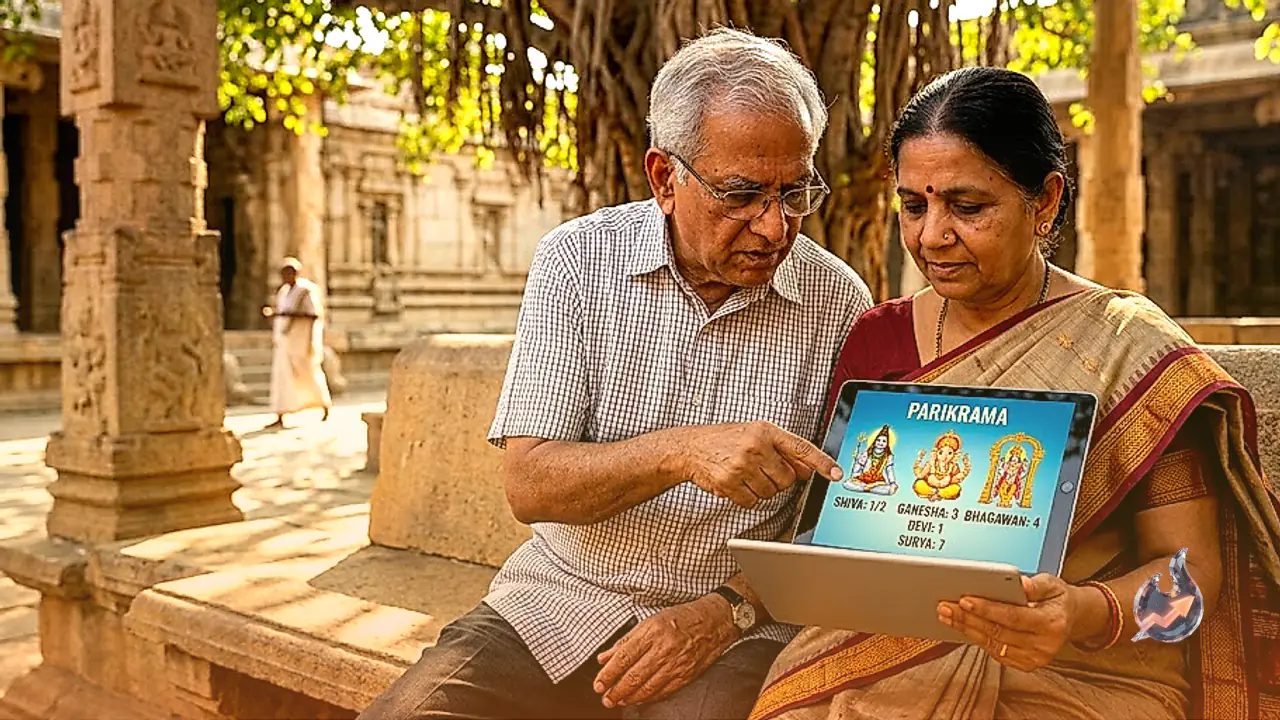
- For Lord Ganesha, doing 3 or 5 rounds is generally considered auspicious.
- Before Lord Vishnu, the tradition calls for 4 rounds.
- For Goddess Durga, devotees perform either 1 round or 9 rounds.
- Around Surya Dev, the Sun God, doing 7 rounds is considered auspicious.
- The rule changes altogether for the Shivling, a full round is never completed around it. Without crossing the jalhari, also called the somsutra, devotees are meant to do a half round or a specific fixed round instead. This can vary slightly depending on the individual traditions followed at different temples.
Which direction the walk should begin from
Based on astrological belief, parikrama inside a temple should always move dakshinavart, meaning in a clockwise direction. This is regarded as the correct and most spiritually beneficial way to perform it, with the deity kept to the devotee's right side throughout the walk.
Etiquette to follow while performing parikrama
Since parikrama is treated as an act of discipline and devotion rather than just a physical walk, certain conduct is expected while performing it.
- It should always be done with a calm mind and genuine devotion, chanting the deity's name while focusing on them is considered auspicious.
- Rushing or running during the walk should be avoided, it should be completed at a normal, steady pace.
- Using a mobile phone, talking to others or joking around during the walk should be avoided.
- Care should be taken that no other devotee performing the parikrama at the same time faces any inconvenience.
- Every temple follows its own set of customs, so the walk should always be performed in keeping with the specific rules of that particular temple.