





















Jaipur, the Pink City, is famed for its ancient temples. Almost every lane and crossing in the old quarter shelters a centuries-old shrine where a steady stream of devotees gathers for darshan. The walled-city market is especially rich in them, with a historic temple on nearly every street. One such shrine is the roughly 200-year-old Kalyanji temple, built along Kalyanji ka Rasta in the Chandpol Bazaar, counted among the oldest temples in Jaipur. Here Thakurji is enshrined in the form of Kalyanji. Its singular traditions and religious significance have earned it a special place among the faithful. The temple priest, Ashok Agarwal, explains its history and the beliefs surrounding it.
The Door to the 24 Avatars Opens Just Twice a Year
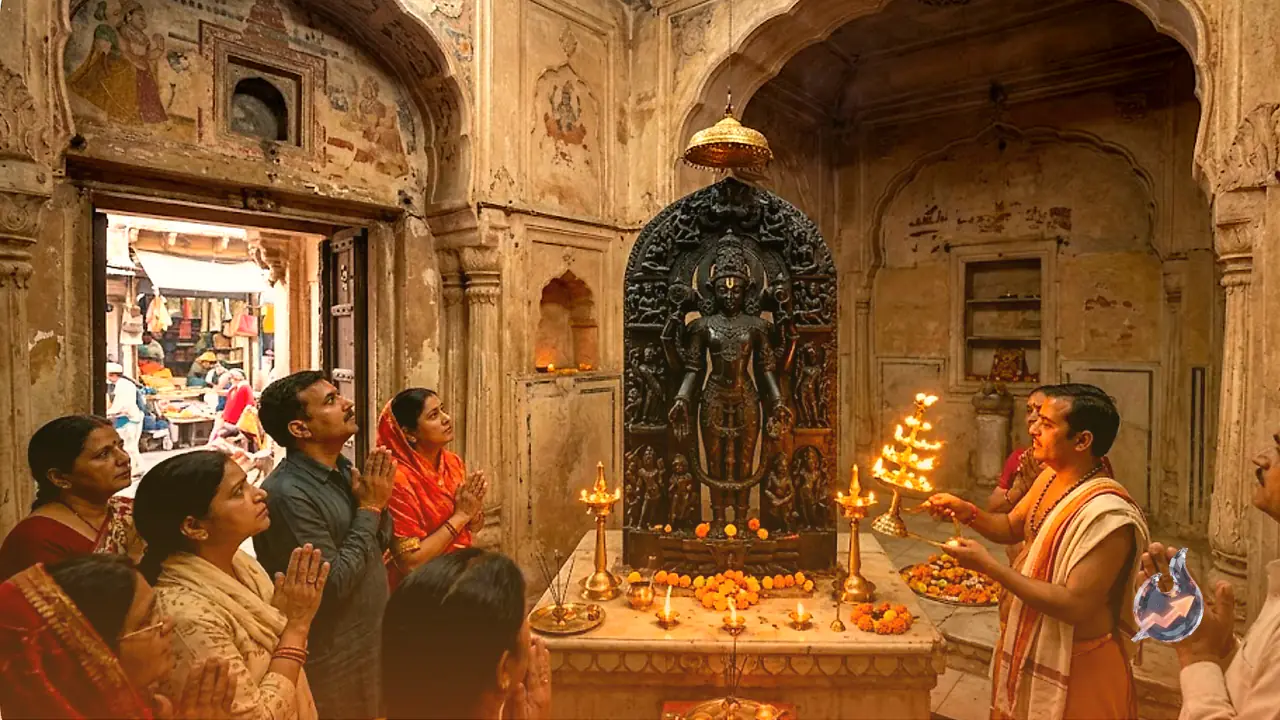
The temple's greatest distinction is the idol of Lord Kalyanji enshrined here, on which the deity's 24 avatars have been carved. Devotees cannot view these avatars year-round; the darshan is granted only on two special occasions. On Akha Teej and on the temple's Patotsav, when this rare darshan takes place, a huge crowd of devotees pours into the temple.
The Idol Emerged From a Stepwell in Sindhi Camp
Ashok Agarwal says the temple and the Thakurji idol enshrined in the form of Kalyanji both go back many years. The idol was recovered from an ancient baori, or stepwell, in the Sindhi Camp area. The idol, carved from black stone, stands four and a half feet tall. Thakurji holds a trident in one hand and a jhamar adornment in the other, depicted in the khadgasan standing posture. The temple also enshrines the idols of Radha Krishna and Rukmani. According to the priest, like Jaipur's other ancient temples, its architecture is remarkable too, with the roof and dome decorated in sheesh mahal mirror work.
The Temple's Paintings Record Lord Vishnu's 24 Avatars
The temple's architecture carries glimpses of the 24 avatars of Thakurji described in the Varah Puran, depicted across separate paintings. These paintings were created at the very time the temple was built. They feature all 24 avatars of Lord Vishnu, including the Matsya, Varah, Kurma, Nrisingh, Vaman, Parshuram, Buddha, Kalki, Vedvyas, Prithu and Manu avatars. The divine deeds of these twenty-four avatars introduce the many sacred manifestations of the Lord, undertaken to establish dharma, protect devotees and destroy adharma.