



















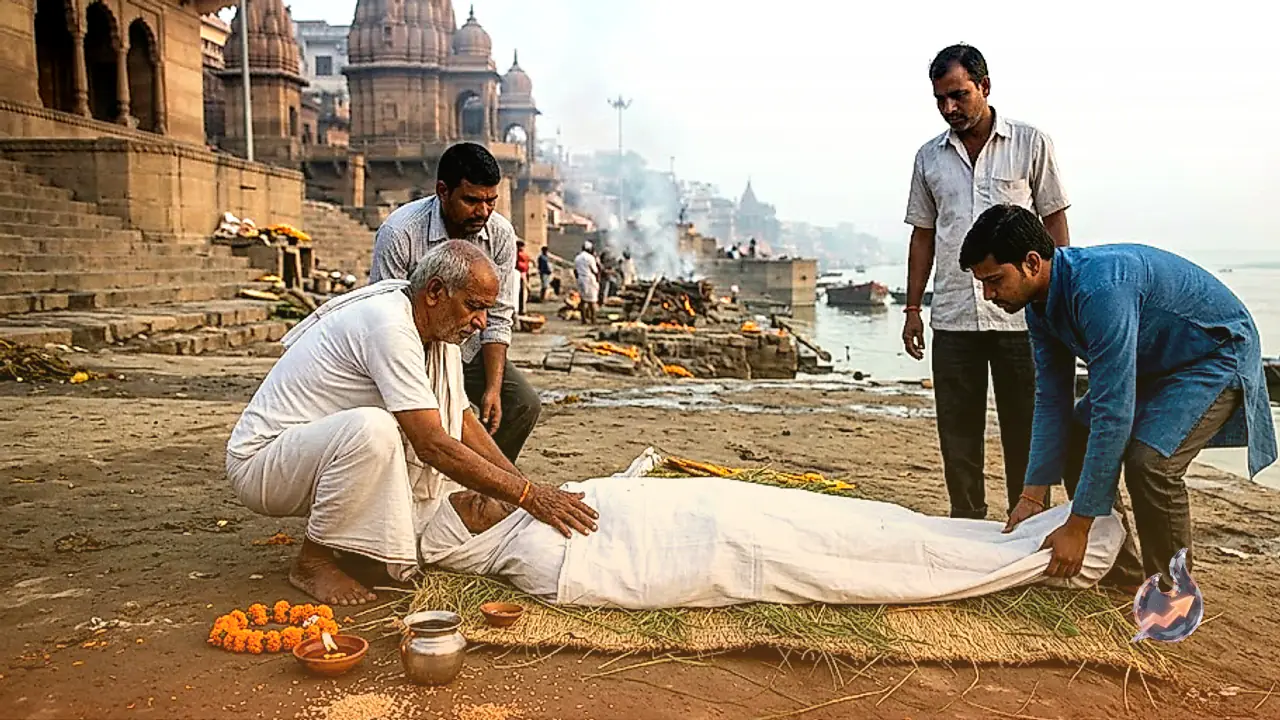

In Sanatan traditions, meticulous rites and customs are prescribed for every stage of existence, extending from birth to the moments following death. When a person passes away, several sacred procedures are performed prior to the final cremation rites. Among these traditions are bathing the deceased body with holy water, clothing it in fresh garments, and placing it directly on the bare ground for a certain duration. The Garud Puran offers an extensive spiritual and philosophical explanation of death and these post-mortem rituals. Keeping the body on the earth before the funeral procession is far more than a mere ritualistic formality; it embodies a profound philosophical message, the core principle of the five elements, and an enduring truth about human existence.
The Five Elements and the Process of Dissolution
According to ancient scriptures, the human physical vessel is constructed from five fundamental elements, collectively known as Panchtattva or the Panchamahabhutas. These elements consist of earth, water, fire, air, and space. Throughout a person's life, the soul resides within this physical structure. The moment death occurs, the binding force holding these five elements together begins to dissipate, initiating their return to their respective natural states. All post-death ceremonies are designed to facilitate this natural transition. As life leaves the body, the physical shell becomes inactive and surrenders back to the laws of nature.
Earthly Contact and Returning to Nature
Placing the deceased body on the bare earth serves as a symbolic marker of its return to Mother Earth. During lifetime, a human being walks upon this land, relies on its resources, and is nurtured by its soil. Therefore, when the breath of life ceases, the body is moved down from elevated furniture such as beds or cots and placed directly in contact with the ground. This ritual signifies that the earthly chapter of life has officially drawn to a close, and the physical form is preparing to merge back into the soil from which it originated.
Dissolution of Ego and the Ultimate Reality of Dust
Beyond its spiritual symbolism, this practice imparts a profound moral lesson to living family members and onlookers. Throughout life, individuals often accumulate wealth, material assets, high positions, and social status, which can sometimes give rise to personal pride and vanity. However, seeing that very body stripped of all worldly luxury and laid flat on the simple ground provides a stark reminder of life's true nature. It visually demonstrates that regardless of one's fame, fortune, or achievements, every physical body ultimately reduces to dust. This serves as a timeless warning to abandon ego and stay grounded.
Impermanence of Material Life and the Primacy of Karma
Resting the deceased on the soil also underscores the transient nature of the material world. Nothing in this physical realm is permanent. The wealth, titles, and property acquired during one's lifetime remain behind when life ends. In that final hour, only a person's karma, their deeds and moral choices, accompanies the soul forward. The teachings of the Garud Puran emphasize that while material comfort ends with physical death, a person's righteous actions and spiritual merits remain their only enduring legacy.
A Symbol of the Soul's New Voyage
In Sanatan philosophy, death is not viewed as the absolute termination of consciousness, but rather as a transition where the soul sheds an old physical garment to embark on a new path. Laying the physical body on the earth marks the conclusion of earthly duties and obligations. It signifies that the physical container has fulfilled its purpose and is now being returned to nature, allowing the soul to proceed freely on its next spiritual journey.