


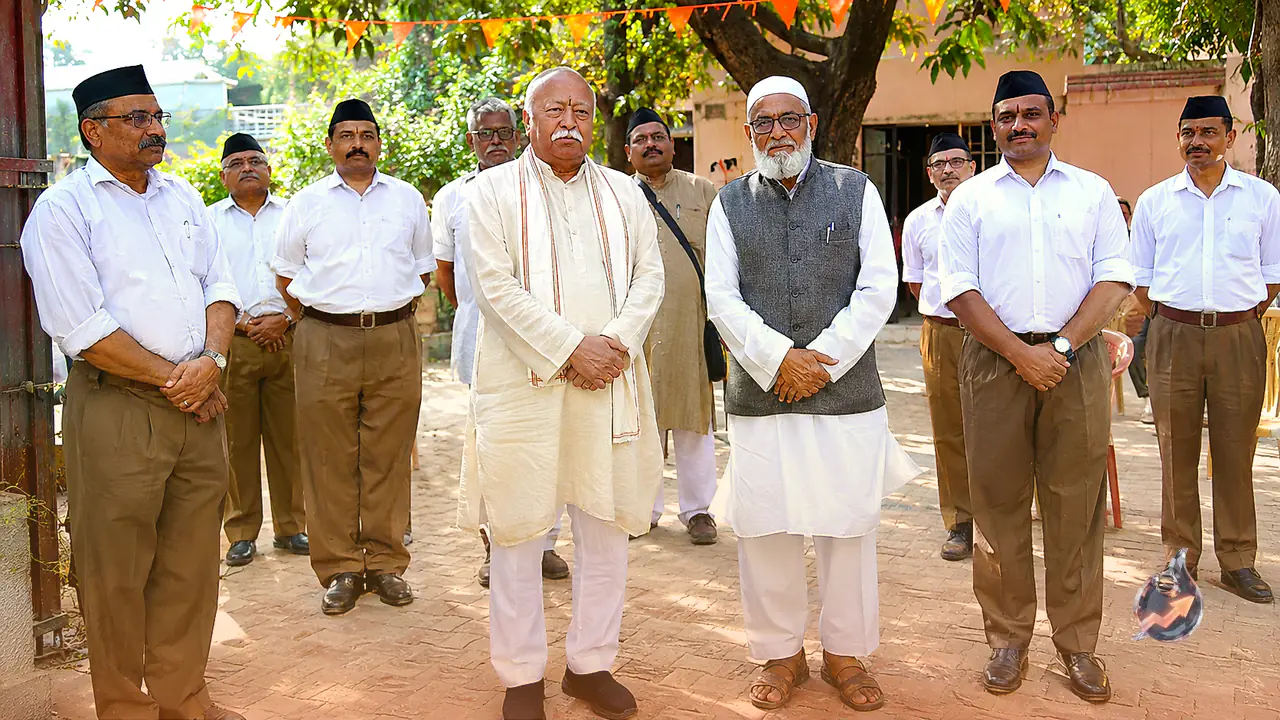














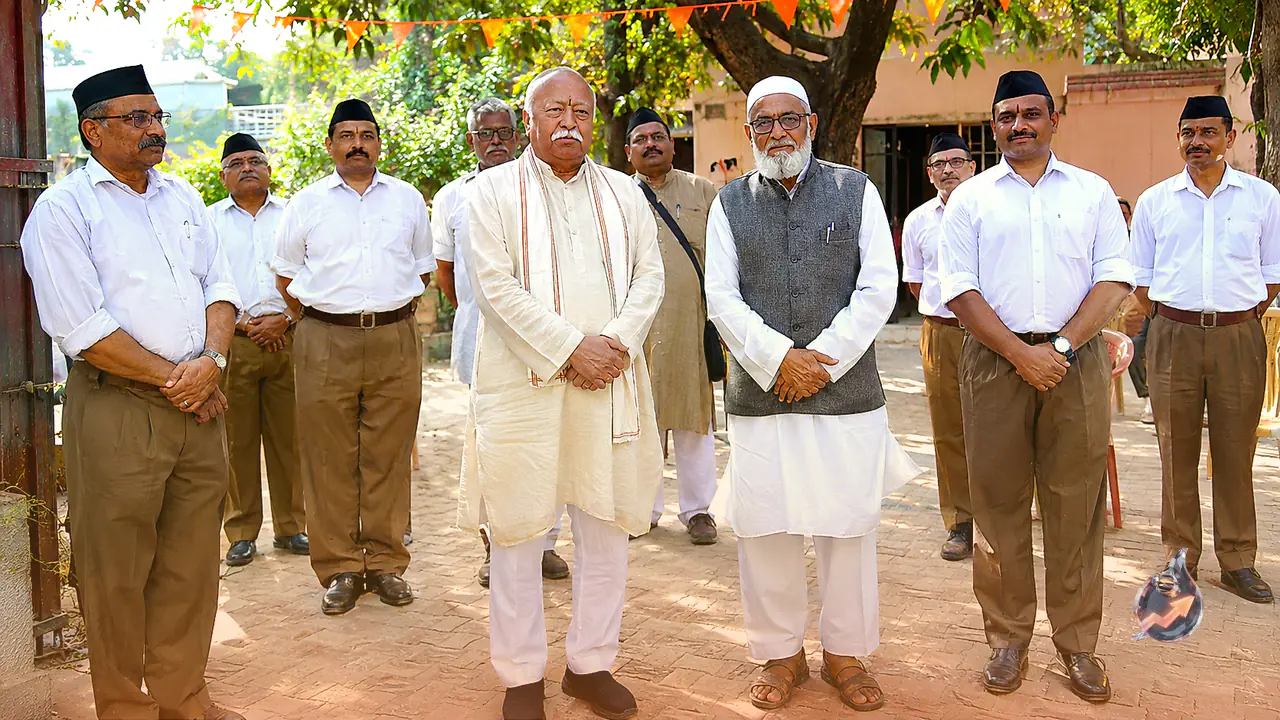

The century-old history of the Rashtriya Swayamsevak Sangh (RSS) contains numerous lesser-known episodes, one of which was recently brought to light by Sangh chief Mohan Bhagat. He recounted an event from the 1930s when efforts were underway within the Central Provinces Legislative Assembly to impose a ban on the RSS. At that time, neither any volunteers nor ideological supporters came forward to defend the organization publicly. However, amidst this silence, a Muslim individual named Ibrahim stood up inside the assembly to speak in defense of the RSS.
The Legislative Defense by Ibrahim
Mohan Bhagat shared this historical anecdote during the inauguration ceremony of the newly constructed auditorium at the headquarters of the Nagpur Nagrik Sahakari Bank Limited. He detailed how, during the formative years of the organization when attempts to ban it were peaking, a person named Ibrahim raised his voice in opposition to those curbs. According to Bhagat, Ibrahim stated in the assembly that the organization should not be shut down because it was not communal. During his address, he also made specific reference to Dr. Keshav Baliram Hedgewar.
As per Bhagat's account, Ibrahim remarked at the time that those who claimed Hindustan was a Hindu nation belonged in an asylum, but he personally knew Dr. Keshav Baliram Hedgewar, who was neither mad nor malicious, describing him as a good human being and asserting that the Sangh could never be communal. In this manner, Ibrahim defended the RSS during an era when its public recognition and backing were far more limited compared to today.
Swayamsevaks Remain the True Identity After 100 Years
Bhagat noted that although very few people knew about the Sangh during the 1930s, Dr. Hedgewar commanded immense respect within society. The identity of the organization has been forged by its swayamsevaks from the very beginning, and even after a century, these volunteers remain its true strength. He emphasized that the journey of the organization is not the result of any external assistance or benevolence. The progress the RSS has achieved over the past 100 years rests entirely on the dedication, selfless service, and character of its workers.
Millions of Volunteers and Thousands of Full-Time Pracharaks
The RSS chief also discussed the lifestyle of the organization's full-time workers, known as pracharaks. He noted that individuals join the Sangh with diverse capacities, skills, and human qualities, but the common thread binding them together is their absolute dedication. Bhagat shared that as a pracharak himself, he has observed fellow workers closely over the years, and their lifestyle has become second nature to him. He pointed out that among the roughly 70 to 75 lakh people recognized as swayamsevaks today, around 4,000 are full-time workers who have dedicated their lives to the nation's future. He stated that people write about pracharaks not for personal gain, but out of genuine affection and respect, noting that no material benefits are tied to the work of the Sangh.
Swimming Against the Current
Bhagat described the life of a swayamsevak as akin to swimming against the current. He explained that a true volunteer strives to live a life free from ego, selfishness, and personal expectations, focusing entirely on how much positive contribution they can make to society. He remarked that while life milestones typically follow conventional sequences, for a swayamsevak, the sequence of sacrifice comes first. According to Bhagat, the world is closely observing India's model of selfless service and social dedication.
Building a Strong Society to Meet Global Expectations
Addressing shifting global dynamics, the RSS chief stated that the world today looks toward India with great expectations. Fulfilling these expectations responsibly requires a strong, disciplined, and unified society. He reiterated that the 100-year journey of the organization is built upon the dedication and selfless service of its workers, affirming that the character of the swayamsevaks and their commitment to society constitute the true identity of the Sangh.