






















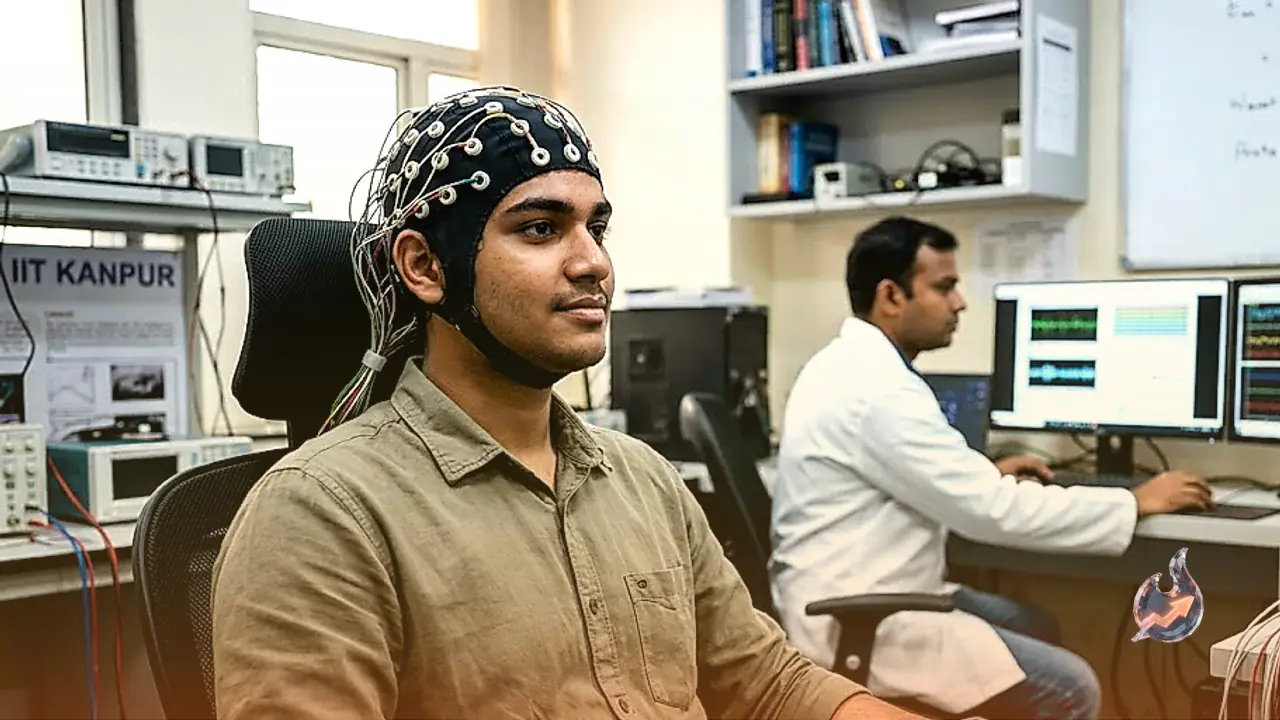

A recent study conducted among students at the Indian Institute of Technology Kanpur has shed light on the physiological and mental impacts of traditional chanting in an academic environment. The research focused on 28 students who had no prior experience with mantra chanting. Over a continuous period of eight weeks, these participants practiced chanting the 'Hare Rama, Hare Krishna' Mahamantra regularly while researchers monitored its effects on their mind and body.
Before the study commenced and immediately after the eight-week period concluded, the participating students underwent specific medical evaluations. These included EEG or electroencephalography tests, which measure electrical activity in the brain, along with heart rate variability tests to track fluctuations in time intervals between heartbeats. These diagnostic tools helped researchers evaluate how the regular practice influenced the participants' stress and relaxation responses.
Led by IIT Kanpur Deputy Director Prof. Brij Bhushan, the study was designed to understand what happens when individuals with no background in spiritual practices suddenly incorporate regular chanting into their routine. Students in prestigious institutions frequently face high levels of academic pressure, examination stress, and anxieties about their future career paths, making it vital to explore effective ways to maintain mental calm.
While Indian society has long associated yoga, meditation, and chanting with mental peace, this research aimed to analyze those traditional concepts through a strict scientific lens. By selecting students who had never engaged in such practices before, the researchers could clearly observe the shifts that occurred purely as a result of adopting the eight-week routine.
Prof. Brij Bhushan explained that the human body operates through two primary branches of the autonomic nervous system known as the sympathetic and parasympathetic systems. The sympathetic system activates the body during times of stress, danger, or challenge, often causing an increased heart rate. Conversely, the parasympathetic system helps bring the body back to a state of rest and maintains general balance after a stressful event.
Heart rate variability tests provide insights into the functioning of these physiological systems, while EEG tests map electrical brainwaves. By comparing the test results recorded prior to the intervention with those obtained after the eight-week period, the research team was able to document measurable shifts in the students' physiological responses.
The findings indicate that consistent chanting over two months produced notable changes in both EEG and heart rate variability outcomes. However, the researchers noted certain limitations, pointing out that because the study involved only 28 students, the results cannot be generalized to apply universally to every individual. More extensive studies involving larger participant groups are necessary to fully understand the broader implications.
As students navigate intense academic competition and high-pressure environments, prioritizing mental health remains critical. Scientific evaluations of practices like meditation, yoga, and chanting offer valuable insights into identifying effective tools for stress management and overall psychological well-being.