



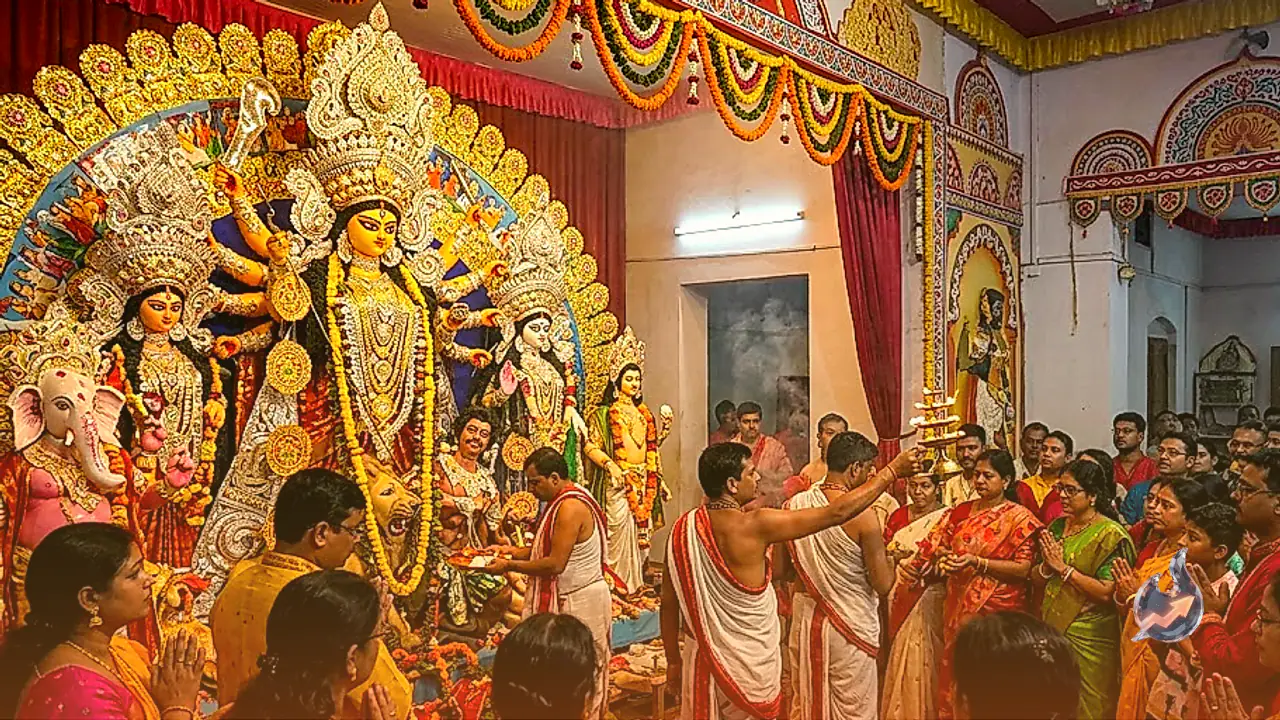

















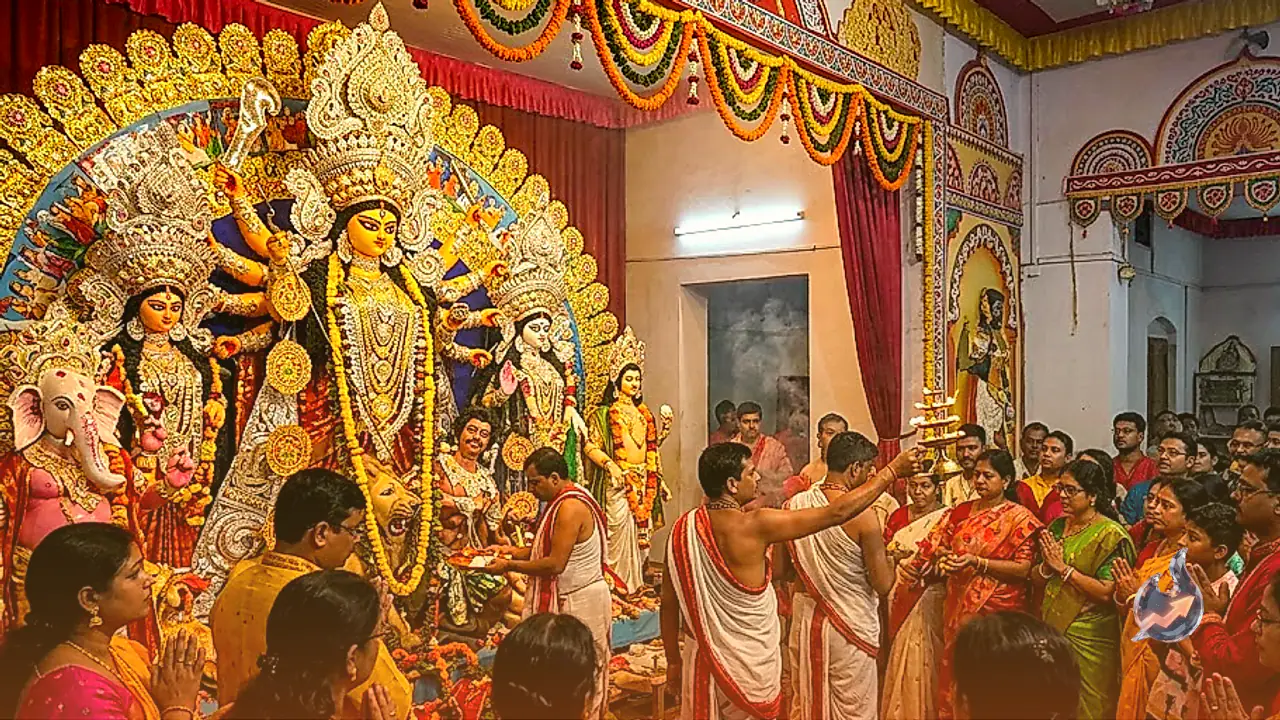

Durga Puja is celebrated with immense enthusiasm and grandeur across Jharkhand, where stunning puja pavilions and magnificent idols capture the attention of devotees. However, the tradition of Durgabari located on the banks of the Koel River in Medininagar, Palamu, stands out for its unique customs. At this historic site, worship has been conducted according to Bengali rituals for the past 112 years. A key highlight of this celebration is that Goddess Durga is adorned with gold and silver jewelry, while the ritualistic eye-painting ceremony serves as a major center of attraction for visitors.
A 112-Year-Old Tradition Rooted in Bengali Customs
The worship at Durgabari in Medininagar follows traditional Bengali customs, making the venue a prominent spiritual hub not just for the Bengali community but for non-Bengali devotees as well. Whenever their prayers are answered, devotees donate gold and silver ornaments to the goddess. These very offerings are used every year to exquisitely decorate the deity. Over time, as the faith of the worshippers grew stronger, the quantity of jewelry dedicated to the goddess increased correspondingly.
Decoration Featuring Seven to Eight Kilograms of Gold and Silver
Saikat Chatterjee, associated with the Durgabari Puja Committee, stated that this year the idol of Goddess Durga has been adorned with approximately 7 to 8 kilograms of gold and silver jewelry. The collection includes golden eyes, a bindi, a nose ring, and bangles, alongside three silver necklaces, a Sita haar, a maang tikka, a waist chain, bracelets, heavy bangles, anklets, a sword, a chhand mala, armlets, and payal. This time, the crown of the goddess stands out as a special center of attraction, crafted by melting jewelry previously donated by devotees. Goddess Lakshmi and Goddess सरस्वती are also adorned with gold and silver ornaments, while Lord Ganesha and Lord Kartikeya wear a golden tilak.
The Divine Eye Donation and Lifelike Gaze
The eye-painting ritual, known as chakshu daan, is a vital part of the worship at Durgabari. It is believed that once the eyes of the goddess are completed, devotees viewing her from any angle feel as though the mother is looking directly at them. According to the organizers, just before immersion, such lifelike vibrancy appears in the eyes and facial expressions of the deity that devotees are moved to tears. This sight remains a profound center of faith and attraction.
Jewelry Stored Securely in Bank Lockers
Saikat Chatterjee explained that all ornaments donated by devotees are safely kept in bank lockers throughout the year. They are retrieved on the Shashthi date of Durga Puja to adorn the goddess. On the day of Dashami, before immersion, all the jewelry is removed, counted one by one, and recorded in a register before being deposited back into the bank locker. To ensure security, CCTV cameras have been installed within the Durgabari premises, and strict barricading is arranged around the idol.
A Legacy of Decoration Spanning Four Generations
Organizer Rajeev Mukherjee shared that the idol of Goddess Durga is specially prepared here every year. For the past four generations, Sukumar has been adorning the goddess. On the night of Shashthi, the deity is dressed in these gold and silver ornaments. The jewelry offered by devotees upon the fulfillment of their wishes is presented to the goddess, a enduring tradition that gives Durgabari its distinct identity.