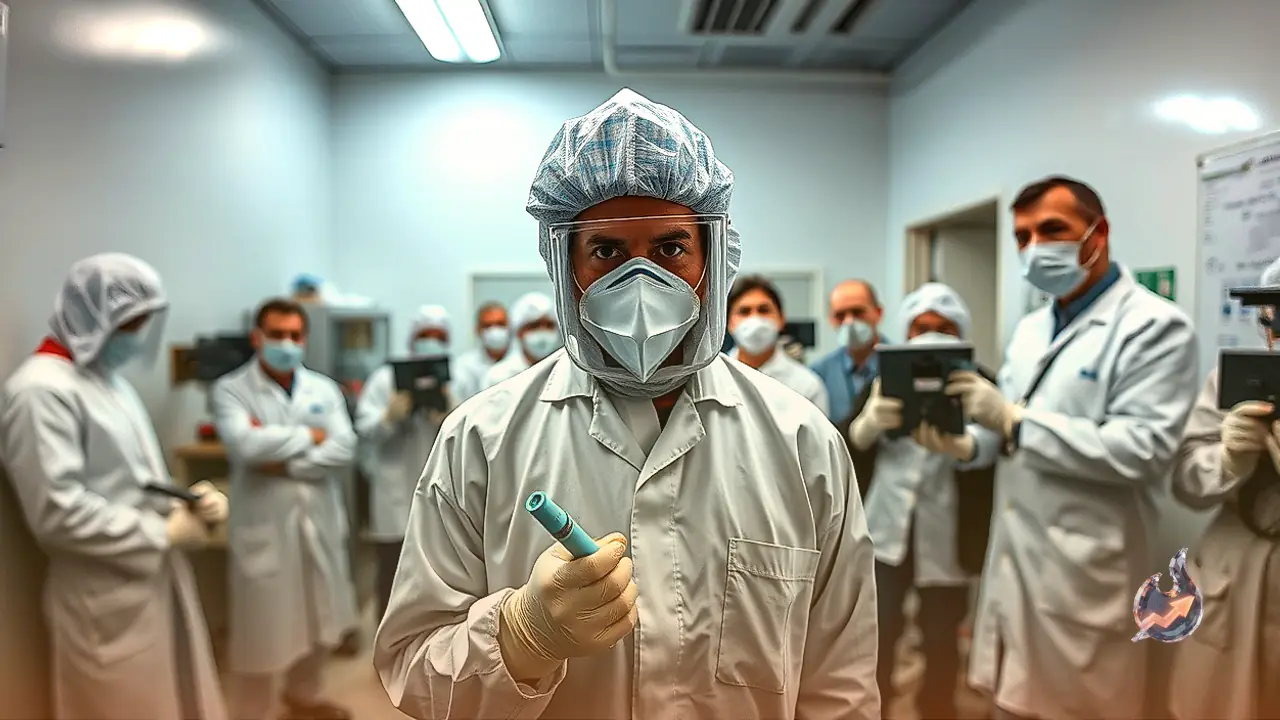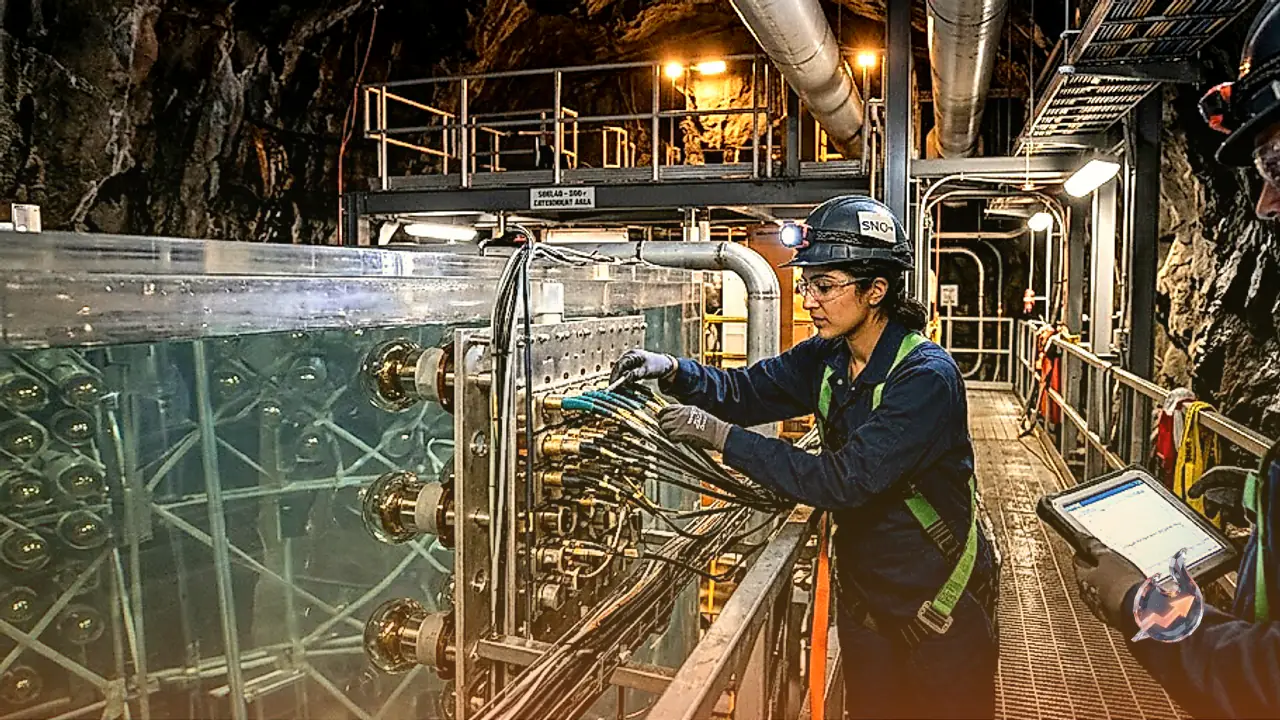
























As morning sunlight spreads across the parking lot of Atoco in Irvine, California, ambient temperatures climb past 80 degrees Fahrenheit around a 20-foot-tall, metal-clad apparatus. On site, engineers inspect internal systems alongside an iPad tracking a steady upward trajectory, charting an unusual capability: capturing clean moisture straight out of ambient air through specialized substances called metal organic frameworks, or MOFs.
The foundational chemistry behind these structures earned company founder Omar Yaghi the Nobel Prize for chemistry in 2025. Early working prototypes built by Atoco have demonstrated regular yields measuring gallons of water each day. The most defining attribute of this specific iteration is what it operates without: neither an electrical grid connection nor external electric current is needed to capture airborne humidity at the microscopic scale or extract the trapped liquid into usable form.
Turning Server Thermal Exhaust Into Fresh Water
The entire operation runs purely on low-grade industrial thermal waste. That low thermal threshold positions the technology as an ideal complement for artificial intelligence data centers, where banks of computing servers continuously generate intense heat while executing mathematical proofs and generative workflows, all while frequently consuming massive amounts of water for cooling.
Atoco CEO Samer Taha notes that four or five years ago, AI facilities were not on the company's radar. Yet the global surge in data infrastructure construction has opened an avenue for the enterprise, offering a practical pathway toward its broader ambition of giving water-stressed communities direct sovereignty over vital hydration supplies.
Molecular Sponges Built Like Microscopic Jungle Gyms
Seth Cohen, dean of the School of Physical Sciences at UC Irvine, who is not affiliated with the startup, likens the structural architecture of a MOF to a children's jungle gym on a playground. Functioning essentially as solid molecular sponges, these materials excel at trapping and holding foreign molecules within their network. Much like a traditional sponge, the trapped contents can subsequently be released through thermal application.
These expansive internal frameworks create vast porous voids at the microscopic level capable of accommodating extraordinary quantities of matter, with minor chemical adjustments expanding interior capacity even further. Omar Yaghi illustrates that the internal surface area within a single gram of MOF could span the expanse of two full football fields. Those interior cavities can be configured to store hydrogen for green energy generation, capture carbon dioxide for atmospheric purification, or accumulate water molecules.
According to Benjie Limketkai, vice president of R&D, the enterprise formulates what Taha terms precision materials designed to repeatedly harvest and discharge moisture. The engineering mandate requires a material that exhibits an affinity for water without binding to it too aggressively, while consuming the bare minimum energy to remain commercially viable. Taha points out that their material scientists work at an atomic resolution where the exact geometric angle of individual atoms is fully mapped and calibrated.
Extracting Moisture in Arid Conditions at Low Heat
During operation, ambient air circulates across the tailored MOF matrix, where porous surfaces attract and secure moisture. Even when completely saturated, the framework remains dry to the touch, refusing to yield moisture under physical compression. Liquid release is achieved exclusively through thermal activation. While conventional desiccants like silica also capture atmospheric water, Cohen points out that silica absorbs significantly less volume and demands extreme heating before yielding its stored moisture.
The standalone installation at the Irvine site represents decades of material refinement. The proprietary design enables off-grid operation even when relative humidity drops into the teens. Taha states that the MOFs integrated within the device harvest and discharge water using thermal energy as low as 100 degrees Fahrenheit.
To evaluate performance in the absence of a live computing facility on site, technicians routed simulated thermal exhaust at approximately 150 degrees Fahrenheit. An attached solar panel operates secondary monitoring electronics rather than the primary extraction mechanism, keeping the tall machine remarkably silent during operation. Just past 9 am, with ambient heat exceeding 90 degrees Fahrenheit, pressing an exterior control and turning a spigot releases a stream of clear water. While legal safeguards prevent public sampling, Taha notes the liquid matches distilled water in purity because the MOF pores are calibrated to bypass atmospheric contaminants.
Repurposing Industrial Losses Into Trillions of Liters
Samer Taha explains that approximately 70 percent of global industrial thermal output is low-grade waste that gets vented harmlessly into open air or waterways without being harnessed. Converting that discarded energy into usable water through molecular extraction could potentially unlock trillions of liters of clean water.
Modern compute facilities represent a rapidly expanding source of this thermal output, with individual server installations emitting thermal volumes comparable to tens of thousands of residential homes. Facility operators must disperse this heat into surroundings, intensifying local heat islands while funding complex cooling infrastructure. Because numerous cooling setups rely on evaporative water consumption that can burn through millions of gallons daily, Atoco aims to resolve both issues simultaneously: extracting the very thermal output operators spend capital to discard, and returning usable water in its place.
Scaling Up for Commercial and Remote Deployments
Beyond tech infrastructure, the venture targets remote settlements where utilities rely on periodic tanker truck deliveries due to absent piping networks. Fulfilling those needs alongside high-demand server campuses will require massive production scaling. The parking lot prototype produces up to 300 liters daily, while development is underway on a commercial module engineered for 1,000 liters per day. The current demonstration runs on heat equivalent to a 20-kilowatt computing cluster, whereas industrial hyperscale campuses operate at scales orders of magnitude larger.
To date, Atoco has initiated five on-grid prototype field trials with partners across the United States and the Gulf Cooperation Council. The startup intends to open commercial order books for its inaugural product before the end of this year, having engaged in early discussions with major technology firms regarding data center pilots. Broader commercial demand is supported by commitments from Microsoft, Google, and Amazon Web Services to reach water-positive status by 2030, replenishing more water than their operations consume.
Seth Cohen, who previously oversaw MOF initiatives at the Defense Advanced Research Projects Agency (DARPA), notes that while these frameworks hold remarkable potential, they do not represent an absolute universal fix. In locations lacking ambient or industrial thermal exhaust, releasing water still demands dedicated power inputs, posing hurdles for isolated rural regions lacking established grid infrastructure.
In terms of economics, Taha reports an operational output cost of $5 per metric ton, matching older municipal desalination infrastructure. However, modern coastal desalination facilities produce water for $2 per ton or lower, a cost threshold Taha anticipates matching within three to five years as manufacturing scales.
For Omar Yaghi, the mission stems from his childhood in Jordan as a Palestinian refugee, where his routine chore involved filling household cisterns from water distribution trucks that arrived only once every two weeks. Experiencing severe rationing firsthand shaped his determination to transition global water access from extreme scarcity into widespread abundance.