























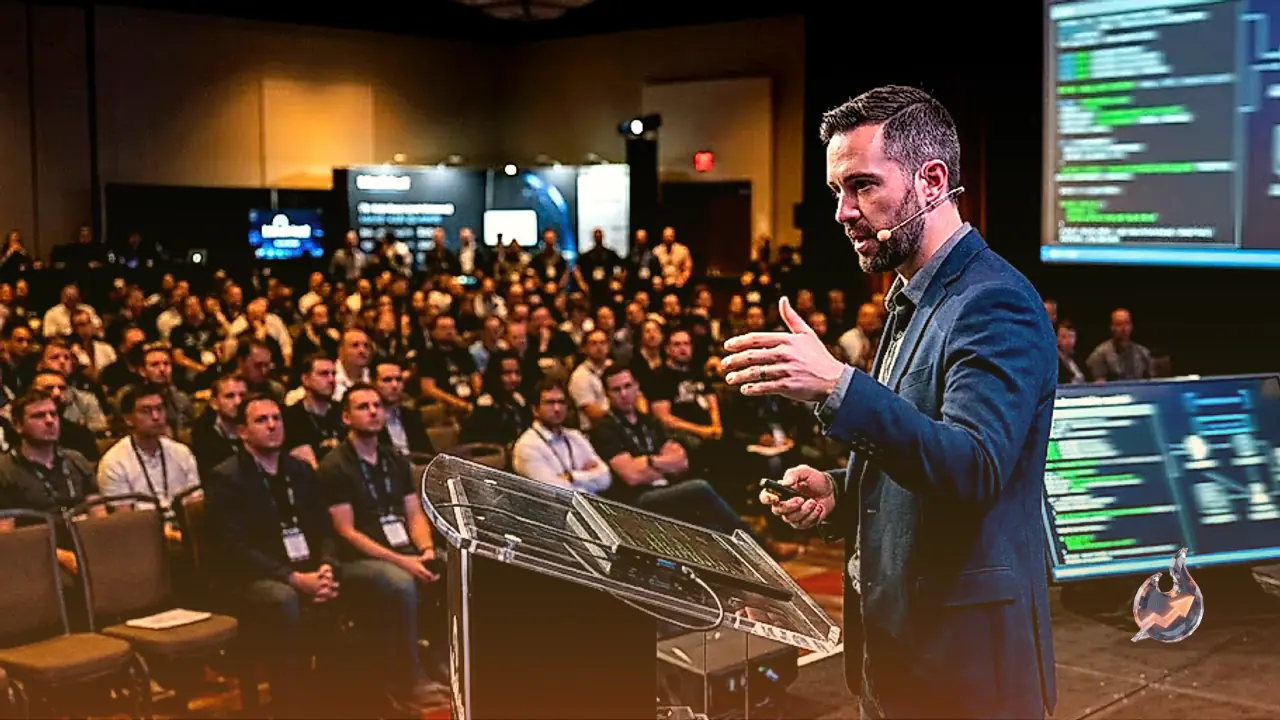

At the annual Black Hat security conference in Las Vegas on Wednesday, cybersecurity researcher Kettle presented groundbreaking empirical findings that map out both the tremendous capabilities and structural limitations of artificial intelligence when applied to offensive security research and vulnerability discovery. Rather than validating popular industry assertions regarding fully autonomous digital threat agents, the research provides a far more pragmatic and detailed perspective. Autonomous artificial intelligence architectures remain substantially constrained when tasked with conceptualizing entirely original attack methodologies without external direction. However, when experienced human security analysts intervene at strategic junctures to guide system parameters and evaluate outputs, artificial intelligence transforms into an exceptionally formidable partner capable of identifying subtle structural flaws within complex software environments.
Unveiling Shared-Parser Confusion in Web Infrastructure
Following several years of dedicated investigation into core web security architecture, Kettle uncovered an entirely novel classification of security vulnerability designated as Shared-Parser Confusion. This specific flaw stems from an underlying software design pattern wherein web servers utilize shared, consolidated code routines to parse both incoming client HTTP requests and outgoing server HTTP responses. In standard network security models, incoming user requests are categorized as completely untrusted inputs that can contain arbitrary or malicious payloads designed to exploit server logic. Conversely, outgoing responses generated by the application server are treated as trusted communication streams.
By relying on identical code modules to process both untrusted requests and trusted responses, application servers introduce a dangerous structural ambiguity. Compromising this parsing boundary creates a widespread attack surface that can potentially cascade into numerous distinct threat vectors across diverse web applications and distributed server configurations.
Overcoming Initial AI Hallucinations and Esoteric Noise
The research campaign commenced in September 2025 utilizing the most advanced frontier artificial intelligence models available at the time from Anthropic and OpenAI. The initial objective focused on probing the capacity of large language models to execute theoretical security research independently. However, early experiments encountered significant practical friction. The generative systems frequently attempted to present previously published esoteric security literature as original breakthroughs, returning complex theoretical findings that were exceedingly difficult to audit and verify quickly.
To overcome this analytical barrier, Kettle refined the experimental parameters by scoping the testing framework strictly within his primary area of personal specialization in web security. This strategic containment ensured total subject matter command, preventing the artificial intelligence models from outputting deceptive or unverified findings. Furthermore, by formalizing his own specialized security research methodology and fine-tuning the models on these structured frameworks, the researcher was able to systematically evaluate how effectively the systems could extrapolate novel logical conclusions on their own.
Managing High-Speed Automated Feedback Loops
As experimental methodologies were refined and newer, more capable model architectures were deployed over time, the research framework yielded actionable security findings at an accelerating pace. The integrated artificial intelligence systems began generating legitimate vulnerability leads approximately every two days without requiring manual initiation from the researcher. This high volume of continuous output created a productive yet intense research feedback loop, generating technical findings at a rate far surpassing traditional human analytical capacity.
The overwhelming volume of potential leads produced an operational challenge, inducing a sense of anxiety and fear of missing out regarding unexamined research avenues. To keep pace with the continuous stream of discoveries, the researcher was compelled to design and implement additional automated analysis tools. Over a period of several months, this collaborative methodology successfully identified more proven vulnerability examples than an individual security researcher could reasonably discover over multiple years of manual inspection.
Human Expertise as the Essential Bridge in Cyber Offense and Defense
Beyond discovering known vulnerability instances, the research sought to test whether artificial intelligence could identify entirely new classes of software bugs. While the system successfully identified a rare category of software flaw, the specific finding was ultimately not exploitable within the single vulnerable target available for testing. Nevertheless, the discovery of Shared-Parser Confusion stands as a critical demonstration of practical human and artificial intelligence collaboration across both defensive engineering and offensive penetration testing.
The artificial intelligence model analyzed empirical datasets to formulate the underlying core hypothesis, but human expertise was required to evaluate, test, and confirm the structural validity of the flaw.
Kettle explained, "It couldn't do that on its own, but I would never have found that on my own for sure."
Addressing the broader industry context, Kettle noted that very few researchers currently discuss the functional limits of artificial intelligence within the cybersecurity domain. Strong commercial incentives encourage organizations to market their platforms as entirely AI native solutions, often ignoring areas where automated systems fail completely. Ultimately, the Shared-Parser Confusion discovery demonstrates that the most impactful security breakthroughs result not from total automation, but from tight, iterative collaboration between human intellect and machine processing power.