
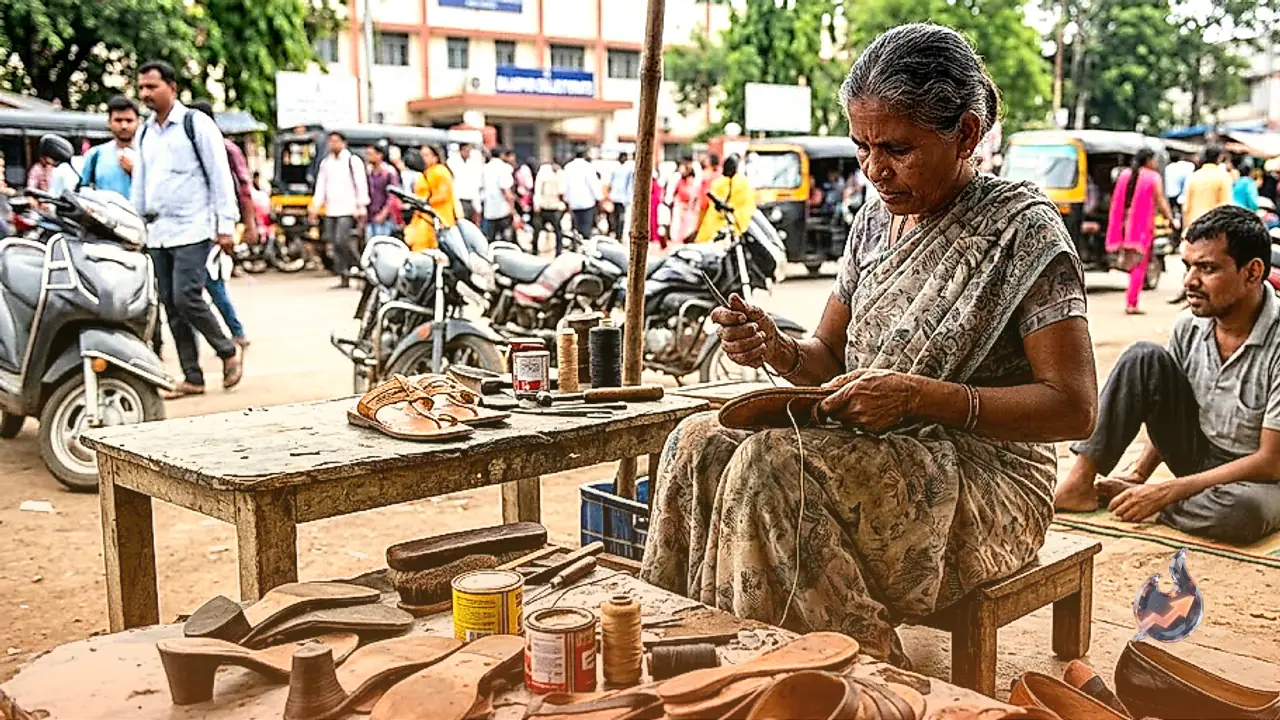


















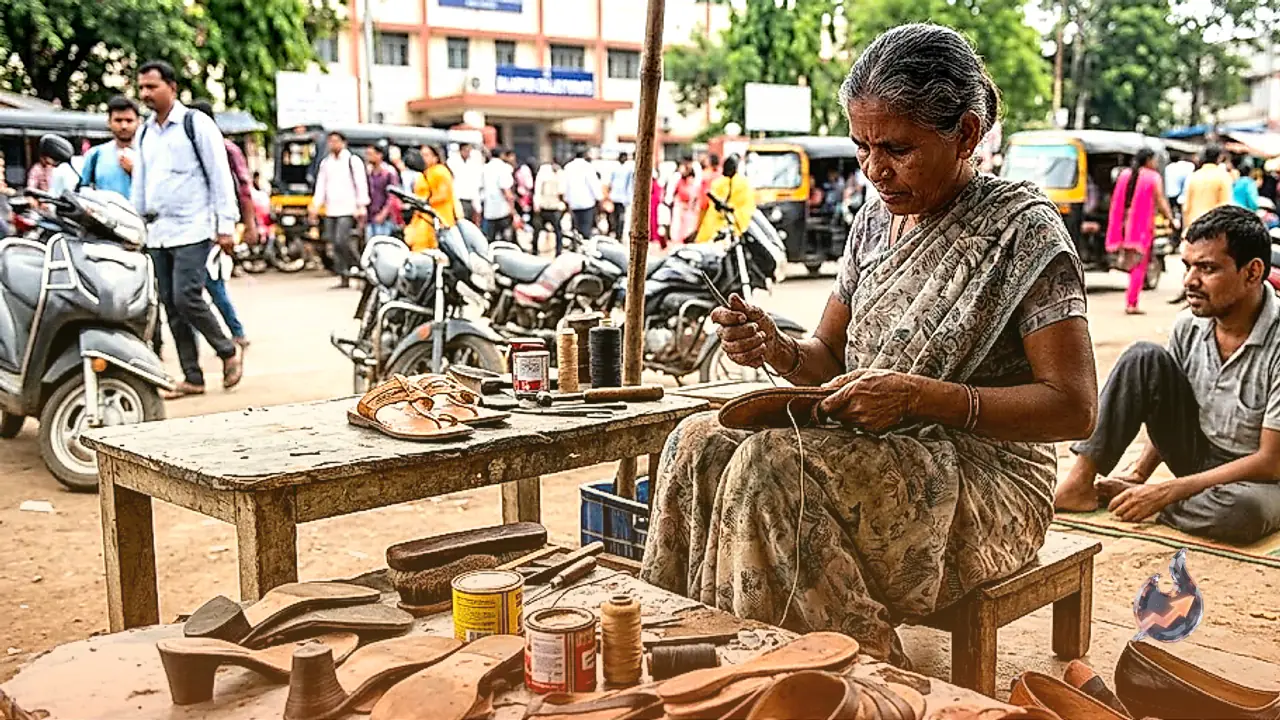

Near the district collectorate in Bilaspur, Chhattisgarh, passersby frequently notice a modest workspace set up along the street. Operating this small station is Rambai, an elderly woman who skillfully repairs and polishes footwear every day. In a profession overwhelmingly associated with men, seeing a woman handle the tools of a cobbler with seasoned precision naturally draws attention and curiosity. Yet for Rambai, this trade is neither a novelty nor a temporary measure; it has been her primary livelihood and the foundation of her self-reliance for decades.
Picking Up the Trade at Just Twelve Years Old
Rambai was born into an impoverished household where basic resources were scarce. Constrained by severe financial hardship, she was unable to pursue formal schooling during her childhood. Recognizing early on that she could not rely entirely on others, she made a firm resolution to build her own means of survival. At around 12 years of age, she began learning the cobbler's trade, taking up needles, thread, and leather tools. Over the years, what began as a young girl's response to poverty turned into a lifelong profession that she continues to practice with unyielding dedication.
Mastering Repairs on Shoes, Slippers, and Sandals
Her daily work extends well beyond giving shoes a fresh coat of polish. Rambai handles stitching, sole replacements, and patching for leather shoes, everyday slippers, and women's sandals. Decades of continuous practice have refined her craft, allowing her to restore worn-out footwear or even assemble basic replacement components whenever necessary. While onlookers initially expressed surprise at finding a woman engaged in this traditional male-dominated vocation, she never let societal hesitation, skepticism, or surprise deter her from doing honest labor.
Carrying the Entire Household After Her Husband's Passing
For many years, Rambai's husband worked alongside her in the same trade. The couple functioned as a team, spending long hours attending to customers and using their joint earnings to cover household expenses. Rambai recalls periods when their combined daily income was modest, yet they managed to budget carefully, buying food grains and meeting essential family needs. When her husband passed away, the full weight of maintaining the household shifted entirely onto her shoulders, requiring her to step up her efforts without looking back.
Supporting a Son with Disabilities and Her Family
Rambai raised four children, comprising three daughters and one son. Her three daughters have married and settled into their respective marital homes, leaving Rambai to live with her son, who has disabilities. Because of his condition, the responsibility of ensuring his daily care, shelter, and financial security rests primarily on her shoulders. Despite her advancing age and the physical toll of sitting for hours by the roadside, she reports to her post every day to ensure their survival without borrowing or seeking charity.
Fluctuating Daily Earnings Met with Enduring Contentment
Working on the roadside means daily income is never guaranteed. On slower days when foot traffic is low, Rambai earns between 100 and 200 rupees. During busier periods with more repair work, her daily earnings can rise to around 400 or 500 rupees. Despite this unpredictability, she expresses genuine contentment with what she earns, emphasizing that money earned through hard physical labor brings a sense of peace, self-respect, and satisfaction that cannot be matched by dependency on others.
A Humble Wooden Tool Chest as Her Greatest Asset
Rambai's workspace features no elaborate decor, promotional boards, or expensive equipment. Her entire enterprise is contained within a small wooden box that stores her awls, leather needles, brushes, waxes, and thread. To her, this compact chest is not merely a container for tools, but the very vessel of her independence, dignity, and livelihood. Through decades of changing times and family hardship, this humble box has remained her most dependable companion.
A Standing Lesson in Dignity and Perseverance
Rambai's journey serves as a quiet yet powerful example for individuals, particularly women, who face harsh economic adversity and feel tempted to give up. Operating with minimal resources, confronting the challenges of aging, and carrying single-handed domestic responsibilities, she continues to stand firmly on her own feet. Her roadside presence sends a clear message to society that no honest work is inferior, and that persistent effort paired with self-respect remains a person's greatest wealth.