























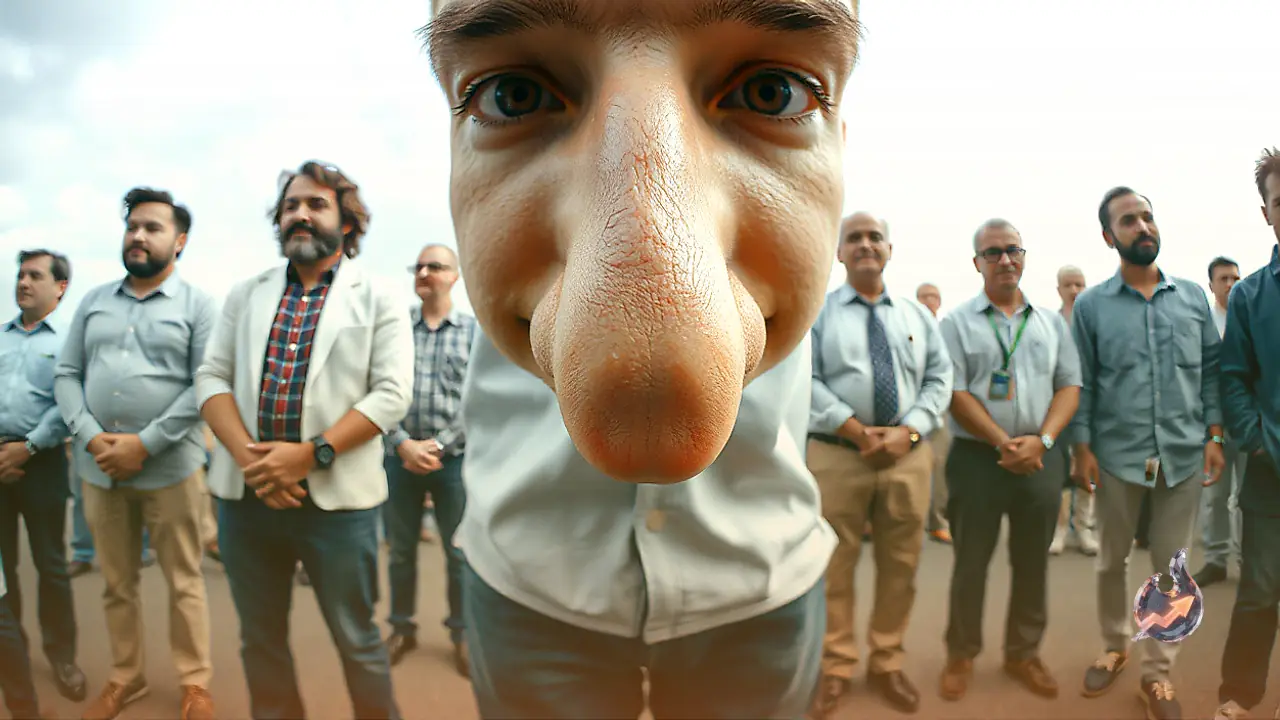

For generations, popular culture and locker-room mythology have perpetuated the belief that the proportions of a man's hands offer a reliable clue about the size of his penis. Medical science has dismantled that urban legend time and again. Yet, according to medical professionals and published research, anyone curious about the correlation between facial anatomy and intimate measurements should actually be looking at a completely different feature: the nose.
The Mathematical Correlation Between Facial Features and Anatomy
Plastic surgeon Dr Anthony Youn highlighted this unexpected physiological connection in a social media video, detailing how facial dimensions can genuinely correspond to male genital measurements. Based on clinical evaluations, men with larger noses possess an average penile length of 5.3 inches. Conversely, individuals with shorter noses register an average measurement of 4.1 inches. The public sharing of these specific metrics immediately prompted widespread humorous reactions online, with commenters drawing parallels to various animated and fictional characters.
What Clinical Studies Reveal About the Phenotype Link
Evaluating the credibility of these assertions, Dr Clair Grainger of Superdrug Online Doctor explains that documented medical evidence does indeed corroborate a relationship between nasal dimensions and penile dimensions. At the same time, she cautions against treating statistical patterns as an absolute or infallible diagnostic rule.
Providing specific context from peer-reviewed literature, she references a 2021 Japanese study examining 126 adult males, which uncovered a statistically verified correlation between nasal size and stretched penile length. This observation was reinforced when a substantially larger investigation followed in South Korea, involving a cohort of 1,160 men. That subsequent work, which appeared in research published in 2023, once again identified nasal structure as a statistically significant indicator of stretched penile measurements.
Dr Grainger suggests that the biological bridge between the two structures likely originates during early prenatal development. Exposure to specific hormonal balances in the womb, particularly intrauterine testosterone levels, plays an instrumental role in shaping both facial cartilage and reproductive tissue. Nevertheless, she emphasizes that the hormonal hypothesis remains a theoretical framework rather than a conclusively proven biochemical mechanism. The existing literature carries inherent methodological boundaries, human physiological variation is broad, and statistical correlation does not establish direct causation.
Shared Tissue and Parallel Neurological Responses
Beyond external measurements, the nose and reproductive organs share distinctive structural and neurological characteristics that highlight their biological kinship. Clinical sexologist Ness Cooper points out that both the human penis and the nose contain erectile tissue and specialized cellular matrices, structures that are also present within the clitoris.
According to Cooper, neural pathways in the nasal cavity and the genital region react to physical stimuli in remarkably comparable patterns. This physiological crossover previously led novelty manufacturers and educational platforms to advise individuals to test the vibration intensity of adult devices against the tip of their nose to gauge how sensitive genital tissues might perceive the sensation. Cooper also notes that a tiny subset of individuals report deriving genuine erotic pleasure through direct stimulation of the nasal region, a psychological and sensory phenomenon clinically categorized as nasophilia.
Does Physical Size Determine Intimate Health and Function?
Despite the public fixation on physical measurements, medical experts consistently underline that anatomical dimensions have very little bearing on intimate satisfaction or sexual function. Cooper reiterates that emotional connection, communication, and technique far outweigh arbitrary numbers when it comes to shared pleasure.
Furthermore, Dr Grainger clarifies that physical length does not govern or influence the onset of erectile dysfunction. Impotence and difficulty achieving firmness stem from entirely unrelated systemic variables, including chronic stress, generalized anxiety, elevated blood pressure, diabetes mellitus, cardiovascular pathology, and the adverse side effects of specific pharmaceutical treatments. Men preoccupied with bedroom performance are advised to focus on overall cardiovascular fitness and metabolic health rather than physical tape measurements. Ongoing erectile challenges can frequently signal an unaddressed underlying medical condition, making professional clinical consultation essential, especially since the condition is widely prevalent and highly manageable with proper medical care.