






















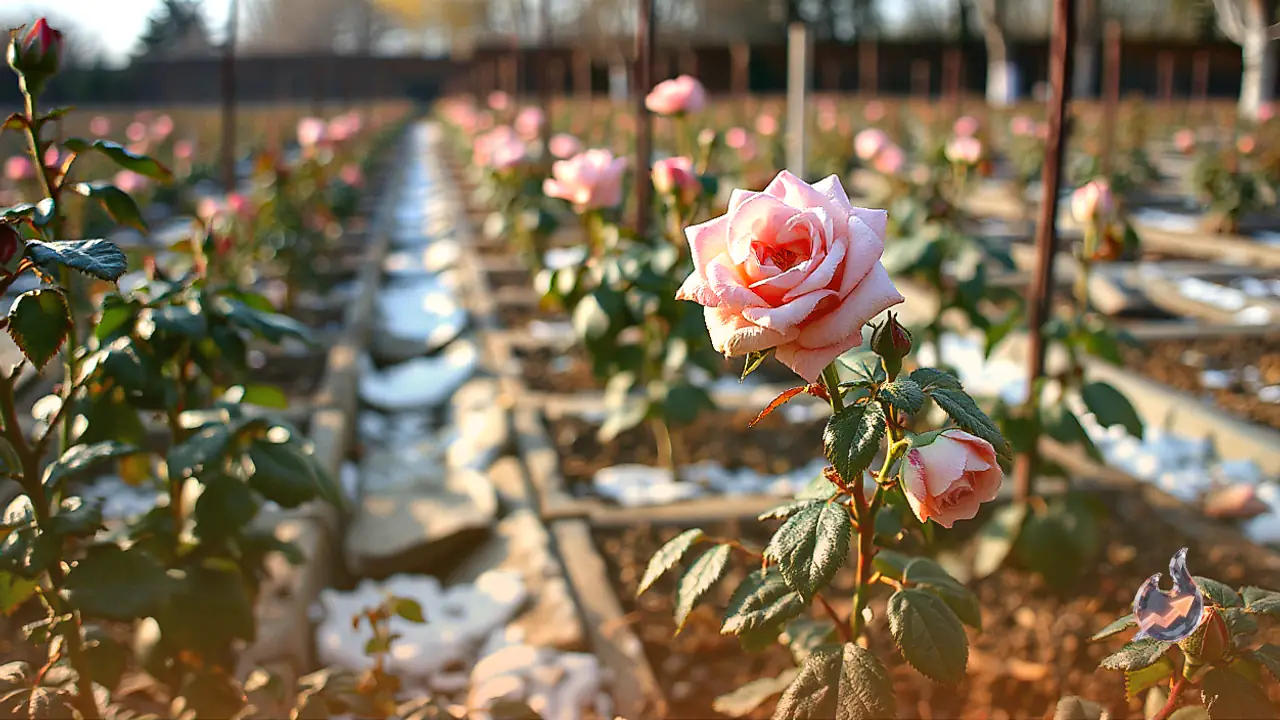

Winter offers the ideal climatic conditions for rose bushes to flourish and produce abundant buds. When transplanting a grafted rose sapling brought from a nursery into a home container, selecting a 10x10 inch pot provides the necessary space for root establishment. During planting, it is crucial to position the graft union roughly two inches above the soil line. Keeping this specific section elevated prevents rot, promotes the emergence of vigorous basal shoots, and significantly enhances flowering potential throughout the cool season.
Pruning Strategies and Deadheading Spent Blooms
Regular maintenance pruning is indispensable for stimulating active branching and increasing bud yield. In the month of October, gardeners can carry out a hard prune, removing approximately 60 percent of the plant's existing growth. Once active blooms fade and wither, prune them off immediately below the three-leaf node. Concurrently, all dried, damaged, and frail branches should be stripped away. Removing this spent foliage channels vital plant reserves directly into new, sturdy branches, transforming the bush into a dense and healthy canopy.
Kitchen Scrap Nutrient Mix for Potassium Enrichment
Roses demand generous quantities of potassium to support bud formation and flower size. An effective homemade fertilizer can be prepared by sun-drying banana peels and crushing them into a fine powder. Combine this dry meal with small cuttings of raw potato skins and washed, spent tea leaves or leftover coffee grounds. Prior to application, loosen the topsoil of the container with a cultivator and allow the substrate to air and dry in direct sunlight for two days. Blend the prepared kitchen mixture evenly into the top layer and water the pot thoroughly.
Sustained Soil Nutrition with Vermicompost and Bone Meal
To preserve fertility within the root zone, blend roughly half a kilogram of vermicompost into the potting mix every three months. During the peak cold season, liquid plant teas formulated by soaking mustard cake deliver readily accessible nourishment. Furthermore, incorporating about 100 grams of bone meal directly beneath the upper soil crust supplies essential minerals to the root base, reinforcing underground anchorage and encouraging robust secondary root expansion.
Stimulating Dormant Shrubs with Bio-Boosters and Aloe Vera
Matured rose bushes that fail to bloom despite regular upkeep can benefit considerably from natural plant growth stimulants. Formulations such as Sagarika, PROM, or commercial seaweed extract can be introduced to kick-start metabolic activity. On an organic domestic level, fresh aloe vera extract diluted thoroughly in plain water and applied directly to the soil helps condition the substrate, assisting the plant in putting out healthy new green leaves and fresh floral buds.
Daily Sun Requirements, Aeration, and Foliage Hygiene
Continuous blossoming necessitates positioning the potted plant where it can absorb a minimum of 5 to 6 hours of direct, unfiltered sunlight each day. Fertilizer regimens should be rotated every 15 days rather than repeating the exact same input, which keeps the soil nutrient profile balanced. Never allow the container soil to compact into a hard crust; cultivate the surface intermittently to facilitate aeration to the root zone. Consistently removing yellowed or deteriorating leaves keeps the foliage clean, ensuring a flourishing rose bush packed with vibrant flowers all winter long.