

















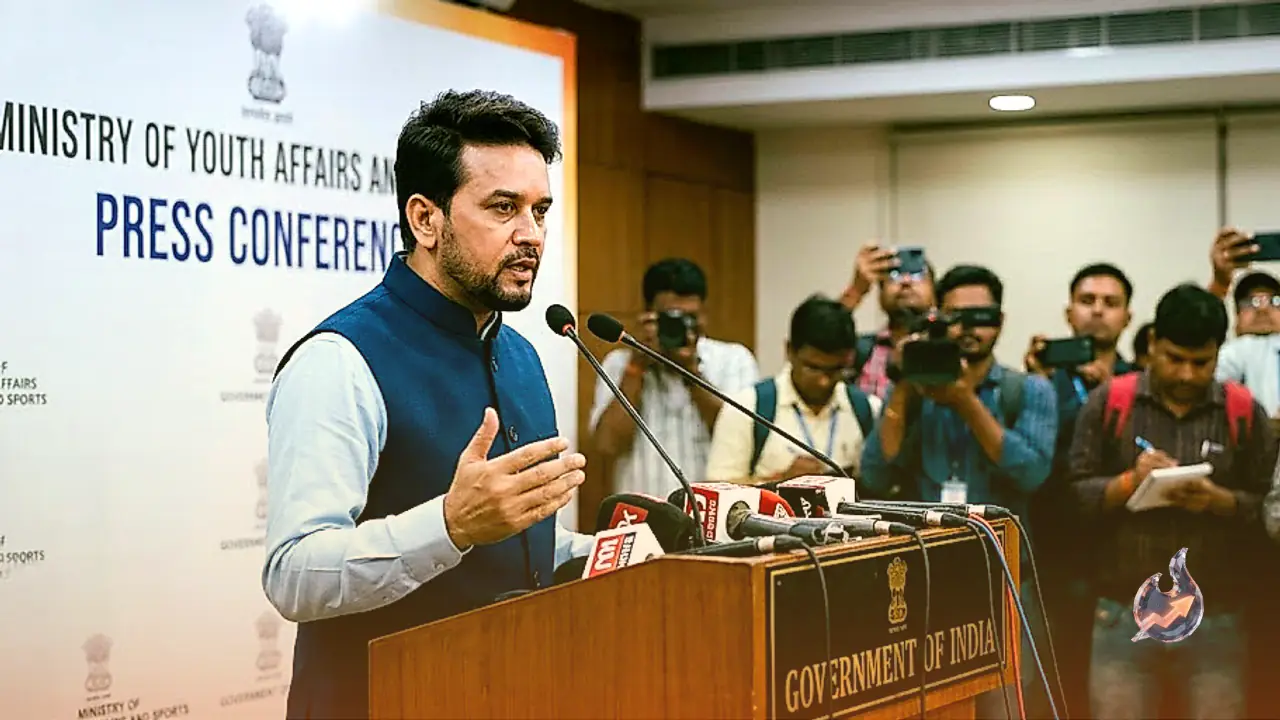

Accelerating the growth of athletics across India demands far more than standalone central initiatives, requiring instead a deeply integrated grassroots framework. Former Union Sports Minister Anurag Thakur emphasized that building a formidable sporting ecosystem depends on synchronized efforts across state administrations, governing bodies, the private corporate sphere, and civil society, rather than expecting single-handed transformation from national policies.
A Multi Stakeholder Five Pillar Framework
Reflecting on administrative responsibilities, Thakur pointed out that the central government naturally serves as an aggregator and supporting backbone, ensuring logistical backing when national squads represent the tricolour on foreign soil. However, the foundational groundwork of talent scouting, community facilities, and athlete conditioning rests primarily on regional administrations and dedicated sports associations.
To build genuine institutional strength, Thakur advocated aligning five critical stakeholders under a unified purpose: the central administration, state governments, sports federations and associations, corporate entities, and grassroots non-governmental organizations along with individual benefactors. He noted that unless these five forces operate in complete concert, Indian sports will fall short of realizing its true competitive power.
Demand for Financial Transparency and Public Dashboards
Turning his focus toward fiscal accountability, the former minister raised concerns regarding how provincial sporting allocations are managed and tracked. He recommended that every state institute an accessible sports dashboard where yearly allocations and itemized disbursements are made public to maintain strict transparency.
To ensure practical governance, he suggested categorizing sports expenditure into three clear segments. The first component should cover capital expenditure dedicated specifically to erecting physical infrastructure like stadiums, tracks, and specialized training complexes. The second category ought to isolate operational overheads, including the remuneration of coaches, technical support crews, and administrative personnel. The third dedicated segment should clearly detail outlays directed toward athlete training regimens and organizing competitive events.
Illustrating the challenges of opaque budgeting, Thakur cited the budgetary pattern in Himachal Pradesh, noting that when education, youth affairs, and sports allocations are merged into a single composite account, determining the exact funds reaching active sports development becomes practically impossible.
Targeted Disciplines for 2030 and 2036 Milestones
Looking ahead toward major global competitions, Thakur urged regional governments to formulate definitive long-term plans with a clear focus on the major international sporting events scheduled for 2030 and 2036. He proposed that each state identify at least three priority sports suited to its regional strengths and direct steady, prolonged investments toward them.
Highlighting historical successes, he referenced Haryana as a prime example of how state-level dedication significantly bolsters national tallies at premier international games, including the Olympics. Notably, Haryana has committed to grooming promising athletes under its Mission Olympics 2036 initiative for the 2026-27 cycle. Thakur concluded that only when every state builds similar focused programs connected to a synchronized national mechanism will the full athletic potential of the nation be unleashed on the global stage.