
















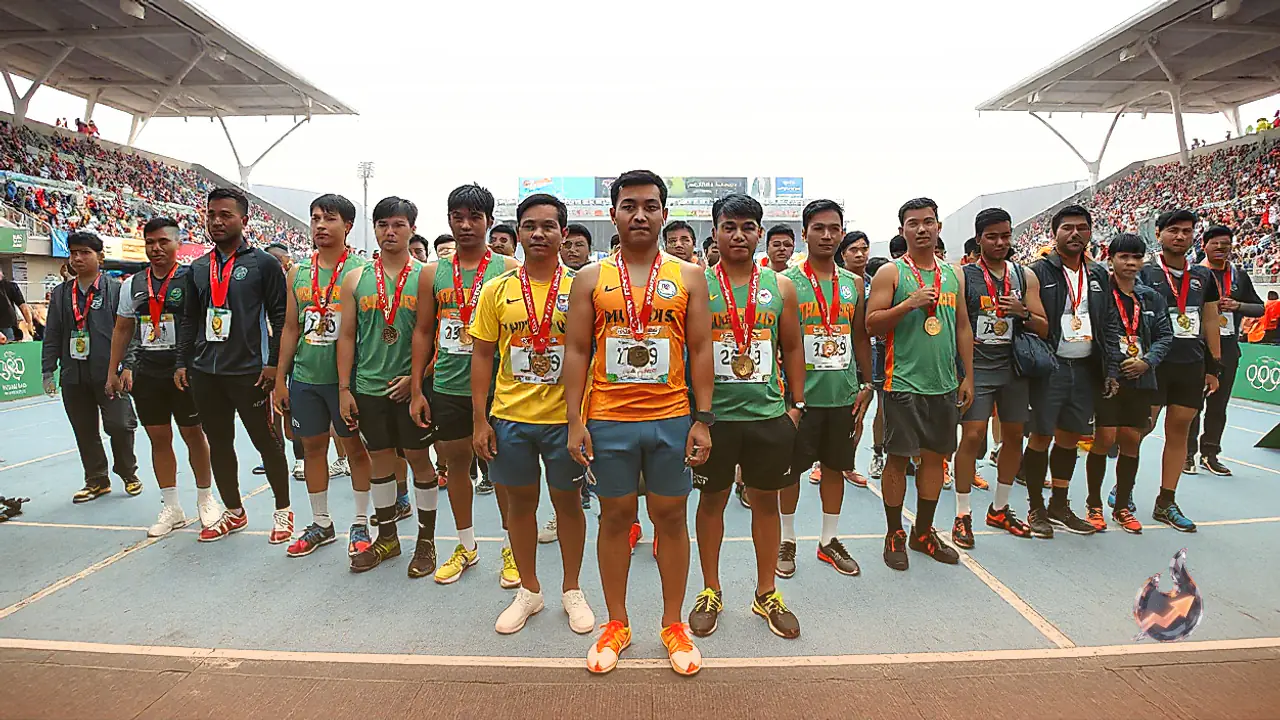

Concluding a memorable campaign in Nagoya, Japan, the Indian contingent recorded a tally of 114 medals, featuring 30 gold podium finishes. This performance eclipsed the country's earlier collection from Hangzhou 2023, coming despite sending roughly half the squad size. While 303 athletes represented the nation at the Hangzhou edition, only 168 competitors travelled to Nagoya. Surpassing the previous overall medal haul with a significantly leaner roster marks a remarkable turning point in Indian sporting history.
Podium Finishes Spread Across Multiple Disciplines
The distinction of the Nagoya showing stems from the sheer breadth of events yielding medals. Track and field athletics remained the bedrock of the national haul, delivering the largest slice of silverware. Crucially, Indian contenders also secured top honors in archery, shooting, and badminton. Securing a spot within the top five of the continental table signals a deep structural shift. The momentum that sparked at Tokyo 2021 has shown no signs of slowing down.
A Decade of Growth from London 2012 to Paris 2024
To grasp the scale of this progress, examining earlier Paralympic cycles offers vital perspective. At the London 2012 Paralympics, India secured merely a single medal. That number crept up to 4 medals at Rio 2016, before the breakthrough at Tokyo 2021 yielded 19 medals. The upward trajectory accelerated into Paris 2024, where the squad gathered 29 medals. Crossing the century mark in consecutive Asian Para Games provides tangible proof of escalating athletic standards.
Broadcast Gaps and the Fight for Visibility
Celebrating these podium winners requires giving them the visibility and mainstream recognition they have earned. Their journeys deserve widespread public coverage across digital streaming platforms and television networks. In Nagoya, however, broadcast decisions caused notable dismay. A critical moment arrived when Sheetla Devi's gold medal-winning contest went unbroadcast, with the live feed choosing to screen a boccia match between Iran and Hong Kong instead. Making the necessary investments to broadcast these athletes live to home audiences remains vital for sustaining growth.
Setting Sights on Los Angeles 2028
Looking ahead to the quadrennial roadmap, India possesses a realistic path toward finishing inside the top 10 at the Los Angeles 2028 Paralympics. The 29 medals collected in Paris could realistically expand toward a target of 45 in Los Angeles. Reaching that benchmark demands sustained investment, strategic talent development, and shared administrative intent.
Confronting Disciplinary Challenges in the Camp
Alongside the sporting highs, certain disturbing incidents underscored the need for stricter protocols. A player was detained and sent back from Nagoya following allegations of sexual harassment. For an ambitious sports nation aiming to host global marquee spectacles, incidents of this nature cannot simply be brushed aside. While the alleged actions of an individual must not tarnish the collective accomplishments of the squad, instituting rigorous accountability and protective systems remains mandatory.
Medical Support for Injured Para Cyclist Shaik Arshad
Amid the celebrations, attention must stay focused on competitors confronting medical emergencies. Para cyclist Shaik Arshad underwent surgery in Nagoya, during which chief medical officer Ameya Kagali remained by his side throughout the treatment. Arshad belongs to the contingent just as firmly as any gold medalist. Ensuring access to high-standard care and comprehensive rehabilitation to aid his eventual return to competition is a collective responsibility. Nagoya proved to be an outstanding success on the podium, yet moving forward requires deeper support, wider publicity, and improved institutional backing.