




















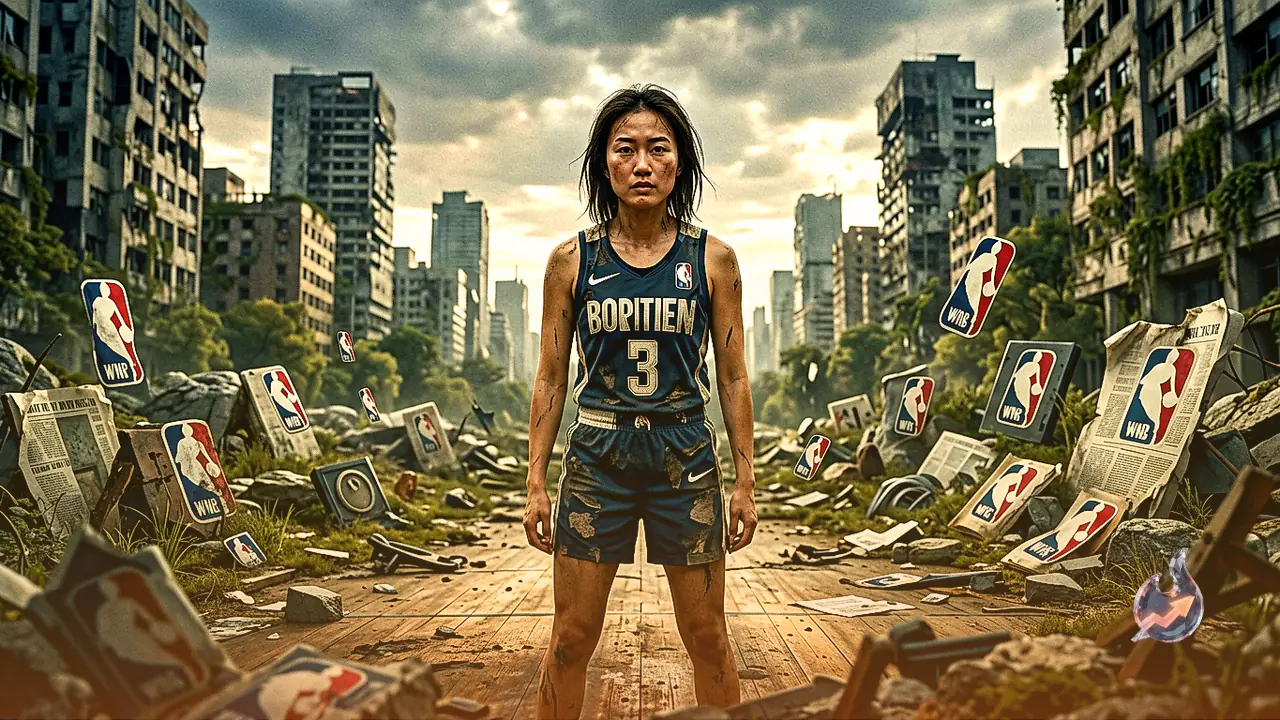

A fresh wave of controversy has erupted surrounding the Women's National Basketball Association over the issue of transgender participation in female sports. Although no transgender woman has ever competed in the league throughout its history, active female players are increasingly finding themselves targeted by online commentators and political figures. Unfounded claims alleging that prominent athletes are secretly male have escalated across social media platforms. This developments has brought broader questions regarding athlete privacy, physical scrutiny, and the governance of women's athletics back to the forefront of national discussion.
Unfounded Accusations Against WNBA Athletes
The recent surge in online speculation gathered momentum after an Australian YouTuber with more than 1 million followers re-shared a 2024 video featuring Brittney Griner, center for the Connecticut Sun. In the footage, Griner was seen admiring a newly constructed basketball arena at Baylor University, where she previously built a distinguished NCAA career between 2009 and 2013. Watson posted the clip alongside commentary questioning why the league has not explicitly defined the term woman, alleging that male athletes might already be participating in the league.
Griner is a cisgender woman, making these assertions entirely baseless. The remarks arrived during a broader political focus on transgender participation in athletics, championed by political movements including MAGA figures and Donald Trump. Several former collegiate competitors have also joined this campaign, notably Riley Gaines, a former swimmer for the University of Kentucky. Gaines tied for fifth place in a 2022 NCAA championship event with Lia Thomas, a transgender swimmer, and subsequently emerged as a prominent advocate against transgender inclusion in female sports categories.
Divergent Perspectives Within Women Basketball
Discussions regarding league eligibility rules have also produced differing viewpoints among active players. Sophie Cunningham, a shooting guard and small forward for the Indiana Fever, publicly expressed opposition to allowing transgender women in female professional leagues during a July interview with ESPN. Cunningham stated that her goal was to protect young girls in locker rooms and sports environments from competing against biological men. Reaffirming her position prior to a recent game, Cunningham informed reporters that protecting children and young girls in sports remains essential to her stance.
Conversely, official league statements indicate that the public uproar lacks factual foundation. The WNBA issued a statement confirming that no transgender women have played in the league and noted that there are currently no immediate eligibility issues requiring resolution. League Commissioner Cathy Engelbert addressed the ongoing social media commentary and minor stadium protests by describing the pushback as the work of external detractors rather than an internal league crisis.
Escalating Tactics and Demands for Biological Testing
With no active transgender players in the league, individuals attempting to maintain focus on the topic have adopted alternative strategies. Former NBA players Enes Kanter Freedom and Royce White, both cisgender men, have made public statements regarding eligibility for the April 2027 WNBA draft by asserting a female gender identity, despite league rules making them ineligible. Concurrently, commentators have turned their focus toward active roster members.
A MAGA influencer on X holding nearly 400,000 followers called for mandatory chromosome cheek swabs for active WNBA players on Tuesday while posting a photo of Griner on the court. The post asserted that distinct physical differences necessitate separate women's leagues and claimed that resistance to testing was telling. The platform's policies under owner Elon Musk, where terms such as cis and cisgender were designated as policy violations, have provided a backdrop for these discussions. Another account named Kentucky Girl, boasting over 150,000 followers, claimed that male players might already be rostered. The post featured images of Griner alongside Courtney Williams of the Minnesota Lynx, Natasha Cloud of the Chicago Sky, Alyssa Thomas of the Phoenix Mercury, and Crystal Dangerfield, formerly of the Dallas Wings and currently playing for a Turkish basketball club.
Conspiracist Groups and Universal Misidentification
Online speculation has expanded beyond individual social media posts into dedicated conspiracist communities. A Facebook group titled Transvestigation Disclosure NOW 2.0, comprising roughly 50,000 members, relies on pseudoscientific evaluation of physical traits to claim individuals are transgender. Members of this group have misidentified numerous athletes, including Angel Reese of the Atlanta Dream, Sabrina Ionescu of the New York Liberty, and Caitlin Clark of the Indiana Fever. One community post went so far as to assert that the entire roster of the Las Vegas Aces was male.
Even athletes who support restrictions on transgender inclusion have faced accusations within these groups. Members of the community asserted that Cunningham herself was male, while a verified X account shared swimsuit photographs of Cunningham from Sports Illustrated with comments questioning her gender identity. Advocates point out that relying on subjective physical standards creates hostile environments for cisgender female athletes who may be tall, muscular, or non-conforming to traditional aesthetic expectations.
The Broader Impact on Women Sports and Media Discourse
Sports analysts and advocacy groups warn that campaigns ostensibly designed to protect female sports are increasingly causing harm to cisgender female athletes. The public questioning of physical features subjects professional competitors to heightened harassment. Media commentary has also broadened the debate beyond eligibility rules. On Tuesday, Fox News host Dana Perino of The Five commented that players expressing frustration over anti-trans sentiment were demonstrating that women should not have their own professional league due to being overly dramatic.
Observers note that the discourse has rapidly shifted from discussions surrounding the preservation of women's sports categories to questioning the legitimacy of professional female leagues altogether. As the WNBA maintains its position on player eligibility, athletes continue to navigate an environment marked by intense digital scrutiny and political debate.