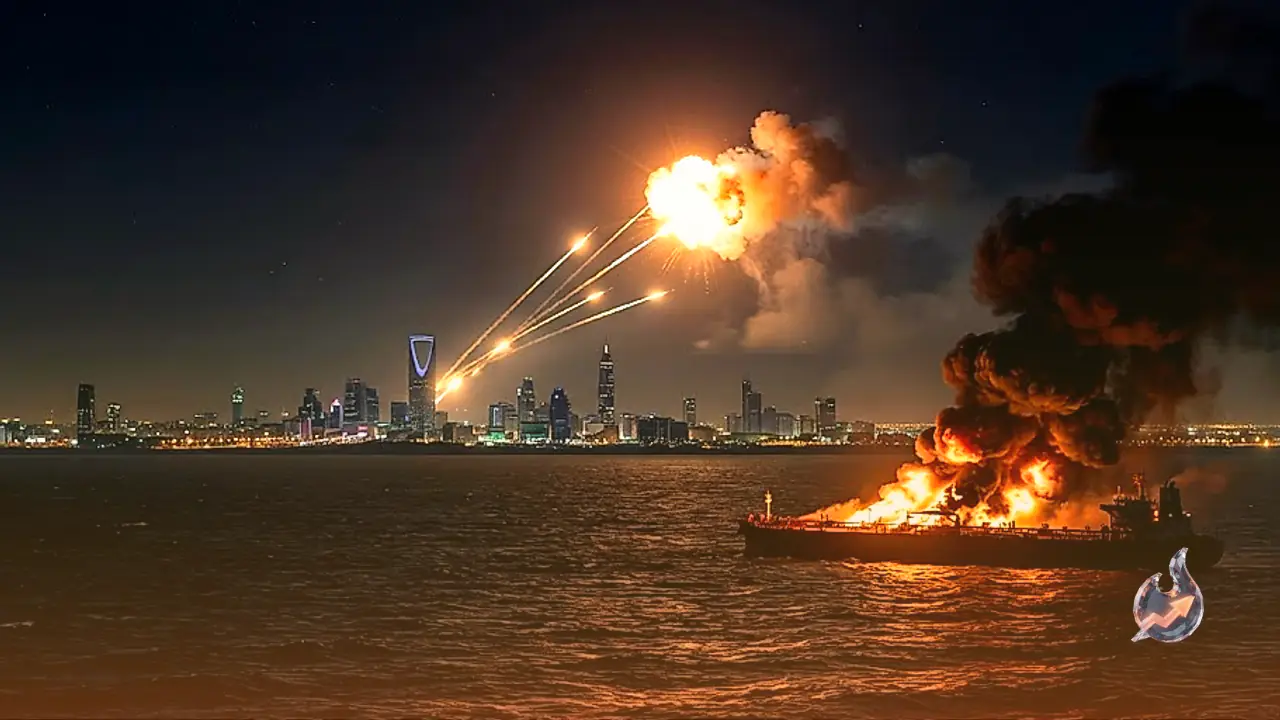


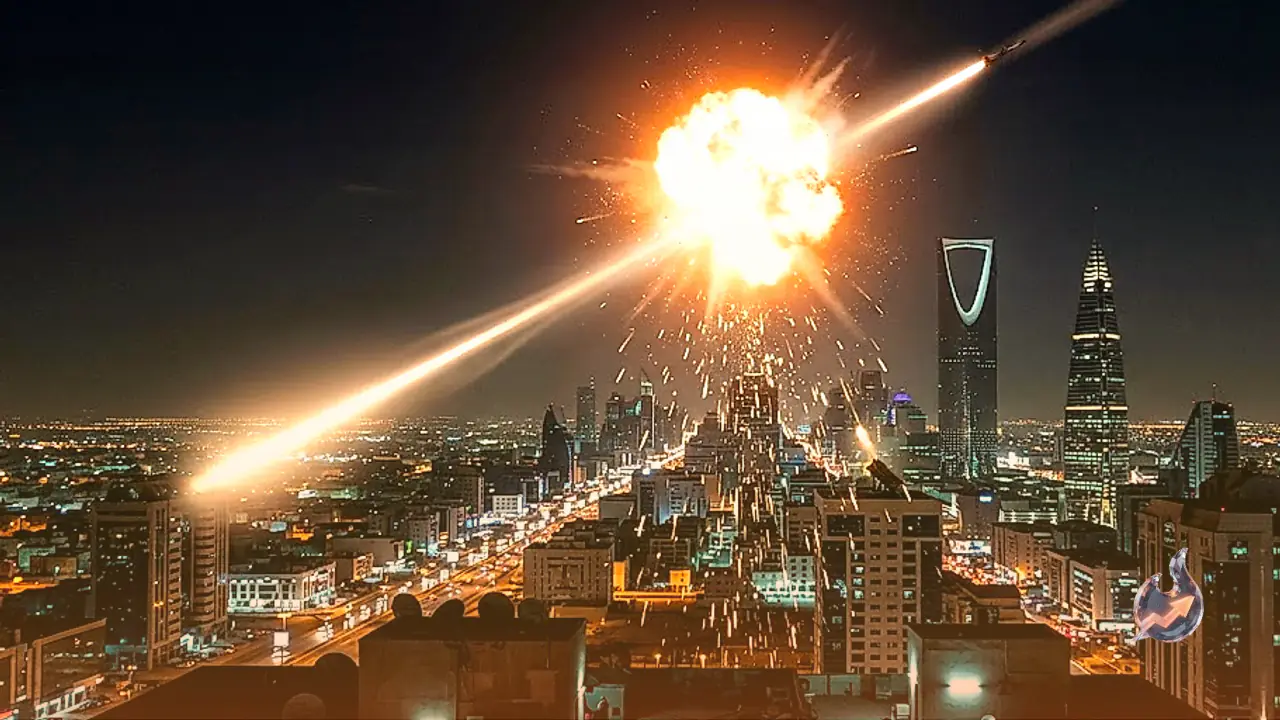




















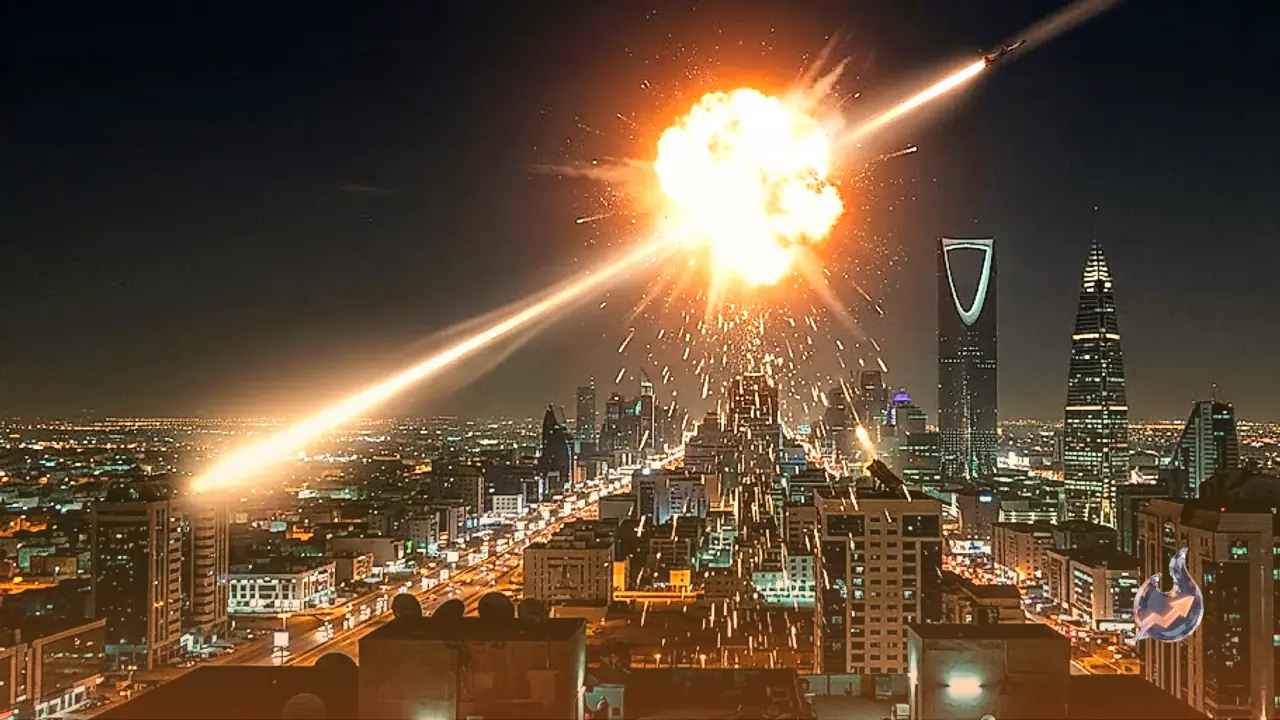

Military conflict across the Middle East reached a dangerous escalation on Tuesday following a series of coordinated missile strikes, naval incidents, and intense ground battles. Saudi Arabia's capital city of Riyadh was shaken by at least four powerful explosions after air defense batteries intercepted two ballistic missiles launched by Iran-backed Houthi rebels from Yemen. Falling missile fragments inflicted damage on infrastructure within the capital. Meanwhile, in the critical maritime passage of the Strait of Hormuz, an oil tanker caught fire after detonating an underwater mine, adding further volatility to global energy corridors.
Riyadh Interceptions and Urban Infrastructure Damage
Residents across Riyadh reported hearing loud explosions on Tuesday shortly after civil defense authorities issued pre-attack warning sirens across the capital and neighboring governorates. According to Saudi civil defense officials, the interception of two incoming ballistic missiles resulted in heavy debris raining down on urban areas. The falling metal fragments damaged a residential building, a construction site, and a parked vehicle in Riyadh. However, initial damage assessments indicated no loss of life or severe injuries among residents. Security alerts were briefly triggered in Riyadh, Abha, Najran, and Khamis Mushait before being safely withdrawn.
Houthi Claims and Regional Defense Readiness
Brigadier General Yahya Saree, the military spokesman for the Houthi movement, issued a statement claiming that their missile forces had targeted the headquarters of the Saudi Ministry of Defense in Riyadh with a direct ballistic strike. Additionally, the Houthis claimed to have launched a separate missile attack directed at the Ras Tanura oil refinery in eastern Saudi Arabia. Saudi government authorities did not issue an immediate response regarding the refinery claim.
Providing details on the broader defense response, Saudi-led coalition spokesman Brigadier General Turki al-Malki stated that air defense units successfully intercepted three additional ballistic missiles targeted toward the Eastern Province. Furthermore, coalition air forces intercepted and destroyed four Houthi attack drones aimed at locations in southern Saudi Arabia before they could reach their intended targets.
Escalating Conflicts in Taiz and Coastal Yemen
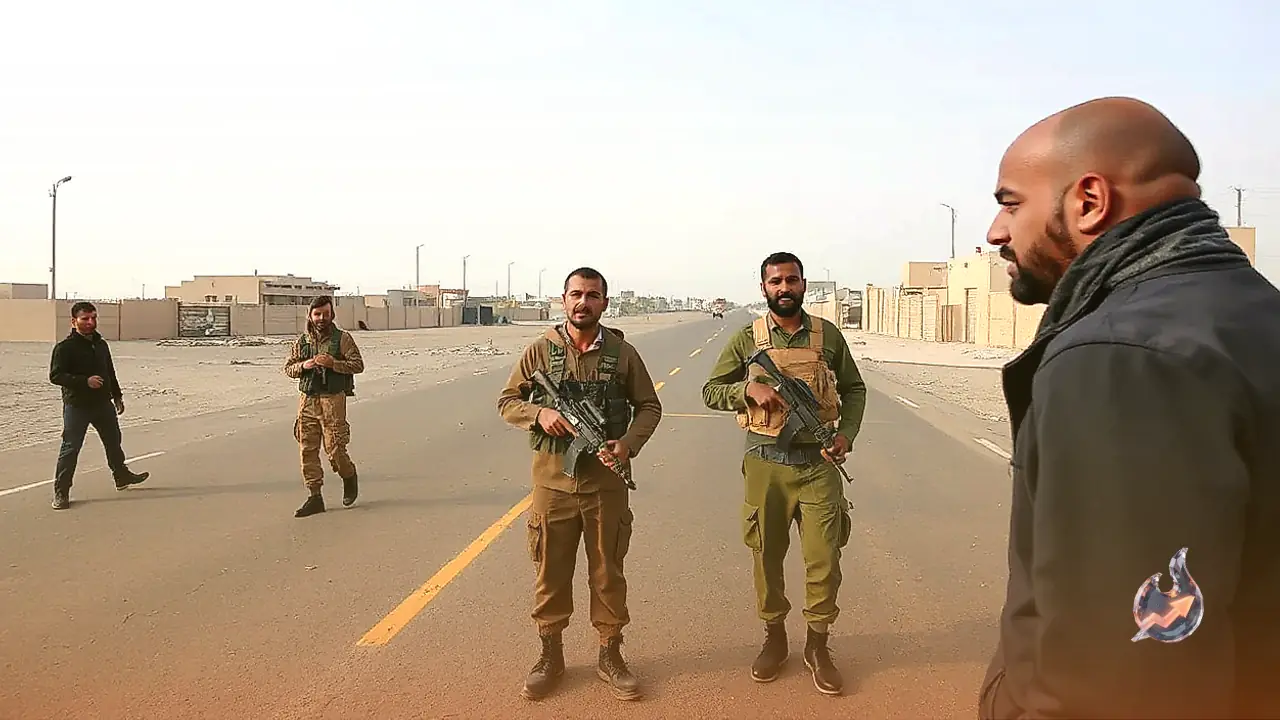
Inside Yemen, heavy fighting continues to inflict casualties. Anis al-Asbahi, speaking for the Houthi-controlled health ministry, accused Saudi-aligned Yemeni government forces of launching a missile strike against a commercial gas station near the city of Taiz late Monday. The attack reportedly killed two people and left several others injured, with local media broadcasting footage of victims receiving emergency medical treatment.
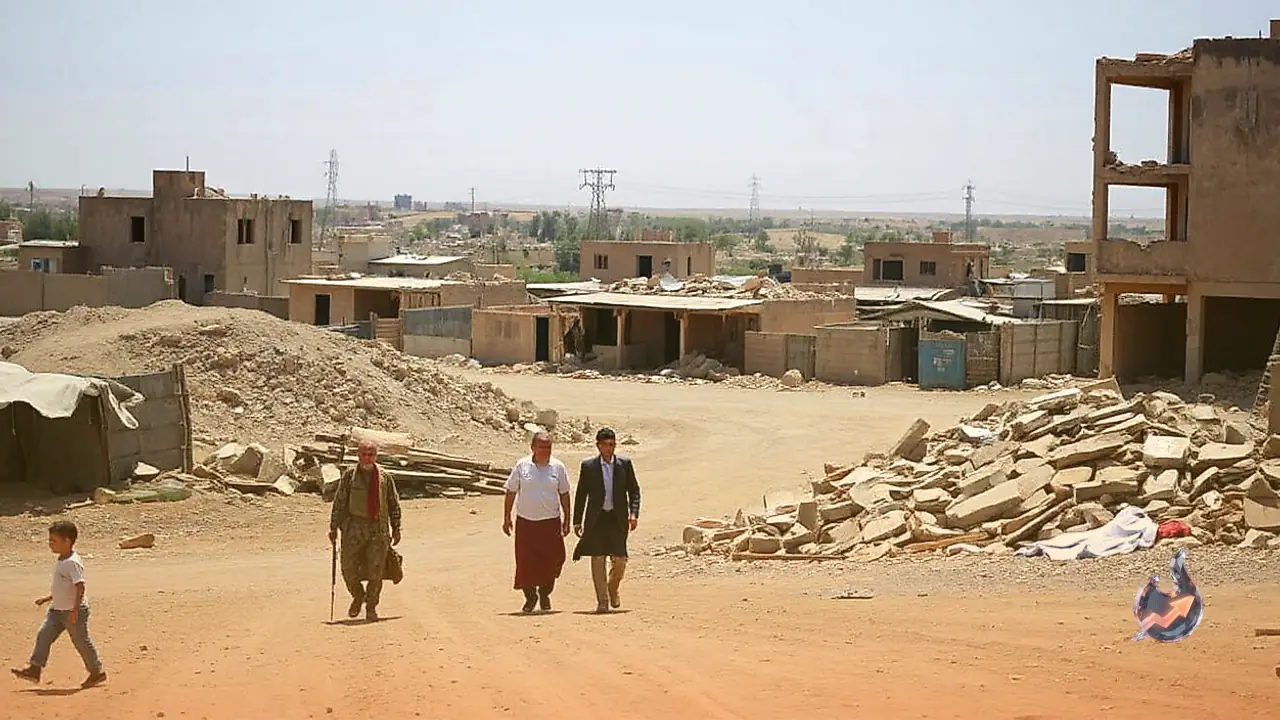
Conversely, the Yemeni military confirmed executing targeted airstrikes against Houthi military positions. Reports indicated heavy aerial bombardment around the strategic port city of Mokha and the Dhubab district near the Bab-el-Mandeb strait. A local witness in Mokha described hearing two massive detonations near the port area early Tuesday morning. Taiz, Yemen's third-largest city and a critical provincial capital, remains under a tight siege by Houthi forces who have blocked major supply routes, triggering intense counter-offensives from government troops.
Strait of Hormuz Tanker Fire and Iranian Warnings
Maritime security in the Persian Gulf faced a fresh crisis after Iranian military authorities confirmed that an oil tanker caught fire east of the Strait of Hormuz after hitting a submerged sea mine. Iranian defense sources claimed the unidentified vessel had deactivated its automatic tracking transponder and entered a restricted maritime zone. While the vessel sustained structural damage, no casualties were reported among the crew.
In the aftermath of the explosion, the Iranian Navy issued an official warning stating that the Strait of Hormuz remains unsafe for unauthorized passage, cautioning that uncoordinated commercial shipping faces severe security risks. Concurrently, speaking at the Gas Exporting Countries Forum summit in Moscow, Iranian President Masoud Pezeshkian blamed foreign military presence in the Persian Gulf for destabilizing global energy markets, asserting that US naval intervention is provoking unpredictable spikes in crude oil prices and hurting international economic growth.
Houthi Warnings to Egypt and Broader Regional Threat
The geopolitical fallout of the conflict is spreading to neighboring nations. Senior Houthi political bureau member Mohammad al-Bukhaiti issued a stern warning to Egypt following the Egyptian parliament's declaration of support for Saudi Arabia. Bukhaiti warned that supporting Saudi military actions in Yemen would be treated as a hostile act that risks entangling Egypt directly into the conflict. As the Arab world's most populous nation, Egypt's potential involvement underscores the rising risk of a wider regional war.