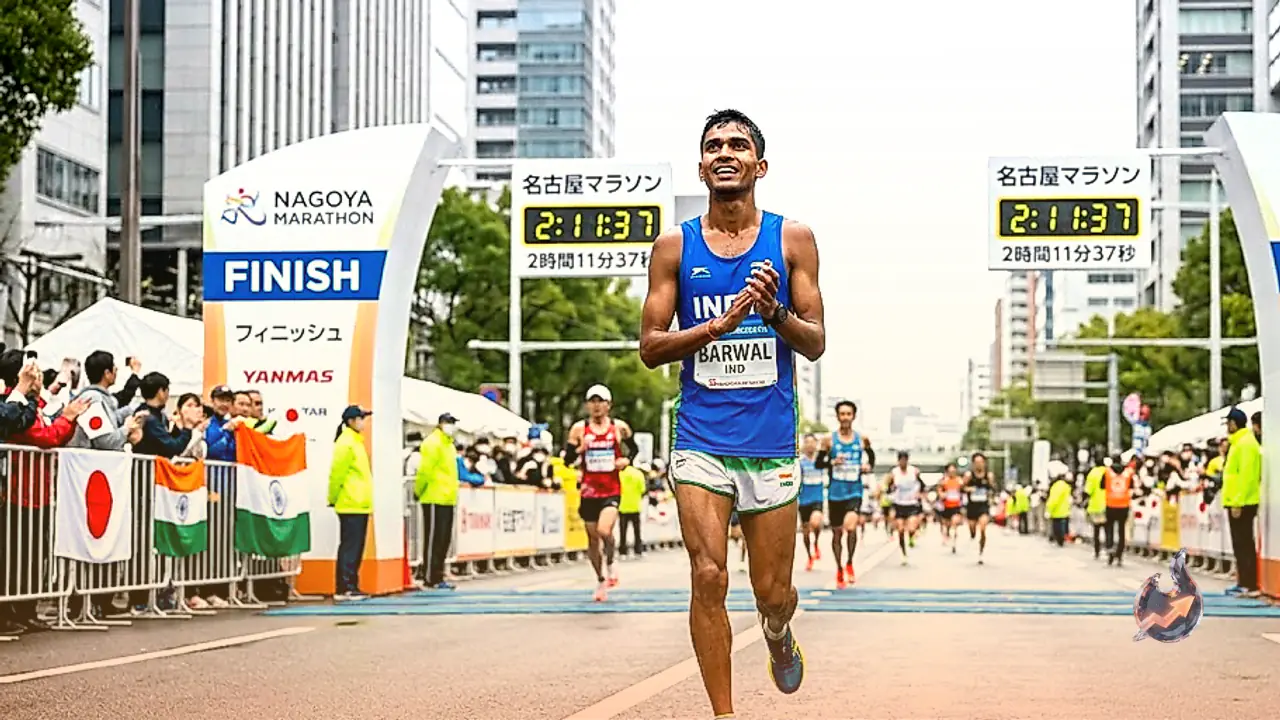

















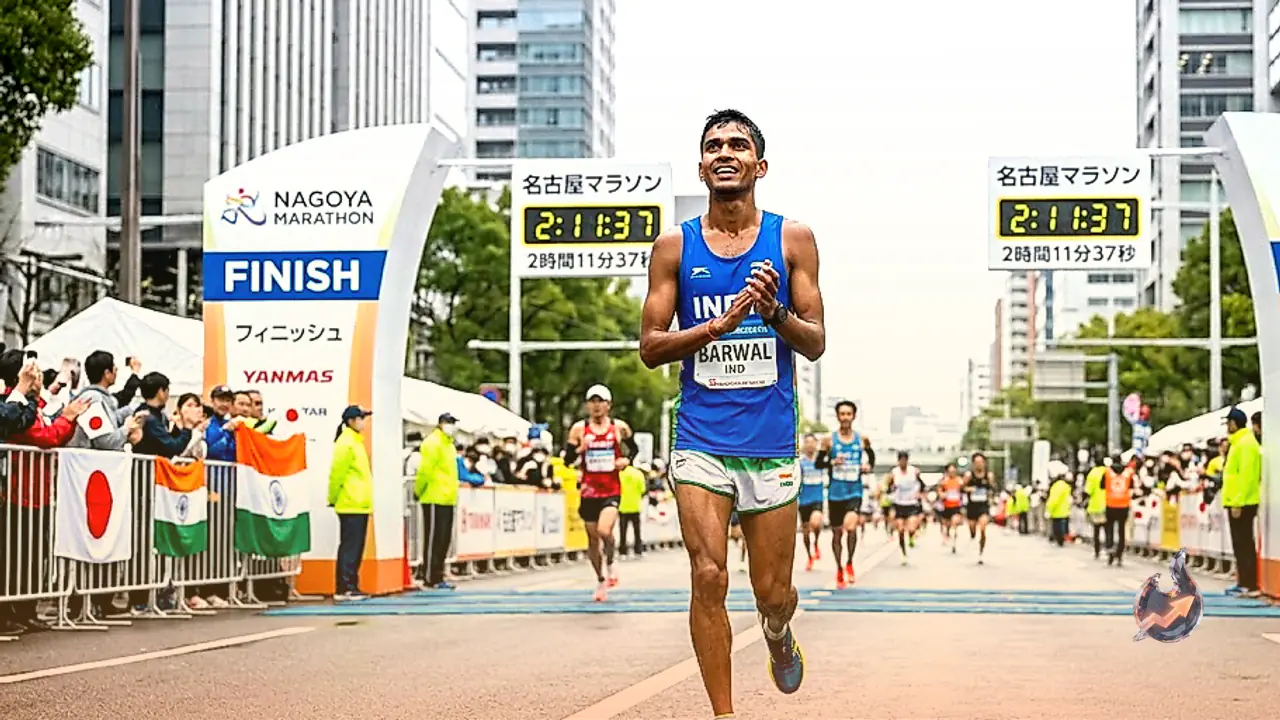

At 3:30 AM in the coastal city of Nagoya, Japan, the weather appeared pleasant on the surface with overcast skies, a gentle breeze, and light drizzle. However, for elite marathon runners, these conditions masked a formidable physical challenge. High humidity levels ranging between 85 and 88 percent, fueled by moisture from the Pacific Ocean, threatened to rapidly drain fluids and essential salts from the athletes' bodies, causing severe fatigue and muscle cramps. Under these brutal conditions, Indian endurance runner Sawan Barwal lined up to tackle the grueling 42.195-kilometer marathon course.
Waking up at 3:30 AM, Sawan had consumed only a single banana before taking his place at the starting line. From early morning until 10:30 AM, that single piece of fruit served as his sole source of physical fuel and energy. By the time he crossed the finish line, his body was so severely dehydrated that he was initially unable to produce a urine sample for mandatory anti-doping tests. He had to continuously drink water for over an hour post-race just to satisfy the test requirements. Demonstrating remarkable grit and endurance, Sawan stopped the clock at 2 hours, 11 minutes, and 37 seconds to secure a historic silver medal in the men's marathon. He shattered his personal best and finished just paces behind Japan's Ichitaka Yamashita, who clinched gold with a time of 2:10:49.
Ending a Decades-Long Foreign Medal Drought
Sawan Barwal's podium finish marks a monumental milestone in Indian athletics history. Previously, all marathon medals won by Indian runners at major multi-sport international competitions had come exclusively on home soil during the 1951 and 1982 Asian Games in New Delhi. India had never won a marathon medal on foreign soil until this performance in Japan. Prior to the race, sports officials had not pegged Sawan as a medal favorite, but his foreign coaching staff held unshakeable belief in his physical potential and tactical discipline.
From Kangra Valley Trails to Military Athletics
Sawan Barwal hails from a small village situated near the Baijnath Shiv Temple in the Kangra Valley of Himachal Pradesh. Growing up in high-altitude mountain terrain, running up steep mountain paths was a natural part of his childhood. Living at high altitudes provided him with an innate physiological advantage: naturally elevated Red Blood Cell (RBC) counts. A higher RBC density enhances oxygen delivery to fatigued muscles, accelerating physical recovery during extreme exertion.
Although Sawan had been running for 15 years, he had no formal exposure to structured athletic training before joining the Indian Army. Following his enlistment, he began competing in 10,000-meter track events and 25-kilometer road races. Recognizing his exceptional endurance, India's foreign long-distance coach Scott Simmons recommended last year that Sawan transition to the full marathon distance. Coach Simmons believed that India possessed vast untapped potential in distance running and identified Sawan's 10,000m engine as the ideal foundation for marathon conversion.
High-Altitude Training in America and Race Tactics
To prepare for international marathon competition, Sawan was sent to train in Colorado Springs, USA, where he worked alongside elite global distance runners. Mastering pace control was vital for his transition to the marathon. In the three months leading up to the race in Nagoya, Sawan maintained a punishing training schedule of 190 kilometers per week, which included three grueling 40-kilometer long runs. Remarkably, the Nagoya event was only the second full marathon of Sawan's entire career, following his debut in Rotterdam, Netherlands, earlier this year in April.
During the race in Nagoya, Sawan executed a flawless tactical plan. His strategy was to stay comfortably tucked within the lead pack from the start. Around the 15-kilometer mark, when the lead group slowed its pace, Sawan smoothly accelerated. A challenging incline at the 30-kilometer mark thoroughly tested the runners' fatigued calves and stamina. Shortly after a sharp turn, the pace surged again, reducing the lead pack to just three or four runners. It was at this crucial moment that Sawan realized a historic medal was within his reach.
Post-Race Reflection and Next Challenges
Reflecting on his historic silver medal, Sawan expressed immense relief, stating that failing to win a medal would have rendered all his intense training and sacrifices meaningless. After covering more than 42 kilometers, Sawan plans to take a full week of rest to recover and catch up on sleep. However, his rest will be short-lived, as preparations for the upcoming Asian Championships will resume shortly. Sawan Barwal's historic silver medal signals a promising new era for Indian long-distance running on the global stage.