

















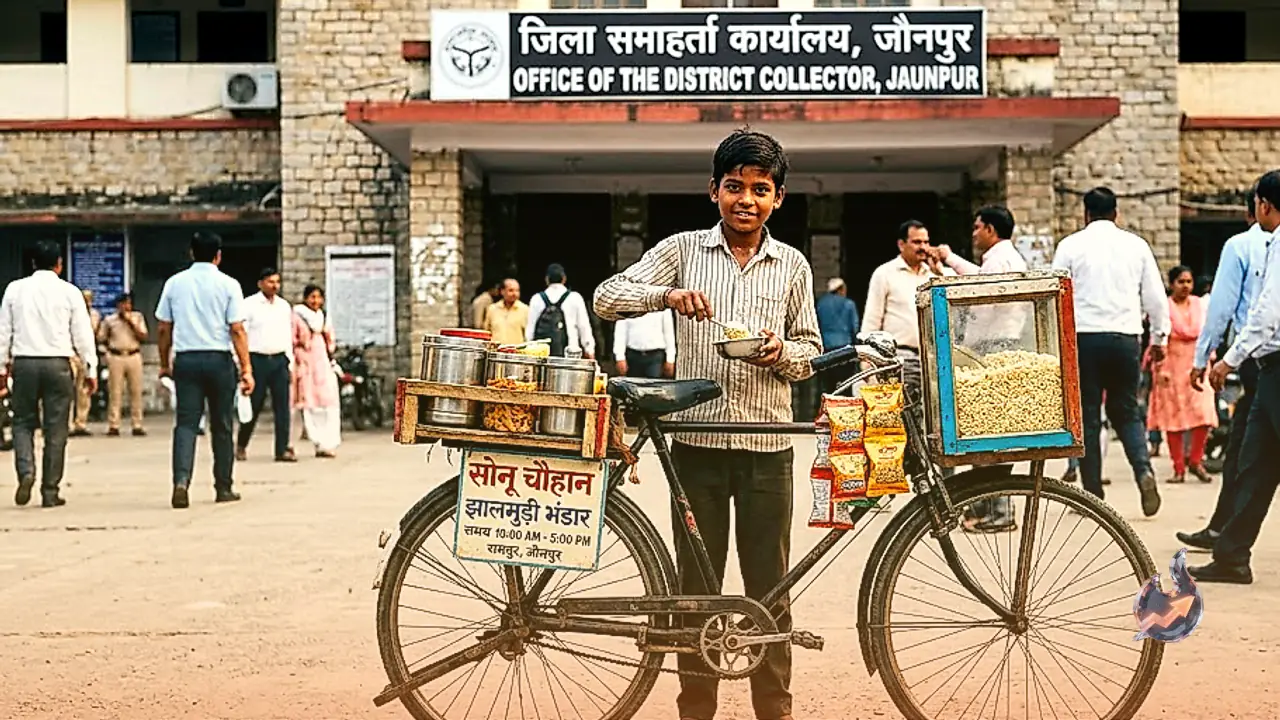
A eleven year old boy selling Jhalmuri on a bicycle inside the Collectorate premises of Jaunpur district in Uttar Pradesh has been drawing the attention of visitors and passersby. At an age when children should be holding schoolbooks and playing with friends, young Sonu Chauhan is working hard in hot and rainy weather to sustain his family and secure a bright future for his two sisters. Having lost both his parents, Sonu has taken on the full weight of family responsibilities far earlier than any child should.
Supporting His Sisters After Tragically Losing Parents
Life took a tragic turn for Sonu Chauhan, a resident of Jamaitha village in Jaunpur, nearly three years ago when both of his parents passed away. Following the demise of their mother and father, survival became an immediate concern for Sonu and his two younger sisters, who are around 8 and 12 years old. Following the tragedy, all three children moved in with their maternal grandfather, Lallu Lal Chauhan, in Jamaitha. However, the economic condition of the grandfather's household is extremely fragile. The family faces severe poverty, frequently struggling to secure two square meals a day.
The Daily Struggle of Selling Snacks on a Broken Bicycle
To cope with the worsening financial crisis at home, Sonu began selling Jhalmuri on a bicycle about a month and a half ago. Every morning, he sets out with his bicycle around the Collectorate premises and neighboring areas. On regular days, his daily sales yield earnings of 100 rupees, 200 rupees, or sometimes up to 250 rupees. However, recent seasonal rains have led to a sharp drop in footfall and customers, severely eroding his daily income. Furthermore, the bicycle and trolley equipment he relies upon to carry his goods have broken down, and Sonu lacks the financial resources needed to pay for repairs.
Sonu's daily life involves intense hardship and personal sacrifice. He often goes without food himself to ensure that his sisters do not sleep on an empty stomach. Recently, Sonu had not eaten a single grain of food from morning until late afternoon. Finding only a small amount of flour left at home, he prepared flatbread in the evening specifically for his sister so she would have something to eat. Balancing school fees and educational expenses for his sisters alongside basic daily subsistence remains a daunting battle for the young boy.
Dream of Making Sisters High Officials Meets Administrative Hurdles
Despite relentless hardship, Sonu remains determined about his primary mission in life: educating his sisters. He envisions his sisters receiving a quality education and eventually becoming high-ranking government officers. Sonu pointed out that while the government runs welfare initiatives such as 'Beti Bachao, Beti Padhao', assistance often fails to reach needy children like them on the ground. He hopes the government will step in to cover his sisters' educational expenses so they can pursue their schooling uninterrupted.
A major roadblock preventing access to official relief schemes is the lack of basic identification documents. Sonu explained that neither he nor his sisters have been able to obtain Aadhaar cards. During the application process, administrative officials require birth certificates. Since the children do not possess birth certificates, the documentation process has stalled completely. Without Aadhaar cards, they are unable to enroll in welfare schemes or receive educational aid. Consequently, Sonu has appealed directly to the District Magistrate of Jaunpur, requesting administrative intervention to issue their birth certificates and Aadhaar cards so they can access government support.
Lost Childhood and Urgent Questions for the Local Administration
Sonu Chauhan's story is more than a narrative of financial distress; it underscores the poignant reality of a childhood cut short by necessity. While other children his age attend classes and play, Sonu navigates the Collectorate corridors selling snacks for survival. Despite the visible fatigue on his face, his resolve to educate his sisters and see them become high officers remains undiminished. His journey poses a pressing question for the local administration and society: whether timely support can replace the snack packets in this young boy's hands with notebooks and pens once again.