























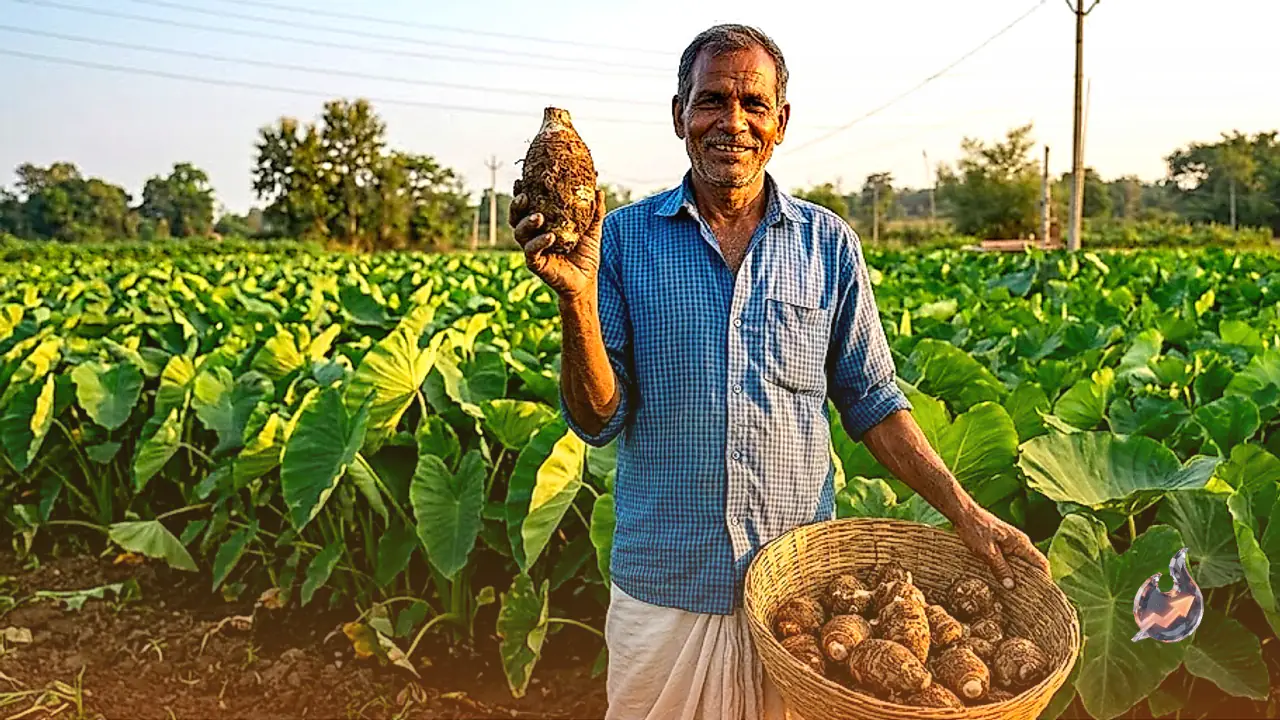

In Jharkhand's Bokaro district, a farmer named Tareshwar Mahto from Peterwar block is turning a modest 70 decimal plot into a source of steady, sizeable income by growing taro, also known as arbi, and has become something of a role model for other farmers in the area. With a fairly small investment, he has managed to earn profits running into lakhs of rupees from this single crop.
A farming family for generations
Tareshwar Mahto is a professional farmer, and agriculture has been his family's main occupation for several generations. Over the past 10 years, he has grown taro across a large area of land, and it is this crop, more than any other, that has delivered him consistent returns season after season.
Sown in February, ready in 5 to 6 months
This year, Tareshwar sowed his taro crop in February. Taro typically takes about 5 to 6 months from sowing to harvest, a longer cycle than many other crops. Even so, it opens up a good earning opportunity because farmers do not have to wait for the tuber alone; the plant's leaves can be sold separately while the crop is still growing. Taro leaves are used to make a popular curry as well as pakoras that people enjoy widely, which means farmers effectively get two income streams from a single planting.
Rs 10,000 cost, Rs 1.25 lakh in earnings
According to Tareshwar, cultivating taro on 70 decimal of land costs him around Rs 10,000 in total. In the market, taro fetches a price of Rs 20 to Rs 25 per kilogram. With careful and consistent upkeep, a plot of this size can yield more than 50 quintals of produce. At current market rates, that translates into earnings of roughly Rs 1,25,000 from the 70 decimal plot alone. Once the Rs 10,000 production cost is subtracted, Tareshwar is left with a net profit of close to Rs 1,15,000. He sells his harvested crop at the Peterwar haat, the local market in his area.
More effort required, but so is the payoff
Growing taro takes considerably longer than most other crops, which means regular irrigation, consistent weed control and ongoing attention through the growing season are essential. Farmers who put in that extra bit of care, Tareshwar says, can expect a correspondingly better return. What sets taro apart is that its earnings comfortably outweigh its low cost, largely because income starts coming in as soon as the leaves are ready to sell, well before the main harvest. Most crops give farmers only one saleable product, but with taro both the leaves and the tuber can be sold, effectively doubling the profit compared with growing something else on the same plot of land.