






















In a bid to break free from the cycle of low-income traditional agriculture, Bharat Mahto, a resident of Bokaro district, made a bold move toward modern vegetable cultivation. Previously, his primary source of livelihood was paddy farming, which yielded very limited profits. Seeking better financial prospects, Mahto turned to modern agricultural techniques. He gathered valuable insights by consulting progressive farmers in his village and exploring video tutorials on YouTube. Today, his transition to vegetable farming has paid off handsomely, offering him substantial financial rewards.
The Economics: Earning Three Times the Investment on 50 Decimals
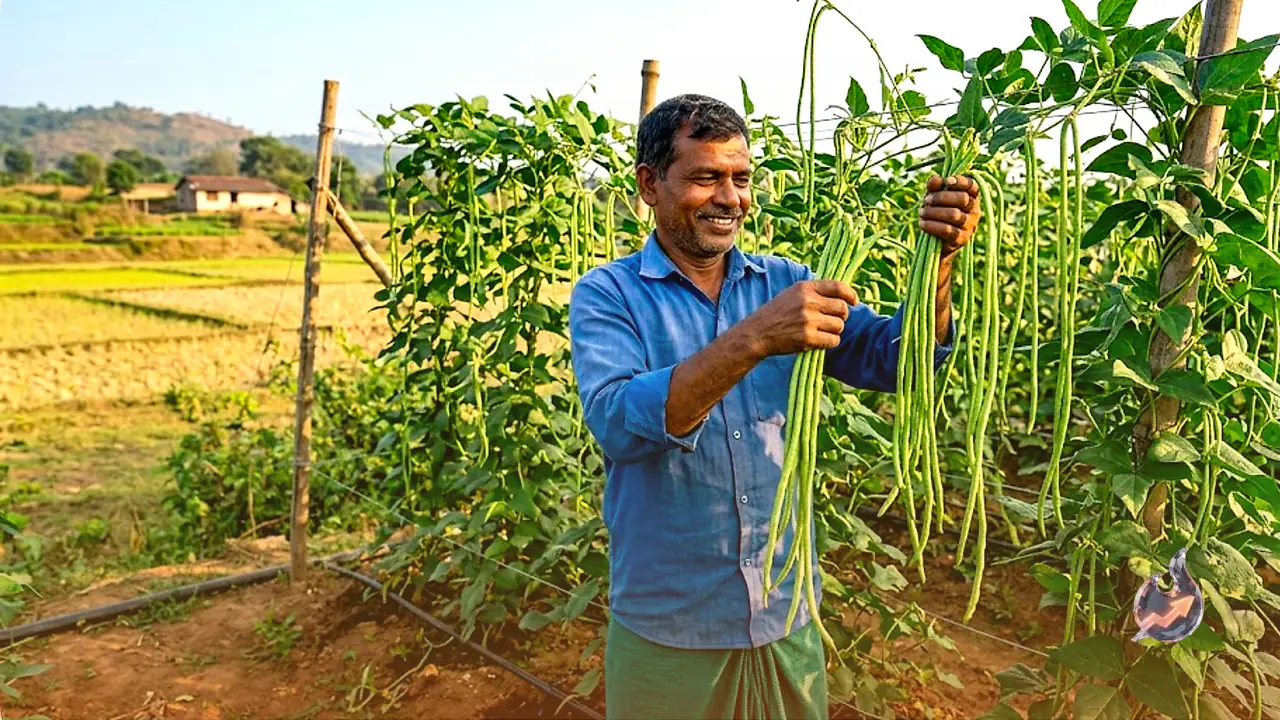
Mahto dedicated a relatively small plot of 50 decimals of land to cultivate yardlong beans. The total cost of cultivation, including inputs and labor, was approximately 30,000 rupees. Thanks to meticulous care and proper crop management, his field produced a high-quality yield of 30 to 35 quintals. In the local Kasmar market, the produce commanded an average price ranging between 35 and 40 rupees per kilogram. By selling 35 quintals of yardlong beans at these rates, Mahto generated a total revenue of 1,22,500 rupees, which represents a highly lucrative threefold return on his initial investment.
Sowing Schedule and Continuous Revenue Generation
Discussing the crop cycle, Mahto shared that he had sown the seeds in the final week of March. The crop matured rapidly, becoming ready for harvest within just 50 to 60 days. One of the primary advantages of cultivating yardlong beans is their extended harvesting period. Once the plants begin producing, the beans can be harvested continuously for several months. This continuous cycle provides farmers with a steady, regular flow of income, helping them manage their daily financial requirements with ease.
Agricultural Hurdles and Pest Management
Despite the high returns, yardlong bean cultivation is not without its share of challenges. Mahto highlighted that pest infestation on the leaves is a common issue that farmers face. Left unchecked, these pests can severely damage the foliage and decimate the entire harvest. To mitigate this threat, Mahto emphasizes the importance of timely intervention using a combination of chemical pesticides and organic solutions to keep the crops healthy and protect the investment.