



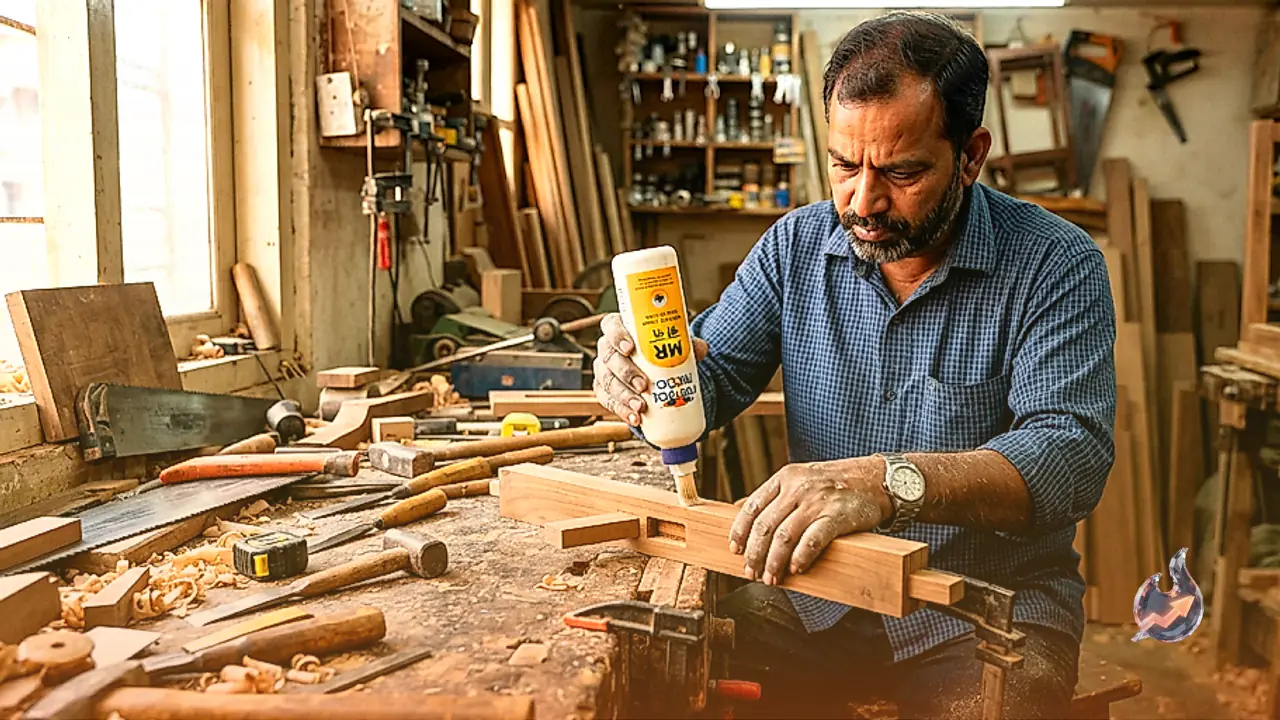














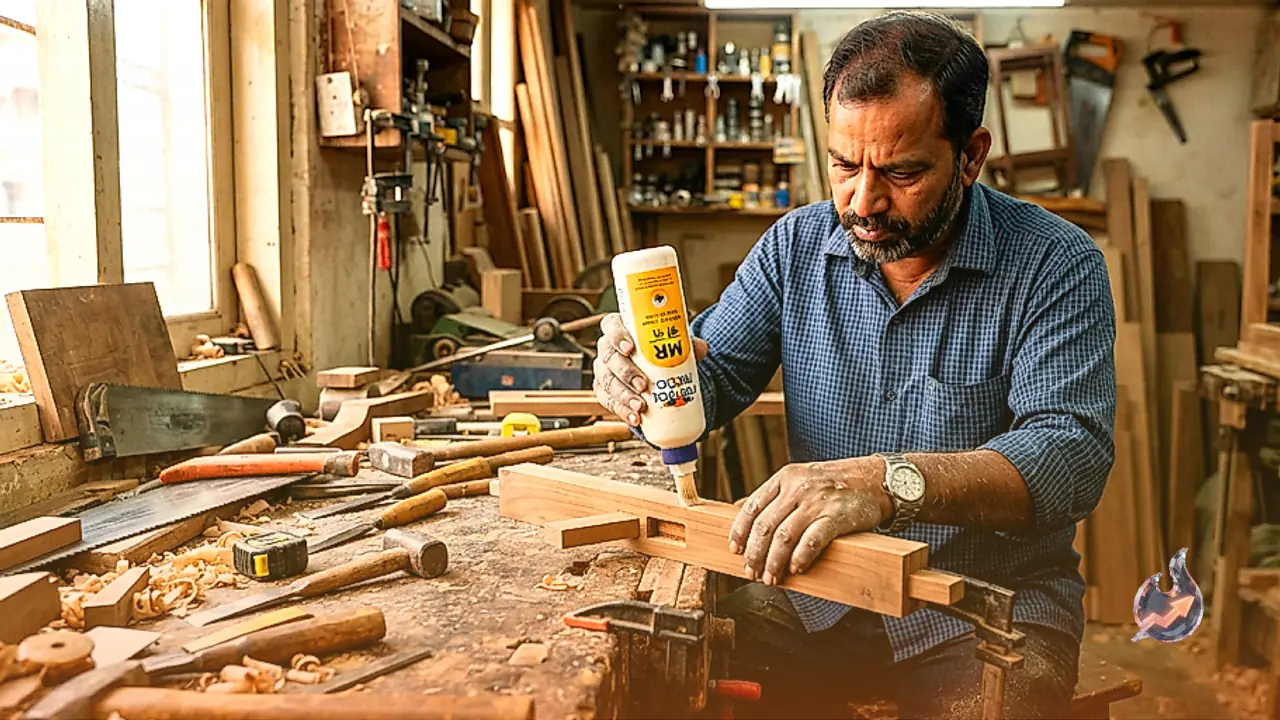

Decades ago, crafting wooden furniture required carpenters to endure a messy and exhausting chore just to bind two boards together. Bonding timber relied heavily on animal-derived adhesives that had to be heated over open fire prior to application, a clumsy procedure that devoured precious working hours and proved difficult to manage safely. Observing this persistent bottleneck, two brothers from Mahuva in Gujarat's Bhavnagar district, Balvant Parekh and Sushil Parekh, spotted an exceptional commercial opportunity. They reasoned that woodworkers desperately needed a synthetic formulation that could be utilized right out of the container without prior warming, and that simple realization sparked the creation of Fevicol.
Shifting Ambitions From Law to Chemical Ventures
Balvant Parekh graduated with a law degree from the Government Law College in Mumbai, yet he harbored little genuine appetite for legal practice and was drawn instinctively toward commercial enterprise. He initially took up employment with Hoechst, a German chemical corporation, gaining practical exposure to the distribution and technical mechanics of chemical and industrial goods. When the foreign enterprise eventually restructured to steer its Indian operations directly, Balvant Parekh chose to strike out on his own. Partnering with his brother Sushil Parekh in 1954, he established Parekh Dyechem Industries at Jacob Circle in Mumbai to pioneer domestic manufacturing.
Pivoting From Textile Printing to White Glue Innovation
In its founding phase, the brothers concentrated on catering to the flourishing textile sector by synthesizing pigment emulsions tailored for fabric printing. Even while supplying mills, they kept a vigilant eye across industrial workshops to discover underserved trade challenges. That attention brought them face-to-face with the daily struggles of furniture makers who were wrestling with foul-smelling, boiling adhesives. The Parekh brothers engineered an easy-to-spread white synthetic formulation that required zero preheating. Rolling out in 1959 under the brand name Fevicol, this single bonding agent was the solitary product manufactured inside their fledgling factory.
Winning Carpenter Trust Through the Eight-Hour Hammer Test
Formulating a superior bonding agent was only half the battle, as convincing veteran woodworkers to abandon familiar animal adhesives proved extraordinarily uphill. Madhukar Parekh disclosed in an interview that sales of the synthetic white glue were dismal in the initial period, requiring the enterprise to persist through roughly a decade of tireless field groundwork. Rather than leaning passively on hardware storefronts or distribution brokers, the Parekh brothers pursued direct engagement with carpenters. They visited workshops personally, distributed free samples, and demonstrated the application hands-on. To eliminate any lingering doubts regarding structural tensile strength, the firm instituted an eight-hour hammer test highlighted in corporate documentation, striking cured joints repeatedly to prove that the surrounding timber would split before the Fevicol bond gave way.
Retail Expansion Through the 30-Gram Household Pack
While conceived originally as an industrial item for woodworkers and professional joiners, the leadership soon realized that ordinary households needed clean bonding agents for minor everyday fixes. In 1970, the company introduced an accessible 30-gram tube, a packaging milestone that carried Fevicol out of dusty carpentry sheds and into family residences, schoolrooms, and corporate desks. Schoolchildren embraced the convenient tube for paper craft projects while domestic users utilized it for simple home repairs, unlocking tens of millions of household buyers.
The Dual-Elephant Emblem and Celebrated Advertisements
Branding creativity played an equally transformative role in establishing Fevicol as a cultural touchstone across India. Around 1970-71, the company engaged advertising firm Ogilvy & Mather to develop a distinct visual signature, resulting in the iconic emblem depicting two opposing elephants pulling against an unbreakable bond to symbolize raw tensile strength. Creative leader Piyush Pandey later revitalized the brand's narrative through humorous storytelling rooted in rustic Indian life, popularizing slogans such as 'Dum Laga Ke Haisha'. The brand achieved international acclaim in 2002 when its legendary overcrowded bus commercial was honored with a Silver Lion trophy at the Cannes Lions festival.
Diversification Across Pidilite's 13093 Crore Manufacturing Network
The runaway success of Fevicol allowed the enterprise to expand rapidly into adjacent bonding and maintenance categories, introducing renowned household labels including Fevikwik, M-Seal, and Dr. Fixit. Reflecting its widened scope, the corporation rebranded as Pidilite Industries Limited in 1990 and went public on the domestic stock exchange in 1993. Over subsequent decades, the company established an unassailable footprint in consumer adhesives, sealants, and construction chemicals. Official company documentation records net sales reaching 13093 crore rupees, backed by 67 manufacturing plants spread across India and a commanding portfolio of more than 25 prominent brands.