















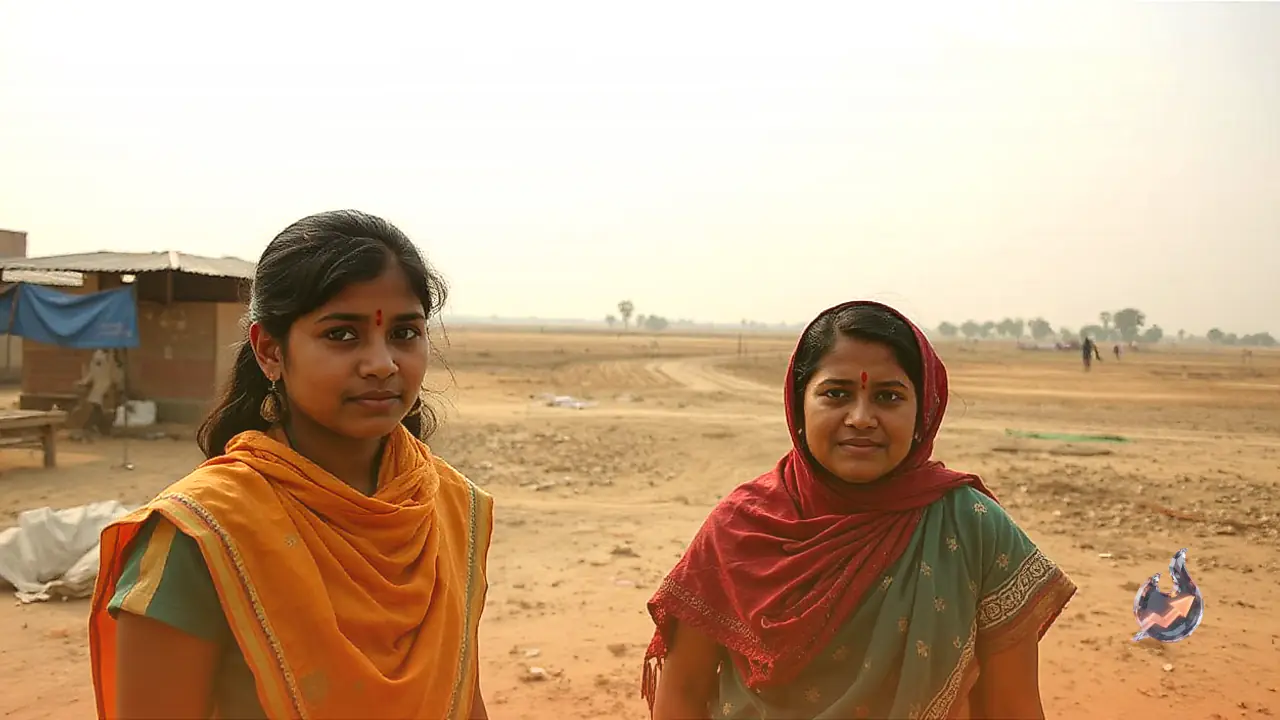

Addressing long-standing challenges surrounding menstrual hygiene, two school students from Bihar's Purnia district have developed an inventive technical prototype. Divya Kumari and Sonam Kumari, students of Aarakshi Middle School, proved that meaningful community interventions do not require massive budgets. Using contemporary technical concepts, the young innovators built an advanced smart kit on an economical budget of just ₹1500. Their invention is designed to simplify menstrual health monitoring, support women during periods, and alleviate environmental hazards caused by discarded menstrual products. The prototype recently received widespread recognition after securing a position among the top 30 models at a national-level competition.
Learning Applied Science and Innovation After School Hours
After finishing their daily classes at school, both girls regularly attend Bihar Bal Bhavan Kilkari. The centre provides complimentary practical learning in crafts, science concepts, and independent project design. While interacting with fellow learners and observing daily life around them, the girls noticed the discomfort, lack of facilities, and persistent social taboos experienced by young women during menstruation. Determined to engineer a practical solution, they set out to build an accessible kit. Under the steady mentorship of project teacher Mohammad Saddam, the pair dedicated three months of rigorous hands-on effort to plan, assemble, and test their prototype.
Smart Monitoring Powered by AI and IoT
The innovation, formally titled the AI and IoT Based Smart Menstrual Health and Hygiene Monitoring Kit, serves as an integrated ecosystem for tracking menstrual well-being and maintaining clean surroundings. A defining feature of their blueprint is a dedicated resting chamber called the Saheli Kaksh. Designed for deployment in schools and workplaces, this safe space enables female students and working women to rest comfortably and manage period symptoms without discomfort or shame. Embedded sensors and connected modules monitor hygiene standards and support health management, offering an affordable technological cushion for young girls.
Solving Waste Disposal Through Controlled Composting
Beyond personal well-being, the project addresses the severe environmental footprint of conventional menstrual waste. Sanitary pads are frequently discarded in regular municipal bins or open drains due to absent disposal infrastructure, leading to acute sanitary risks and enduring soil pollution. Divya and Sonam tackled this dilemma by integrating a systematic disposal mechanism directly into their model. The system outlines an eco-friendly composting pipeline that treats discarded pads safely, mitigating contamination risks and providing an environmentally viable path to process menstrual refuse responsibly.
Normalising Menstruation as a Natural Biological Process
Both Divya and Sonam emphasise that social reticence around periods continues to compromise feminine health. Through their work, the young innovators seek to break persistent stigmas and foster open dialogue. They maintain that menstruation should never be viewed as an ailment, an embarrassment, or a personal limitation, but rather embraced as a healthy and regular bodily function. Their project advocates for accessible hygiene facilities, clean environments, and adequate personal care so that girls can pursue their routines without unnecessary anxiety.
Statewide Win in Begusarai and National Level Distinction
Roshan Rana, manager at Bihar Bal Bhavan Kilkari, highlighted that the prototype first showcased its potential at a regional science exhibition organized in Begusarai. The project outperformed competitors to claim first prize at the event, earning a direct nomination for the national showcase. At the national level, the invention earned a spot among the top 30 innovations in the country. The fact that an indigenous model crafted within a budget of only ₹1500 achieved national acclaim has generated tremendous pride across the institution and the wider community in Purnia.