























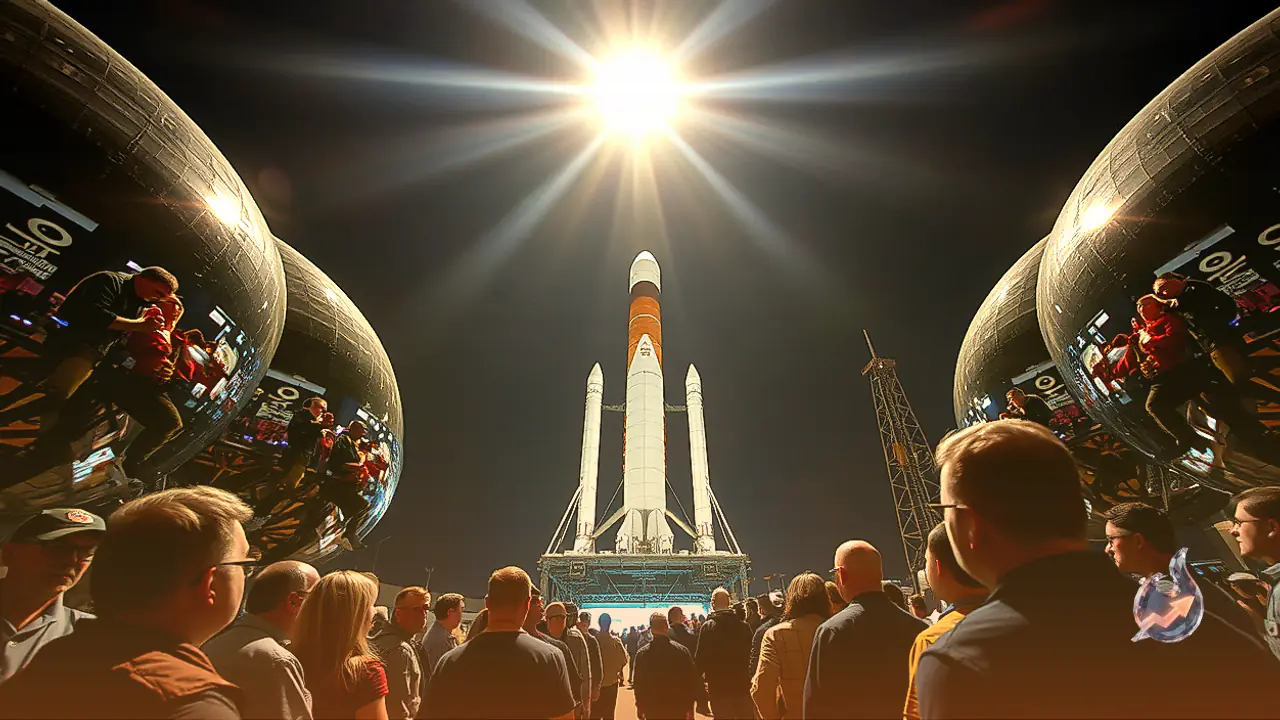

Turning the darkness of night into day by capturing sunlight high above the atmosphere is edging closer to reality through an ambitious international space venture. Reflect Orbital, a space technology startup based in California, is developing an orbital network fitted with large reflective mirrors designed to redirect solar light toward designated ground targets after sunset. To transport these hardware units into orbit, the American firm has entered into a launch services agreement with India's private rocket manufacturer, Skyroot Aerospace.
How the orbital sunlight delivery system operates
The concept relies on placing a constellation of spacecraft in low Earth orbit, each equipped with specialized mirrors engineered to capture and bounce sunlight toward regions experiencing nighttime conditions. Early projections indicate that the technology is aimed at illuminating a target area roughly five kilometers wide at any single moment. Ground controllers will retain real-time command over the light beam, allowing them to dial brightness up or down depending on the operational requirement. Once the intended task is complete, operators can switch the reflection away from the target completely.
Skyroot rockets tapped for satellite deployments
Under the operational schedule established between the two firms, the initial spacecraft will ride aboard Skyroot's Vikram-1 launch vehicle. The subsequent satellite is scheduled to fly on the upgraded Vikram-1U rocket, which is currently in development. Engineers are integrating supplementary boosters into the Vikram-1U design to expand its overall payload capacity for heavier satellite deployment. Highlighting the deal, Skyroot CEO Pawan Chandana called the tie-up a significant step forward in finding novel applications for commercial space technology. Meanwhile, Reflect Orbital head Ben Novak affirmed that his team intends to collaborate transparently with regulators, astronomers, and local communities as operations expand. The American Federal Communications Commission has already granted regulatory approval covering the assembly, orbital deployment, and test operations of the startup's primary satellite.
Echoes of Russia's 1993 Znamya experiment
Attempting to redirect the sun's rays from low orbit is an idea with substantial historical precedent. Back in 1993, Russian researchers carried out the Znamya experiment, deploying a reflective membrane in space to test whether focused sunlight could illuminate dark parts of the globe. While the initial technical trial verified the physics behind the concept, steep financial constraints and economic turmoil in post-Soviet Russia eventually led to the cancellation of further development. Decades later, modern micro-satellite engineering and competitive private launch systems are making the concept viable once again.
Ecological worries and astronomical backlash
The prospect of artificial sunlight at night has drawn immediate criticism from environmental researchers and academic observers. Conservation advocates caution that sudden bursts of nighttime lighting could severely disrupt nocturnal ecosystems, alter animal foraging and mating habits, and scramble human circadian rhythms. Furthermore, astronomers have raised warnings that bright orbital reflectors could produce optical interference across deep-space telescopes, complicating ground-based observations of distant celestial bodies. Several organizations have even petitioned the FCC to reconsider and withdraw its clearance for the mission, underscoring that commercial deployment will face deep scrutiny regarding its environmental footprint.