






















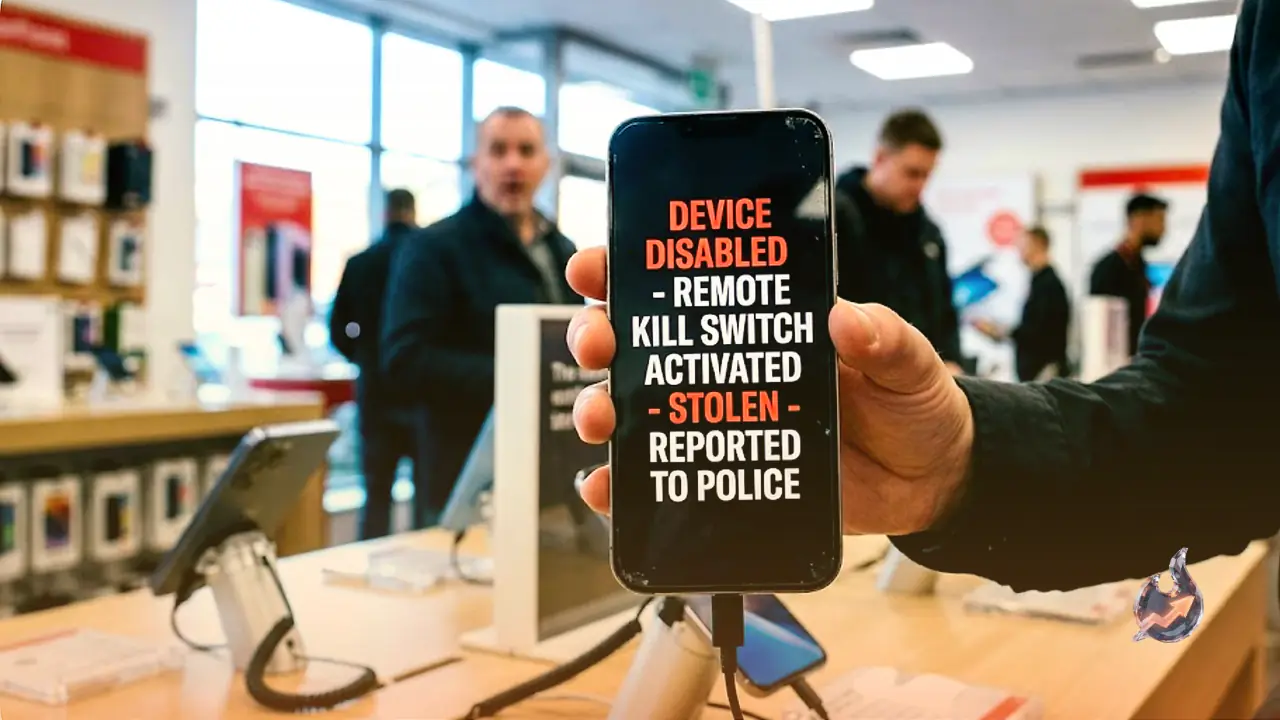

Two of the United Kingdom's largest telecom operators have rolled out a powerful new weapon in the fight against the country's rising phone theft crisis. Virgin Media O2 and VodafoneThree have jointly launched a Kill Switch system that can remotely render any new smartphone stolen from a retail store completely inoperable, stripping it of all value on the black market before it ever reaches an illegal buyer.
How the Kill Switch System Works
The technology is designed to target a very specific category of devices: brand-new handsets that have not yet been sold to any customer. If one of these unsold phones is stolen from a store and someone attempts to power it on for the first time, the system immediately identifies it. The device's data is logged in a dedicated database maintained by the manufacturer, where it is flagged as stolen property. A remote command is then sent to the handset, fully disabling it. Once the Kill Switch is activated, the device becomes virtually impossible to use or resell.
Customers Have Nothing to Fear
A critical safeguard ensures that ordinary consumers are not affected. The Kill Switch has no power over phones that have already been sold. Once a customer legally purchases a device, ownership transfers to them and the network operator has no authority to remotely shut it down. The system operates only on retail inventory that has never passed into a paying customer's hands.
London Alone Saw Over 70,000 Phone Theft Victims Last Year
The numbers behind this initiative explain why action was necessary. Mobile phone theft in the UK has been rising steadily, with London recording more than 70,000 victims in the past year alone. Organized criminal networks have been fueling this trend, stealing handsets in bulk and selling them through illegal channels for profit. By making stolen unsold devices impossible to use, the telecom industry hopes to eliminate the financial incentive that drives these crimes.
Apple Already Runs a Similar System
Police and the telecom sector have long been pushing Apple, Samsung, and other manufacturers to embed a universal anti-theft Kill Switch into every smartphone they sell. Apple already operates a comparable system for devices stolen from its own Apple Stores. However, a broad, industry-wide rollout covering all brands and all devices has so far failed to materialize.
The Netherlands Set the Precedent
The UK is not the first country to go down this path. Before this deployment, several mobile network operators in the Netherlands had already adopted similar technology to protect handsets held in their stores. The experience from those operators appears to have helped make the case for the UK rollout. If the results prove positive, other countries are expected to consider adopting the same approach in the future.
The Effect on the Black Market for Stolen Phones
The underlying logic of the Kill Switch is simple and direct: a stolen phone that cannot be used or activated holds almost no value. Criminals who currently profit by raiding retail stores and offloading handsets through illegal channels would find the whole operation unprofitable. The expectation is that collapsing the resale value of stolen unsold devices will drive down the number of thefts targeting mobile phone stores and make organized smartphone theft a far less attractive criminal enterprise.