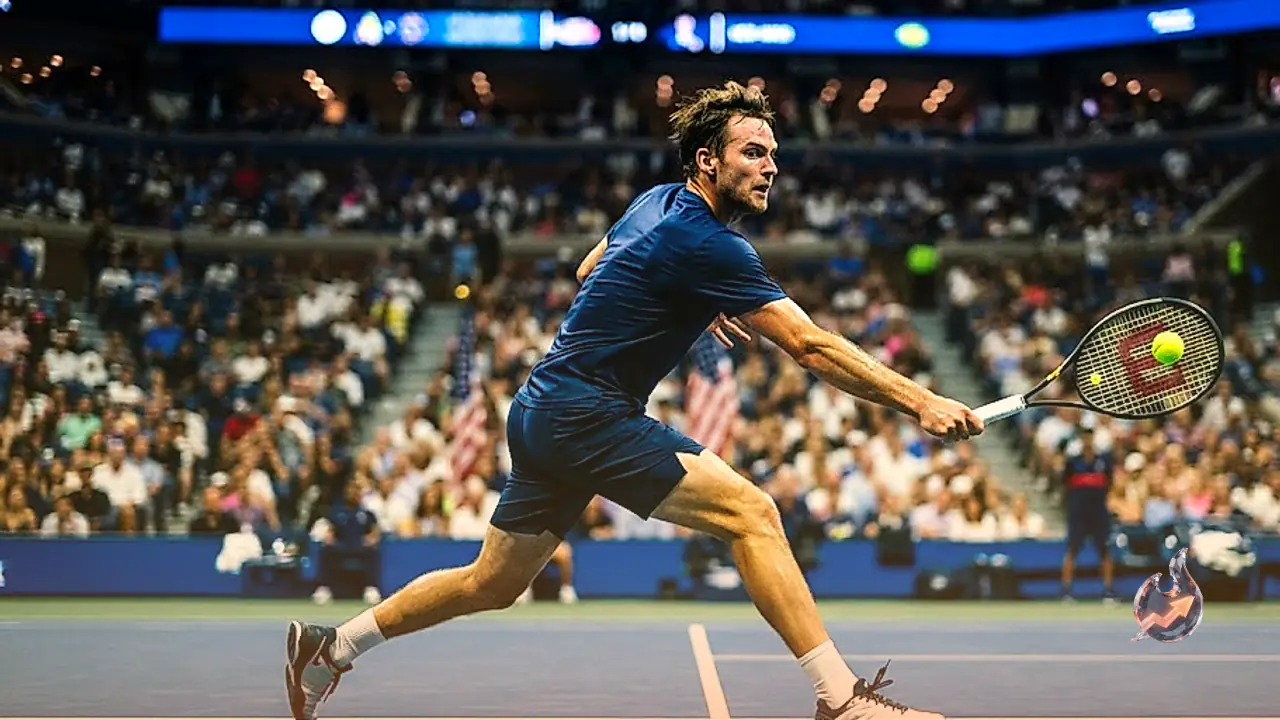






















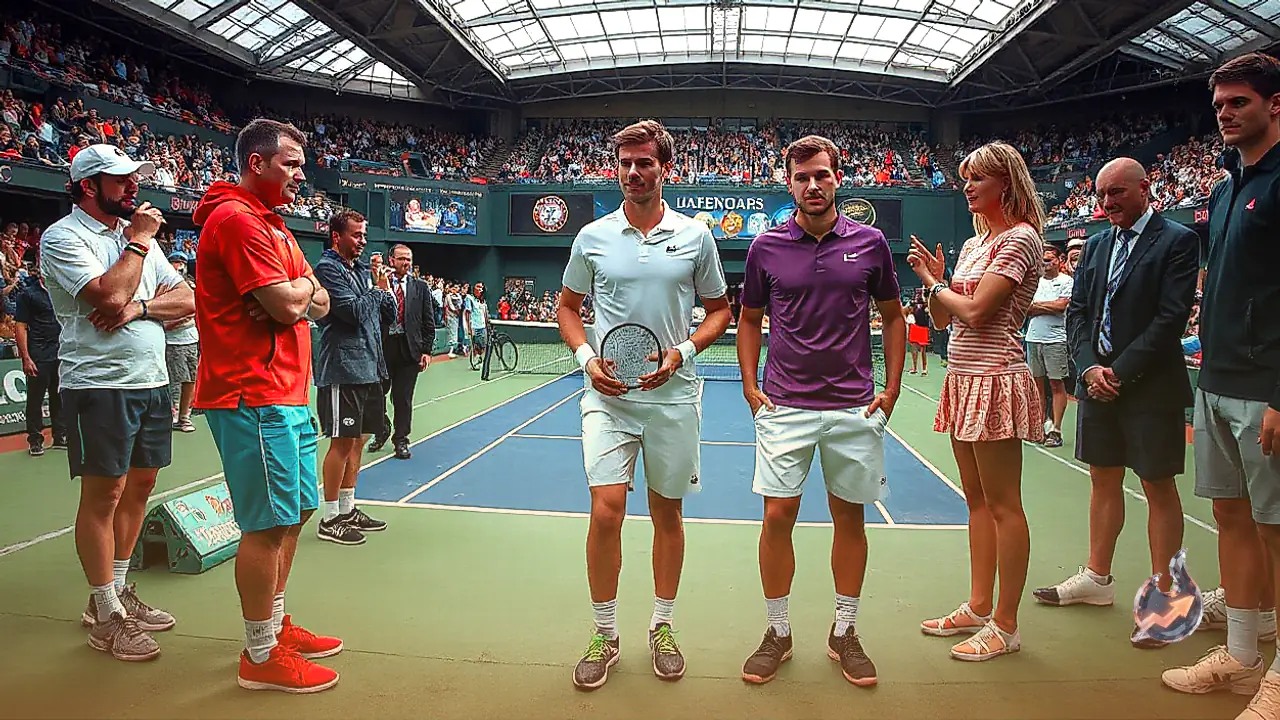

Men's professional tennis has witnessed a historic transition at the pinnacle of the rankings as Alexander Zverev capped off a sensational late-season run to finish 2026 as a two-time Grand Slam champion and the world number one. Having spent 13 long years waiting to secure his breakthrough at a major championship, the German star dismantled his reputation as the best male player never to have lifted a Grand Slam trophy by claiming both the French Open and the US Open crowns within an astonishing three-month stretch.
At 29 years of age, Zverev has etched his name into the record books as the oldest man in more than half a century to ascend to the world number one spot for the very first time. His sudden surge to the sport's greatest summit serves as an extraordinary reward for persistent dedication and relentless physical effort, especially for an athlete diagnosed with type 1 diabetes at just four years old. Over the course of 2026, he advanced to the title decider in three of the four Grand Slam tournaments, demonstrating an unprecedented level of durability and form.
Overcoming Past Heartbreak and Rekindling Aggression
Entering this transformative campaign, Zverev had already compiled an enviable list of accolades that established him as an elite competitor. He was an Olympic gold medallist, a two-time victor at the season-ending ATP Finals, and a former world number two who had contested three previous Grand Slam finals. Yet, the memory of his most agonising defeat continued to linger: the 2020 US Open final against Dominic Thiem. On that afternoon, Zverev had established a commanding two-set lead, only to collapse in a fifth-set tie-break after coughing up two fatal double faults while Thiem was visibly battling physical cramps.
That inability to match the fearless, attacking verve he routinely exhibited across regular ATP Tour stops during high-stakes Grand Slam finals had become an entrenched psychological barrier. Aware that his window to establish a legacy was narrowing, he made a conscious pledge before the season began to alter his approach. He resolved to strike the ball with noticeably higher velocity, assume calculated risks from the back of the court, and inject greater variety into baseline exchanges.
The Mallorca Training Camp with Rafael Nadal
The tactical overhaul that revitalised Zverev's game was ignited during a focused 10-day training stint in Mallorca alongside Rafael and Toni Nadal in July 2025. Seeking fresh insights from a 22-time major winner who understood his tendencies inside out, Zverev turned to the Spanish legend to rethink his tactical identity. Zverev noted that he wanted to observe and listen to what tennis looked like in their minds, and specifically how they perceived his own strengths and flaws on court. As someone who had contested battles against him for a decade, Nadal was uniquely positioned as both an opponent and an analytical observer to provide unparalleled strategic clarity.
The adaptation process was not without its hurdles. Moments of severe tension still resurfaced at critical junctures, such as when he fought through debilitating cramps during June's French Open final against Flavio Cobolli. Similarly, during a four-set battle against Jannik Sinner on Wimbledon's Centre Court, he showcased an aggressive and adventurous mindset despite coming up short.
Family Roots and the Road Ahead
Zverev's rise to the top remains deeply anchored in family bonds. His father, Alex Zverev Senior, has been a constant presence guiding him from the player's box throughout his professional career, while his older brother Mischa, an accomplished former ATP professional, stepped into the coaching setup following his own retirement. That dynamic represents a full-circle evolution for the family: as a small toddler, Zverev would routinely sit along the sidelines observing Mischa trade groundstrokes with a young Andy Murray during junior training sessions.
According to Zverev, the coaching relationship with his father thrives primarily because the two spend virtually no personal time together away from the tennis court. Reflecting on his upbringing, Zverev shared that his parents never pressured him into the sport. Because both parents were former tennis professionals who understood the grind of the circuit, they originally urged him to pursue football or field hockey so they would not be required to coach him. He praised their foresight, remarking that they were exceptionally smart and had navigated the sport's rigours firsthand.
Looking ahead, holding on to his top ranking will demand even greater consistency against elite rivals. Zverev has endured a streak of 10 consecutive losses to Sinner. Should Sinner and Carlos Alcaraz enter the upcoming season in peak physical condition, Zverev's central test will be to transform 2027 into a genuine three-cornered rivalry for the sport's biggest prizes.
Off-Court Allegations and the ATP Safeguarding Shift
Despite his landmark accomplishments inside the lines, Zverev's ascent to the pinnacle of men's tennis arrives alongside persistent discomfort due to serious allegations concerning his personal conduct. In October 2020, former partner Olga Sharypova accused him of physical violence and coercive, controlling behaviour. While that matter did not proceed through formal criminal courts, it prompted the ATP Tour to commission an extensive independent inquiry handled by external investigators. That probe ultimately concluded that there was insufficient evidence to substantiate the published claims of abuse.
The controversy nonetheless spurred systemic changes across the sport. The ATP subsequently appointed a dedicated director of safeguarding and rolled out a comprehensive safeguarding framework this year. The initiative was designed to establish an unambiguous global mechanism for reporting, investigating, and preventing misconduct across professional tennis, spanning harassment, bullying, domestic violence, and related offences.
In another legal challenge, a public trial convened in Berlin in May 2024 concerning allegations brought by another former partner, Brenda Patea. Zverev vigorously denied the allegations and contested the initial penalty order. The judicial process concluded with a court settlement, with the presiding court emphasizing that the resolution did not constitute a formal verdict or a determination of guilt or innocence. A key factor highlighted by the court was that Patea had formally communicated her desire to bring the proceedings to a close.
The settlement was confirmed on the exact day Zverev reached the French Open final. When questioned about settling the case rather than pursuing an outright exoneration through a finished trial, Zverev insisted that having the case dropped represented proof of innocence, claiming that legal authorities do not drop cases if an individual is guilty. He firmly declared the matter resolved, demanding that no further inquiries be made regarding the subject. Patea did not offer any public commentary regarding the agreed resolution.
Acapulco Outburst and Disciplinary Scrutiny
Zverev's career has also encountered disciplinary penalties stemming from conduct on the court. During the 2022 Acapulco tournament, he was expelled for unsportsmanlike behaviour following an explosive outburst over a disputed line call during a deciding doubles match tie-break alongside Marcelo Melo. Enraged by the decision, Zverev directed verbal abuse at chair umpire Alessandro Germani, declaring that the official had ruined the entire contest.
His anger culminated in four violent racket strikes against the umpire's elevated chair, with one swing narrowly missing Germani's foot. Zverev later issued a full apology, expressing deep regret and stating that it was difficult to articulate how remorseful he felt. A suspended ban and fine hung over his career, but the penalty was ultimately averted as he navigated the subsequent 12-month probationary window without incurring further fines for aggressive conduct, disrespect, or physical abuse. Thus, while Zverev stands atop the rankings as tennis's premier competitor, his career remains framed by both athletic resilience and persistent scrutiny.