


















A fresh set of photographs from Haridwar is making the rounds online, and together they capture the temple town from an angle rarely seen, not just its ghats and shrines, but the traffic circles, roads and flyovers that hold the pilgrim city together. From the diyas floating on the Ganga at dusk to the forested hills ringing the city, the images offer a full portrait of a place balancing faith with fast-paced growth.
Diyas on the Ganga at Har Ki Pauri
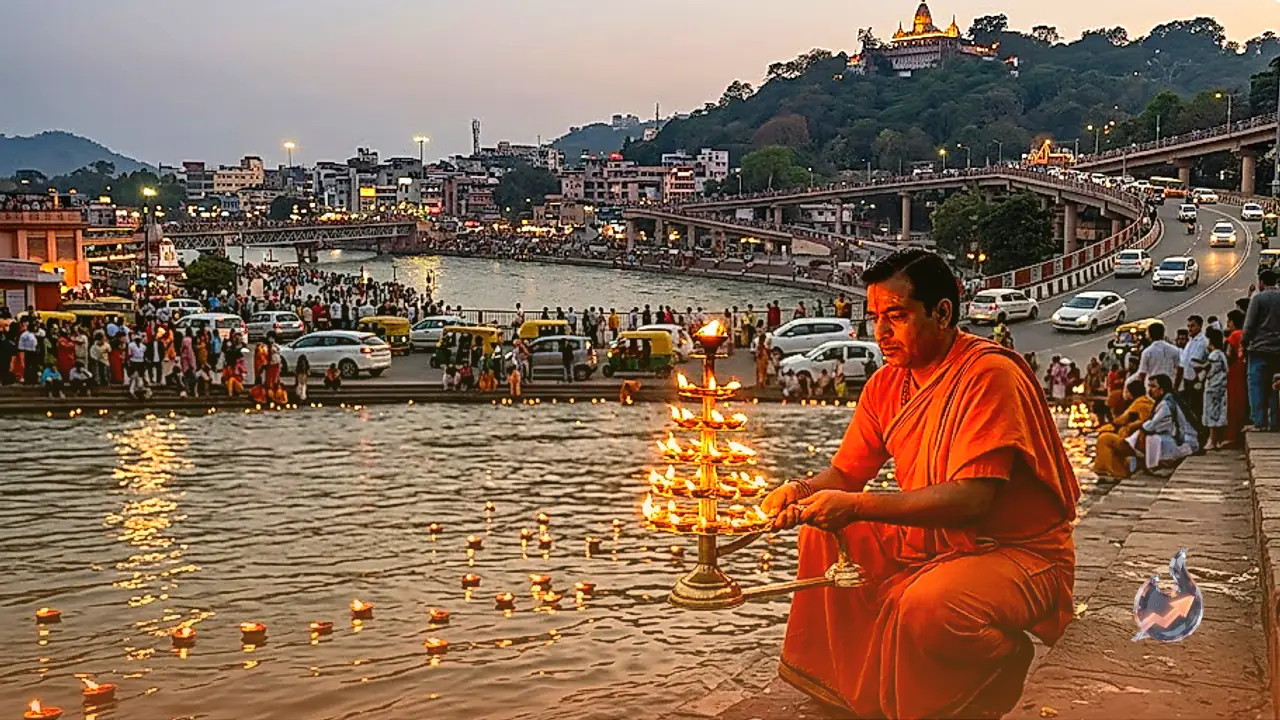
The most striking frame in the set is of Har Ki Pauri, the ghat known the world over, captured during the grand evening Ganga Aarti. As the sun sets each day, thousands of small lamps are set afloat on the river, and their flickering light on the water creates a scene so dazzling that it looks as though every star in the sky has come down to rest on the ghat.
Mansa Devi's court among the clouds
Another photograph turns skyward, framing the peaks of the Shivalik range that seem to touch the heavens. Perched atop Bilva Parvat, one of these hills holds the temple of goddess Mansa Devi, surrounded by dense greenery that lends the whole scene a deep sense of calm. With clouds drifting just above the ridgeline, the shrine appears almost otherworldly, like a divine court suspended in the sky.
Shankaracharya Chowk welcomes visitors
Haridwar's identity, though, isn't built on its shrines and ghats alone; its busy intersections have become landmarks of their own, reflecting the city's modern, well-planned side. The first of these that greets anyone entering Haridwar is Shankaracharya Chowk, close to the Daam Kothi on the Ganga's bank. Nearby, the ghat draws devotees from across the country and abroad who arrive to bathe in the river, a sight the photographs capture in vivid detail.
Chandracharya Chowk, the city's beating heart
Deeper into the city lies Chandracharya Chowk, Haridwar's busiest crossing and its commercial hub, shown in one frame buzzing with its usual energy and pace. The chowk represents the town's business side, staying active around the clock with a steady stream of both residents and visitors passing through. It's this constant movement of people, the images suggest, that keeps Haridwar feeling alive at every hour.
Tulsi Chowk's evening glow
Further along, a picture of Tulsi Chowk draws the eye instantly. The decor around the intersection, along with nearby artwork, speaks to the heritage the city carries with it. Once evening falls, the chowk lights up beautifully, and that glow gives visitors a glimpse of a newer, more polished Haridwar alongside the traditional one they came to see.
Devpura Chowk links the city's growth
The journey through this pilgrim town also passes Devpura Chowk, a junction that links several parts of Haridwar and gives a clear sense of how traffic flows through the city. Government offices, playgrounds and parks sit close by, and together they make a point the photographs drive home: Haridwar is advancing on the path of development even as it stays rooted in spirituality.
Wide roads, tall trees and city planning
The broad, clean roads that run through Haridwar's chowks make their own case for the city's charm. Just a short distance from the Ganga, these roads are lined with tall, leafy trees, and sunlight filtering through their branches turns an ordinary drive into something memorable. Streetlight poles down the median and potted plants along the way add a fragrance and a sense of order that visitors notice as they pass through.
A flyover view over Chandi Chowk
One more photograph, taken from the flyover above Chandi Chowk on the main road, shows vehicles moving briskly beneath a backdrop of greenery. From this vantage point, dense forest cover spreads out on every side, framed by tall hills that add to the highway's appeal.
Taken together, the chowks, the temples, the towering hills, the flowing Ganga and the city's tidy infrastructure make the case for why Haridwar continues to draw visitors from around the world. For anyone looking to step away from a hectic routine, these images serve as a quiet invitation to come and see the town for themselves.