




















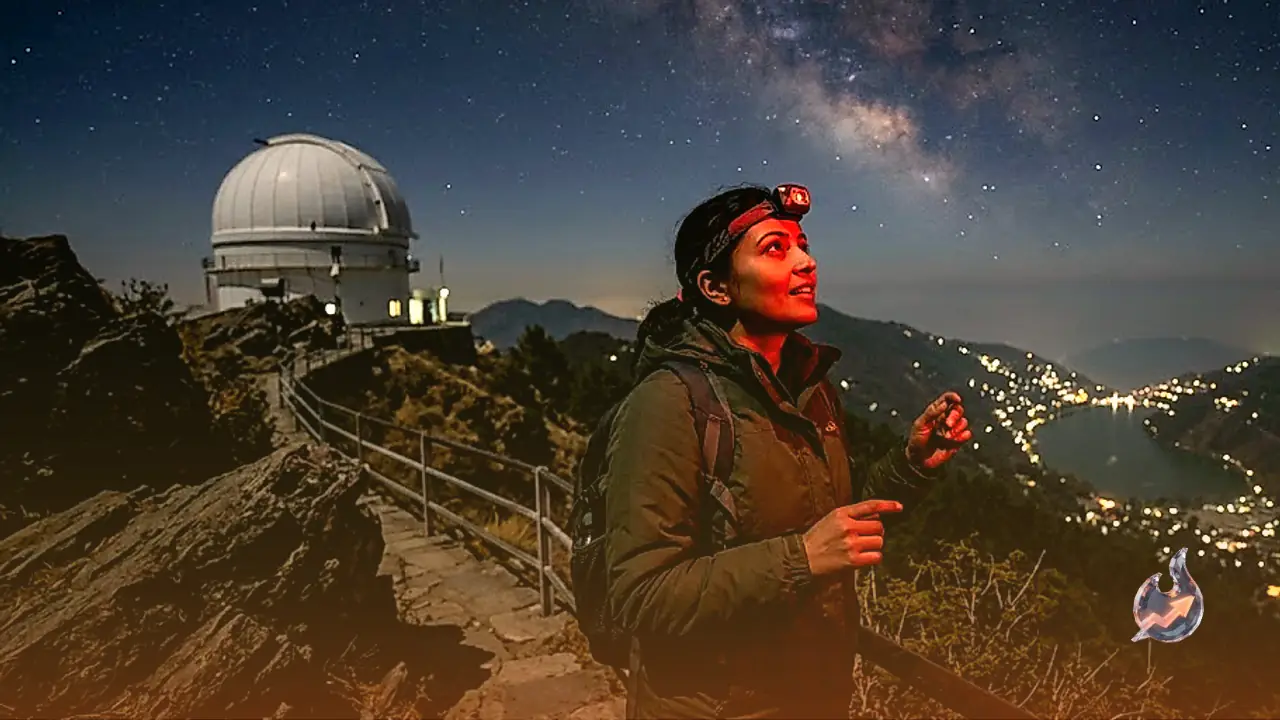

Nainital isn't just about lakes and green hills, once night falls, the sky above it becomes a draw of its own. Away from city lights, the hillside stretches around the town have very little light pollution, which means certain spots offer a clear view of stars, planets and the Milky Way without any heavy equipment. The state tourism department has been promoting the belt as an astro-tourism circuit, one that runs from the Aryabhatta Research Institute of Observational Sciences, or ARIES, all the way up to Naina Peak.
ARIES sits atop Manora Peak
Nainital's Manora Peak is home to the Aryabhatta Research Institute of Observational Sciences (ARIES), counted among the country's leading centres for astronomical and atmospheric research. Scientists there use advanced telescopes and modern equipment to study planets, stars, galaxies and other space-related activity. When the weather is clear, the sky above this stretch turns remarkably transparent, creating near-ideal conditions for astronomical observation. The institute isn't open to regular tourists every day, but during special occasions and public events, visitors can drop by to learn about astronomy and take in the night sky for themselves.
A 3.6-metre telescope at Devasthal
Devasthal, in Nainital district, ranks among India's major centres for astronomical research. It houses ARIES's large 3.6-metre optical telescope. In clear weather, the area is considered ideal for studying stars, planets and distant galaxies, and low light pollution keeps the night sky looking especially crisp. The research facility itself isn't always open to the public, but the surrounding area still offers a strong stargazing experience.
Thousands of stars over Mukteshwar
Sitting at roughly 2,300 metres above sea level, Mukteshwar is known for its natural beauty and calm surroundings. With none of the glare of city lighting, thousands of stars become visible at night without interruption. Winter and the period right after the monsoon are considered the best time for stargazing here. Many visitors bring their own telescopes for a view of the Milky Way, and the spot is also a favourite among photography enthusiasts.
Khushi Ram Top: Himalayan peaks meet a clear night sky
Khushi Ram Top, near Mukteshwar, is popular with both adventure seekers and astronomy enthusiasts. From here, snow-capped Himalayan peaks are visible on one side while a spotless night sky unfolds on the other. Low light levels make it easy to pick out planets, constellations and star clusters. Spending the night here after a trek makes for a memorable experience, and photographers also head to the spot to capture images of the galaxy.
Pangot: a haven for stars after dark
Pangot, about 15 kilometres from Nainital, is best known for birdwatching, but once night falls, it turns into something close to a paradise for astronomy lovers. Tucked among dense forests, the area has almost no light pollution. The Milky Way, shooting stars and several planets are all clearly visible from here. Visitors who camp overnight get to spend the whole night watching the stars under the open sky.
Clear skies over Ramgarh's orchards
Ramgarh is known for its quiet hills and fruit orchards, and at night its sky turns clear enough for thousands of stars to appear at once. Being away from city lights makes it another strong stargazing destination. Several homestays and resorts here let guests spend the night under the open sky, and in clear weather, the Milky Way is visible as well.
An astro village is coming up at Takula
Takula, in Nainital district, is known for its natural beauty and peaceful surroundings. Tourist footfall here is lower, which makes the night sky appear even clearer. Astronomy enthusiasts use telescopes to observe planets and constellations, and winter's clear skies are considered particularly good for watching astronomical events. The tourism department has built an astro village at the spot, where astronomy-related activities are set to begin soon. The views of the sky from here are said to be strikingly beautiful.
A sea of stars from Naina Peak
Naina Peak, the highest point in Nainital, is known for sweeping Himalayan views by day and a star-filled sky by night. After the trek up, the night view here is especially captivating. In clear weather, the Milky Way and several constellations are visible, and the calm setting makes the stargazing experience even more memorable. The combination of adventure and astronomy is what sets Naina Peak apart from other spots.
Campfires and stargazing at Nainital's camping sites
Nainital district also has several camping sites that offer a unique chance to watch the stars under the open sky at night. Such camps are found around Pangot, Ramgarh and Mukteshwar. Campers can enjoy the starry sky while sitting around a bonfire, and in clear weather, the Milky Way and multiple planets are easy to spot. Shared with family or friends, the experience tends to make the trip memorable for a long time.