





















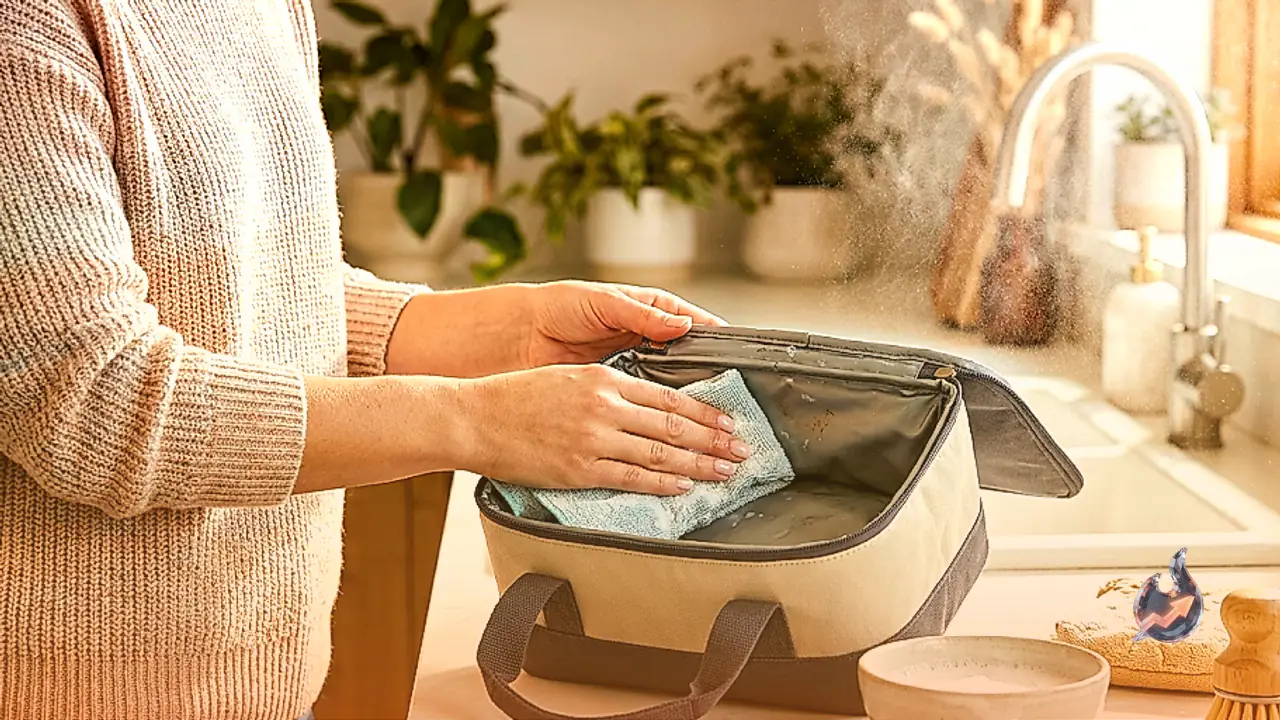

After returning home from school or work, we often empty our tiffin boxes and wash them while leaving the lunch bag behind for the next day. The real trouble becomes apparent the next morning when opening the zipper releases the stale smell of yesterday's meal or curd. Sometimes a few drops leak from the container without leaving a visible mark on the outside, letting the liquid reach the bottom seams. Tiny food particles get stuck in the corners, and grease lingers near the zipper from spoons carrying chutney. Bags designed to keep food warm or cool can also retain moisture near their inner lining and stitching. Therefore, while cleaning, open the bag completely to locate stains and identify where the odor is coming from. Frequently, a used napkin left in the front pocket is the actual culprit. A mild soap, clean cloth, and soft brush work wonders for home cleaning. Always start by checking the care label on the bag to determine whether it can be washed or simply wiped with a damp cloth.
Emptying Pockets and Removing Dry Crumbs
After taking out your tiffin box and water bottle, thoroughly check the smaller pockets as well. Remove any spoons, napkins, or empty food wrappers left inside. Now point the opening of the bag toward a dustbin and shake it gently. This will dislodge breadcrumbs, snack particles, and dry dirt. If the bag has a removable bottom insert, take it out and inspect the space underneath. Next, check the care label. Follow the instructions if machine washing is permitted. For bags that specify wipe-cleaning only, make sure to use a well-wrung cloth.
Softening and Lifting Dried Stains
If lentil or vegetable juices have dried and hardened, trying to scrape them off with a fingernail or knife can damage the inner lining of the bag. Mix a few drops of mild dish soap into a bowl of lukewarm water. Dip a soft cloth, wring it out thoroughly, and press it against the stain for a few moments. Afterward, wipe from the outer edges toward the center of the stain to prevent the grease from spreading. Use a clean section of the cloth if the current part gets dirty. Finally, wipe the area with another cloth dampened in plain water and wrung out to remove any soap residue.
Brushing Seams and Corners Gently
Food particles frequently accumulate at the bottom of the bag where two seams meet. Dip a clean, soft toothbrush slightly into soapy water and shake off the excess moisture. Move the brush gently along the stitching using light strokes. If particles are visible in a corner, sweep them toward an open area and pick them up with a cloth. Where the lining appears worn or frayed, use a soft cloth instead of a brush. If the bag's handle or strap is handled daily, wipe it down as well, since dust often accumulates at the strap joints.
Clearing Stuck Zippers and Teeth
Open the zipper fully and inspect the teeth on both sides. If dried chutney or tiny food particles are stuck, remove them using a cotton swab dampened in mild soapy water and wrung out. Clean the end point of the zipper as well, as small debris often hides within the folds of the fabric there. Follow up with a cotton swab moistened with plain water, then dry the area with a towel. Test the zipper to ensure it opens and closes smoothly. If fabric is caught in the teeth, gently pull the material away rather than jerking the zipper forcefully.
Using Baking Soda to Eliminate Lingering Odors
If the stains are gone and the bag is completely dry but a faint food odor persists, place a small open bowl filled with a little baking soda directly inside the bag. You can leave this overnight. Keeping the powder inside a bowl ensures it will not get trapped in the seams and zipper. Remove the bowl in the morning and leave the bag open for a while. If the smell remains, check beneath the bottom insert, pockets, and corners again, as a small part of the stain or some hidden moisture might still be present.
Air Drying and Daily Habits
After cleaning, wipe down the interior and exterior of the bag with a dry cloth. Open the main zipper as well as all smaller pockets, and place the bag in a well-ventilated area. Position it so that air can reach the bottom. If the inner lining easily pulls outward, draw it out slightly to dry. Cleaning the bag in the evening provides enough time for it to remain open overnight. Check the bottom and seams for moisture before packing your tiffin in the morning. Developing the habit of emptying your lunch bag and leaving the zipper open upon returning home will greatly reduce the effort required to remove stubborn stains next time.