





















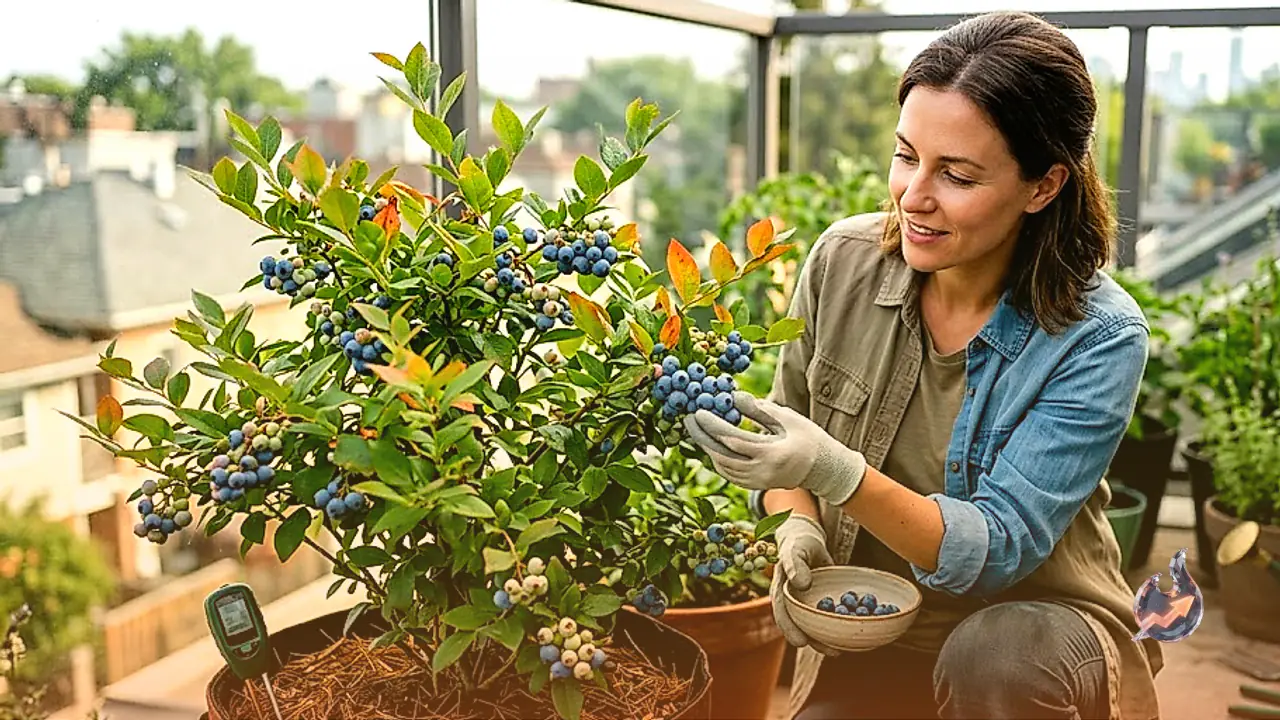

Prized for their compact size, plump juice, and distinct balance of sweetness and tang, blueberries have earned an essential spot in modern diets. Everyday cooks and breakfast enthusiasts regularly fold them into morning oatmeal bowls, blend them into thick smoothies, and bake them directly into muffins and sweet cakes. Sourcing fresh blueberries from retail supermarkets, however, frequently carries a steep grocery bill. For homeowners and apartment dwellers blessed with a sunny balcony, open terrace, or modest backyard corner, growing a domestic blueberry bush offers a rewarding alternative, though the plant demands far more precise care than standard fruit trees.
Thriving blueberry plants depend strictly on highly acidic growing media, steady sunshine, and disciplined irrigation schedules. By matching container-friendly varieties with the local climate and observing essential horticultural practices, gardeners can successfully harvest fresh berries from standard pots. Understanding the comprehensive life cycle from potting soil preparation to final berry collection ensures steady yields year after year.
Selecting Climate-Adapted Varieties and Cross-Pollination
Prior to visiting a nursery, growers must identify cultivars configured to match their region's seasonal temperature patterns. Compact, dwarf bush types represent the finest choice for confined containers and restricted outdoor areas. In several growing zones, rabbit-eye and lowbush blueberry varieties remain common choices, but individual types exhibit widely differing tolerances to local heat and winter chill hours. When discussing options with nursery staff, detailing local summer highs and winter patterns ensures the purchase of a bush suited for pot cultivation.
Securing the right physical container size forms only part of early planning; planting two distinct compatible cultivars close together provides measurable benefits whenever garden space and household budgets allow. Cross-pollination between differing varieties significantly enhances fruit set, leading to noticeably larger berry clusters and improved harvest volumes across multiple popular selections.
Formulating Acidic Soil and Regulating pH Balance
The single most decisive factor governing blueberry health remains the chemical composition of the substrate. Unlike common garden vegetables that prefer neutral grounds, blueberry root systems thrive exclusively in acidic potting blends. The optimal soil pH range sits strictly between 4.5 and 5.5. Standard backyard topsoil and universal potting mixes generally register higher pH numbers, which lock out vital trace nutrients and cause severe growth stunting.
Container planters should select dedicated potting mixes formulated specifically for acid-loving shrubs. Blends featuring significant proportions of peat moss or equivalent organic acidic media create the ideal underground environment. Utilizing an accurate soil pH testing kit remains essential before planting and throughout the growing cycle. Gardeners should strictly avoid adding random amendments, agricultural lime, or generic alkaline fertilizers without previous soil measurements, as sudden chemical shifts can fatally damage sensitive feeder roots.
Pot Architecture and Daily Sunlight Requirements
The structural anatomy of a blueberry bush features shallow, fibrous root networks that spread horizontally rather than plunging straight down. Consequently, containers offering broad surface widths serve the root ball far better than excessively narrow, deep cylinders. Adequate drainage openings at the bottom of the pot are non-negotiable to prevent water retention. As the bush matures across seasons, shifting the root system into progressively larger containers prevents bound roots and maintains steady canopy expansion.
Positioning the pot in an area that captures between 6 and 8 hours of uninterrupted natural sunlight each day promotes optimal flowering and berry development. In regions characterized by blistering midsummer heat waves, however, delicate foliage requires shielding from harsh afternoon solar radiation. Because potting mix inside containers loses moisture rapidly in warm climates, checking substrate hydration levels through peak heat periods remains a critical daily habit.
Moisture Management, Mulching and Controlled Fertilization
Blueberry roots demand consistently damp earth but suffer catastrophically in waterlogged, soggy conditions. Water applications must align with physical soil readings: whenever the topmost layer dries slightly to the touch, apply water evenly until excess runs freely through the drainage holes. Overwatering starves the root zones of oxygen and fosters fatal root rot conditions.
To lock in moisture and stabilize substrate temperatures, spread a protective top layer of organic mulch, such as shredded pine bark, across the soil surface. Pine bark naturally complements the acidic profile of the container while curbing rapid evaporation under hot skies. When supplying nourishment, restrict applications strictly to fertilizers formulated for acid-loving plants, following package dosage recommendations to the letter. Excessive feeding burns root hairs and causes scorched foliage edges, proving far more harmful than moderate nutrient schedules.
Canopy Pruning and Protecting Crops from Birds
Once a blueberry bush reaches healthy vegetative maturity, systematic pruning keeps the plant productive and structurally sound. Routinely inspect the framework to remove dead, dried, broken, or tangled branches using clean shears. Thinning crowded centers improves interior light penetration and airflow, allowing vigorous new fruiting wood to emerge. Young, developing bushes should never undergo severe pruning, as they need maximum leaf coverage to establish root vitality.
As green berries swell and shift color toward deep indigo, wild birds naturally target the bushes for feeding. Covering the entire shrub with a lightweight, secure bird netting safeguards the fruit load without blocking sunlight or ventilation. Install the protective mesh securely with adequate clearance so that birds cannot access the berries or become entangled in the fabric.
Recognizing True Ripeness and Harvesting Techniques
Novice gardeners often pick berries immediately after their skin shifts to blue, only to discover that the fruit tastes sour and astringent. Full exterior blue coloration does not necessarily signal complete internal sugar maturation; berries often require additional hang time on the branch to develop peak sweetness. Only harvest the crop once each individual berry turns completely dark blue right up to the stem attachment. When fully ripe, the fruit detaches cleanly into the hand with the gentlest pull, requiring zero forceful tugging.