


















Born on October 15, 1931, in the coastal town of Rameshwaram in Tamil Nadu, Avul Pakir Jainulabdeen Abdul Kalam proved that poverty cannot limit a person driven by purpose. As a young child, he distributed daily newspapers to assist his family through severe economic distress, yet went on to become one of the most revered figures in Indian modern history. After shaping the country's space exploration and missile programs, he served as the eleventh President of India between July 25, 2002, and 2007. His remarkable journey offers practical principles for students, young professionals, and leaders navigating their own challenges.
Never Allow Circumstances to Halt the Pursuit of Knowledge
Kalam's early childhood was defined by financial hardship. To supplement his household income, he took up the task of delivering newspapers across his neighborhood at a very tender age. Despite the long hours and physical strain, he remained deeply committed to his textbooks and coursework. He completed his graduation in physics before securing admission to the Madras Institute of Technology to specialize in aeronautical engineering. His early years demonstrate that having heavy daily obligations should never serve as an excuse to stop learning. Even when free time is severely limited, maintaining an active drive to acquire new skills and broaden intellectual horizons remains essential.
Transforming Childhood Fascination into Concrete Goals
From an early age, Kalam possessed an intense curiosity regarding how birds soar in the sky. During an elementary school class, his teacher, Sivasubramania Iyer, took the students outdoors to illustrate the aerodynamics of flight using real birds as practical examples. That vivid outdoor demonstration ignited a passion that stayed with Kalam for decades, ultimately directing him toward formal studies in aeronautical engineering. A dream remains merely a wish unless supported by deliberate planning, the right educational choices, persistent hard work, and a commitment to mastering new concepts every single day.
Refusing to Let an Early Defeat Define Personal Worth
Kalam's career path was not without crushing disappointment. His deepest personal ambition as a young graduate was to become a fighter pilot in the Indian Air Force, but he narrowly missed the selection cutoff. Rather than viewing the rejection as the termination of his ambitions, he immediately channeled his energy into scientific research and defense engineering. Experiencing failure in an entrance test, interview, or competitive opportunity does not mean an individual lacks inherent ability. In many circumstances, an enforced change in direction is precisely what aligns a person with their true calling.
Confronting Failures Directly to Uncover Critical Lessons
When the Indian Space Research Organisation attempted the maiden launch of the Satellite Launch Vehicle SLV-3 in 1979 under Kalam's direct leadership as project director, the rocket failed to achieve its designated trajectory and crashed. Satish Dhawan, who was serving as the head of the organization at the time, publicly assumed personal accountability for the mission's failure, shielding the engineering team from blame. The team thoroughly diagnosed the malfunction, rectified the flaws, and subsequently placed the Rohini satellite into orbit on July 18, 1980. Kalam frequently cited this episode as a defining lesson in managerial resilience. When things go wrong, stepping forward to analyze the technical missteps rather than deflecting fault is what lays the groundwork for subsequent breakthroughs.
Sharing the Spotlight and Supporting Team Members
The leadership dynamic observed during the SLV-3 trials left an indelible mark on Kalam's own administrative philosophy. While Satish Dhawan stood alone before the press following the 1979 launch failure, he deliberately asked Kalam and the project engineers to address the reporters and receive public acclaim following the triumphant launch of the Rohini satellite in 1980. This balance exemplified true mentorship. An effective leader does not merely point the way forward during calm periods; they absorb institutional pressure during crises while ensuring that contributing colleagues receive full credit whenever milestones are reached.
Letting Tangible Output Speak Louder than Rhetoric
Following his foundational tenure developing satellite launchers at the Indian space agency, Kalam transitioned to the Defence Research and Development Organisation to spearhead the indigenous missile development program. His strategic direction over the development of strategic missile systems such as Agni and Prithvi granted India independent deterrent capabilities and earned him widespread renown as the 'Missile Man of India'. Professional stature is built on concrete accomplishments rather than empty promises. Consistently executing demanding assignments with accountability remains the most durable method for establishing lasting credibility.
Retaining Grounded Simplicity Regardless of Rank
Kalam assumed office as India's eleventh President on July 25, 2002, serving the nation until 2007. Despite transitioning from a dedicated research scientist to the ceremonial head of state residing in the presidential estate, he maintained his trademark humility, unpretentious lifestyle, and spontaneous connection with youth and ordinary visitors. He never permitted the grandeur of high office to sever his connection with everyday citizens. Achieving social influence or high organizational rank should never alter a person's core demeanor; treating individuals across all walks of life with dignity remains the true indicator of personal stature.
Directing Professional Success Toward Societal Progress
For Kalam, technical expertise was never intended to remain locked inside research centers or restricted to academic papers. He maintained that technological capability must directly serve national development and uplift citizens. Through the formulation of Technology Vision 2020, he helped articulate a long-range blueprint designed to accelerate economic infrastructure and technological self-reliance across the country. Specialized education and professional expertise should not serve personal enrichment alone; using technical insight to solve public problems creates lasting national progress.
Sustaining an Unbroken Rhythm of Learning and Teaching
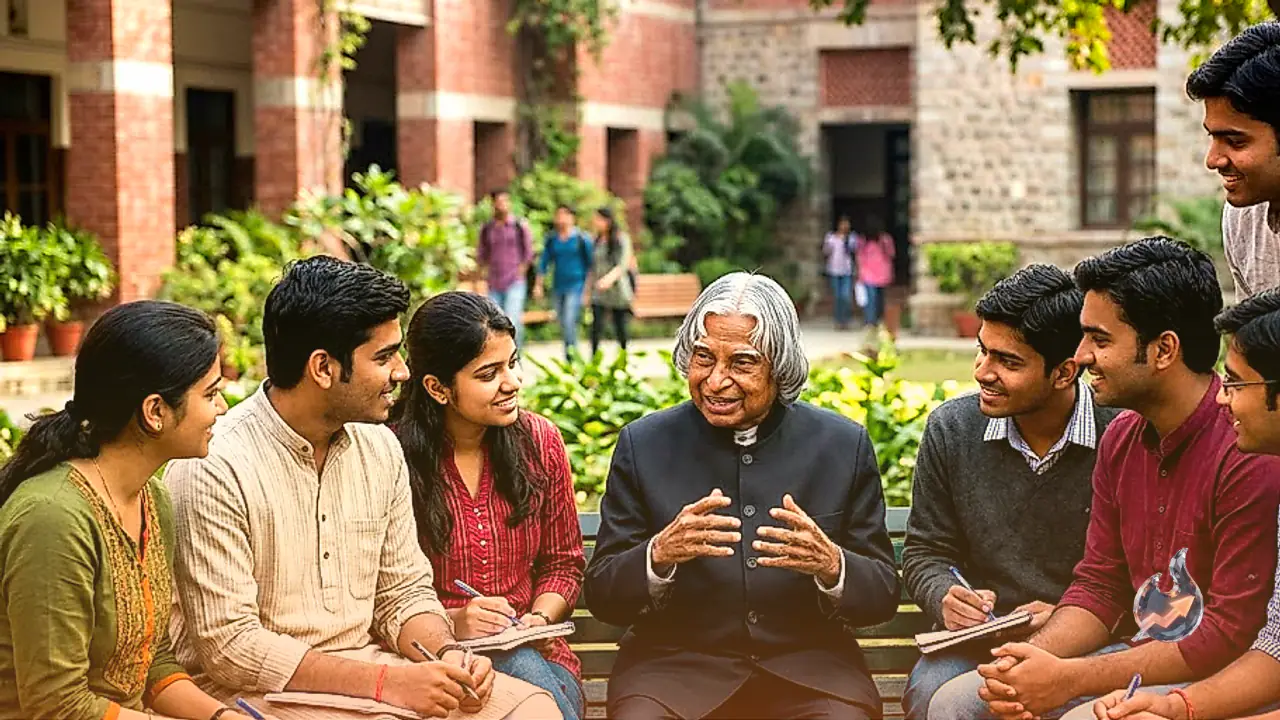
Even after his presidential tenure concluded in 2007, Kalam rejected retirement. He immediately joined Anna University as a professor, dedicating his remaining years to traveling across urban and rural educational institutions to interact directly with school and college students. His overriding objective was to ignite young minds to pursue expansive goals and contribute to collective nation-building. Knowledge gains its greatest value when passed down to future generations. Regardless of age or the milestones behind a person, the enthusiasm to learn something fresh and teach others should continue indefinitely.