

















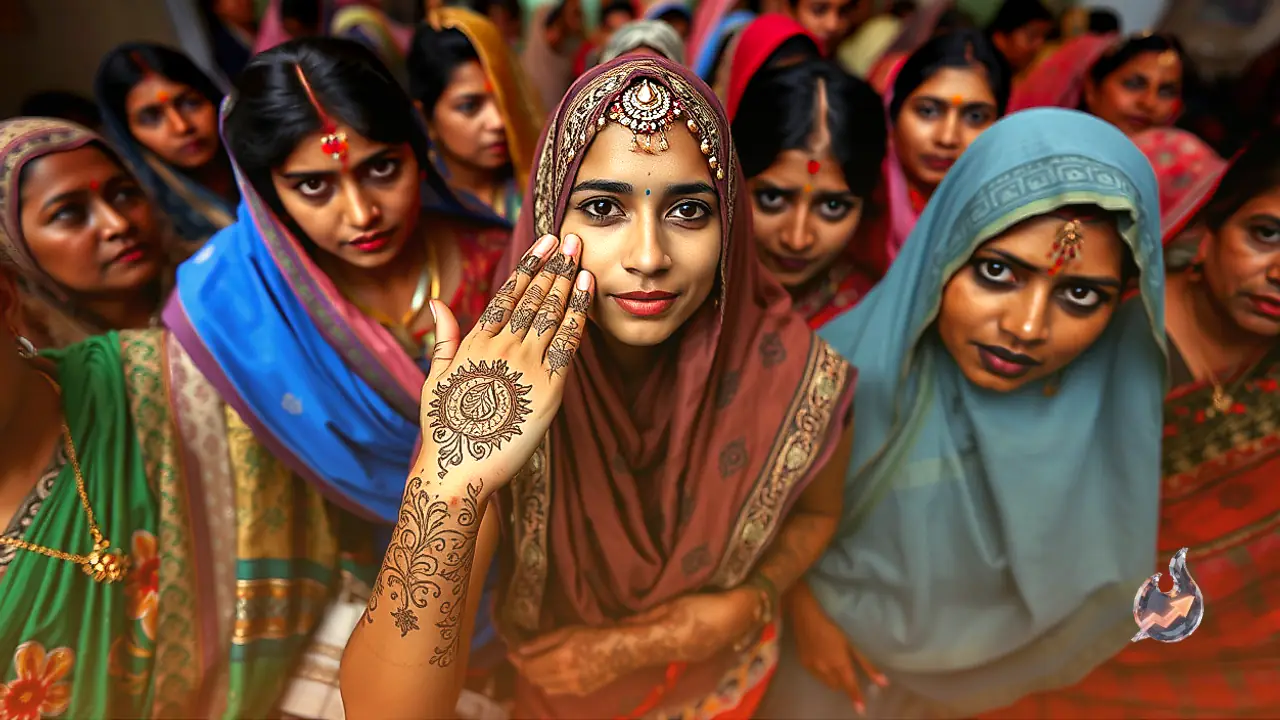

Henna applied on the hands holds immense cultural significance during Karwa Chauth, yet not everyone prefers palm-filling, overly dense patterns. Many women today lean toward arrangements that look tasteful, lightweight, and modern. The defining strength of minimal mehndi is that unadorned skin is deliberately treated as an essential component of the overall composition. By leaving adequate breathing space across the hand, the primary motif stands out with absolute clarity, ensuring the hands look neatly decorated rather than crowded. Selecting the right pattern suited to personal preference and hand structure can effortlessly enhance your entire festive appearance.
Traditional Karwa Motif Framed by a Floral Border
For those wishing to incorporate the central ritual element of the festival into their henna, choosing a traditional pot motif is an ideal direction. This approach involves drawing a neat, compact karwa right at the center of the palm. To create visual harmony, a light and delicate border woven with tiny flowers and soft leaves can be outlined around it. Accenting the pot with tiny dots or subtle line patterns adds an extra touch of grace. It is essential not to overcrowd the surrounding skin; keeping the surrounding area empty allows the central pot motif to remain sharp and prominent, making it a wonderful match for anyone who enjoys theme-based festive styling.
Minimal Bride Sketch Highlighting Face and Attire
Reflecting the festive spirit through a small, delicate figure of a bride right on the palm creates an endearing impression. You can opt for a minimal sketch of a bride positioned at the center, accompanied by a petite creeper of leaves and blossoms flowing alongside it. Concentrating light details strictly on the bride's facial outline and lehenga while keeping the remaining elements soft makes the entire artwork look sophisticated. Subtle accents such as tiny hearts or micro-dots can be seamlessly integrated. The standout advantage of this style is that it eliminates the need to cover the entire hand while fully retaining the authentic essence of the occasion.
Symbolic Union of the Sieve and the Moon
The traditional viewing sieve and the crescent moon are deeply intertwined with the evening rituals, and translating them into a refined henna pattern delivers a striking aesthetic. In this composition, a compact outline of a sieve is placed in the center with a clean crescent moon resting gently behind it. Incorporating a scattering of tiny stars, gentle foliage, or subtle dots completes the festive tableau. Maintaining a crisp, clean outline of the sieve is vital for this design. Avoiding overly intricate details and deliberately preserving open spaces ensures that the finished pattern looks uncluttered, airy, and elegant.
Crescent Moon and Scattered Star Patterns
The moon is the defining symbol of the festival's preparations, making it a timeless subject for a stylized henna design. A slender crescent moon can be sketched along one side or corner of the palm, complemented by a few twinkling star motifs nearby. Pairing the crescent with a petite creeper or a cluster of gentle flowers creates a balanced and graceful flow. This specific layout appeals directly to lovers of understated, contemporary styling. Because generous negative space remains across the hand, the final appearance comes across as exceptionally clean and stylish.
Delicate Floral Creepers Flowing from the Fingers
If you prefer an effortless, classic look rather than specific ritual symbols, a slender vine carrying floral and leafy motifs is a wonderful alternative. Starting gracefully from a fingertip and winding downward toward the palm, this narrow trail imparts a soft and delicate aura to the hand. Interspersed with small blossoms, petite leaflets, and delicate dots, the design requires no complex detailing. Because it comes together rapidly, it serves as an excellent option for individuals seeking a quick application without compromising on elegance.
Balanced Coverage with Airy Jaal and Motifs
Some individuals desire a sense of coverage on the palm while actively wishing to avoid thick, overly saturated layers of henna. A hybrid pattern combining balanced coverage with minimal design principles solves this dilemma effectively. By keeping very light patterns across the fingers and introducing an airy floral motif, slender vine, or an open jaal across the palm, the design achieves visual completeness while remaining breezy, light, and thoroughly modern.