



















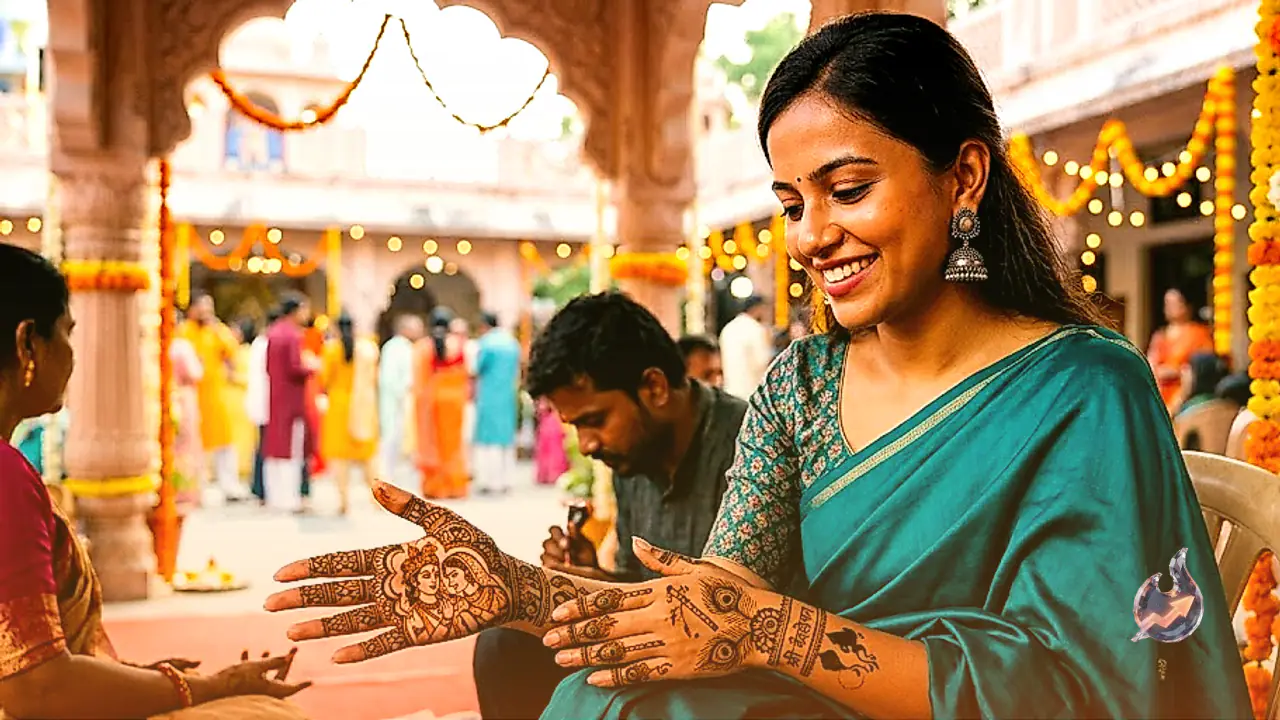

The vibrant festival of Shri Krishna Janmashtami brings together devotion, festive cheer, and traditional beauty rituals. Adorning one's hands with intricate mehendi patterns during this occasion is not merely a cosmetics choice, but a deeply felt expression of love and reverence for Lord Krishna. Women and young girls across regions dedicate their festive preparation to applying mehendi featuring iconic motifs linked to the deity, such as the sacred flute, peacock feathers, butter pots, and divine Radha-Krishna figures. Whether you prefer elaborate full-hand artworks or modern subtle arrangements, these trending mehendi design ideas can elevate your traditional festive attire.
Spiritual Name-Jap and Mantra Mehendi Patterns
For individuals who favor spiritually resonant mehendi styles, designs centered around divine names and sacred mantras serve as an exceptional choice. This pattern incorporates the phrase "॥ Radhe ॥" on one wrist and "॥ Krishna ॥" on the other, symbolizing eternal love and spiritual surrender. Across the central palm, the names Radhe and Krishna are repeatedly inscribed in artistic calligraphy, transforming traditional chanting into visible artwork. To enhance the sacred aesthetic, fingertips are completely filled with rich dark brown henna, drawing inspiration from classic Rajasthani mehendi techniques. The completed pattern creates a peaceful, authentic look reminiscent of the spiritual atmosphere of Vrindavan.
Adorable Bal Gopal Motifs for Devotional Elegance
Placing an artistic representation of Bal Gopal, the child form of Lord Krishna, at the center of the palm remains one of the most cherished design choices for Janmashtami. Depending on personal preference, women can opt for a detailed miniature portrait or a prominent centerpiece depicting little Krishna. Key details such as the ornate crown (mukut), the distinct peacock feather embellishment, and the flute held in small hands add remarkable depth to the portrait. Surrounding the central figure with delicate floral elements, fine leaves, and flowing vine motifs fills the palm naturally while capturing the joyous spirit of the festival.
Radha-Krishna Portraits for Elaborate Full-Hand Styles
Those seeking a deeply traditional and majestic aesthetic can choose mehendi designs featuring the divine duo of Radha and Krishna. This comprehensive style places facing portraits or joint figures of Radha and Krishna at the center of the palm. The artwork is further enriched with intricate lattice (jaali) work, detailed flower bunches, and delicate leafy vines extending toward the wrists and fingers. For women who prefer full-hand henna application, this intricate style offers a regal visual appeal that perfectly complements heavy festive wear.
Peacock Feather Motifs for Refined Simplicity
The peacock feather holds profound significance in Lord Krishna's iconography and remains a timeless motif in festive mehendi art. Designing a bold peacock feather at the center of the palm, combined with small flute sketches, subtle flowers, and delicate dot work, creates a striking visual harmony. For those who prefer a less congested design, featuring just one or two elegant peacock feathers across the palm or wrist offers a sleek alternative. This understated approach requires less application time while maintaining an authentic festive charm.
Minimalist Mehendi Ideas for Contemporary Aesthetics
Minimalist henna patterns have gained immense popularity among young women and working professionals seeking subtle festive styling. Modern minimal options include placing a small flute along a single finger, adding a tiny peacock feather on the palm edge, or drawing a small Bal Gopal outline near the wrist. Accentuated with micro dots and slender leaf vines, these minimalist concepts deliver a refined and sophisticated finish suitable for fast-paced celebrations.
Diagonal Flute and Peacock Feather Combinations
Combining the sacred flute and the peacock feather offers a balanced, theme-focused mehendi concept. In this design, a diagonally placed flute spans the palm, capped with an artistic peacock feather motif. The fingers are decorated with understated dot sequences and micro-vines to maintain visual balance. This layout effectively communicates the core symbols of Janmashtami while remaining easy to apply and comfortable to wear.
Coordinating Mehendi Patterns With Festive Outfits
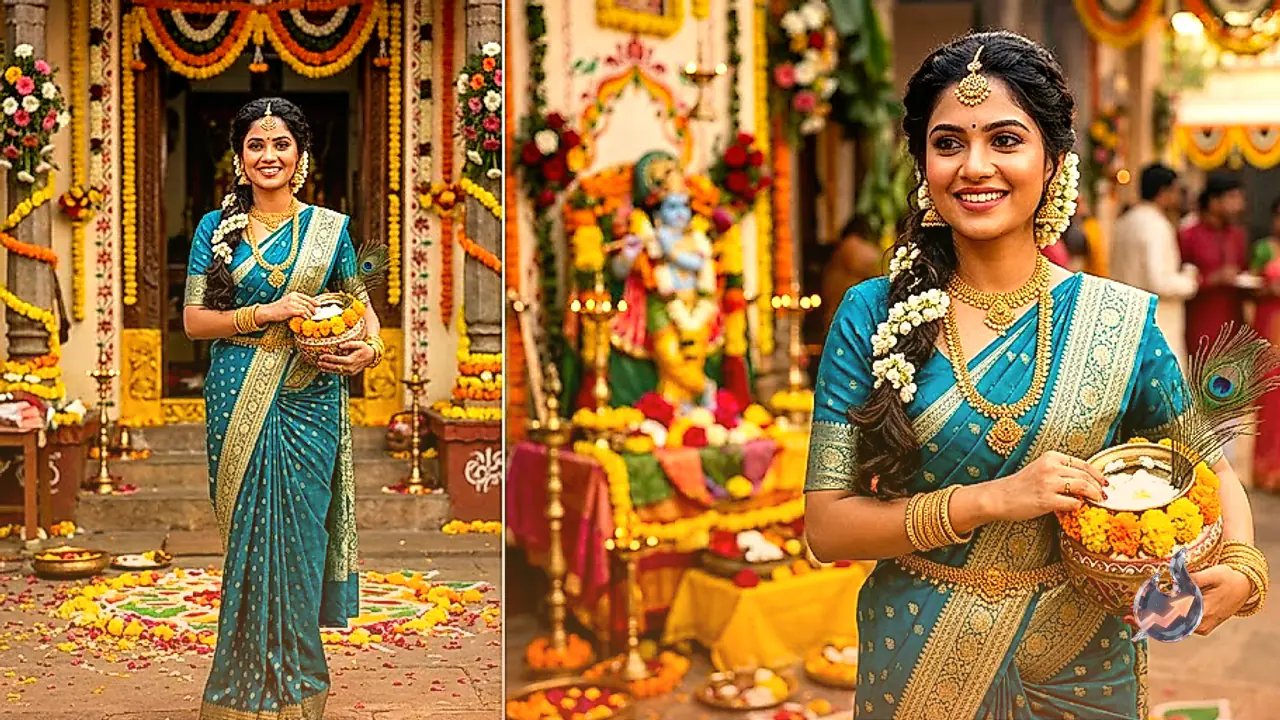
Selecting a mehendi style that matches your festive wardrobe enhances your overall appearance during Janmashtami celebrations. Elaborate Radha-Krishna portraits and dense peacock feather patterns pair exceptionally well with traditional ethnic garments in vibrant shades like yellow, green, blue, and red. Conversely, minimalist Krishna motifs and subtle flute designs complement lightweight kurtis, sarees, or contemporary Indo-Western ensembles. Choosing a style based on your personal comfort and outfit ensures a cohesive look for the festivities.