





















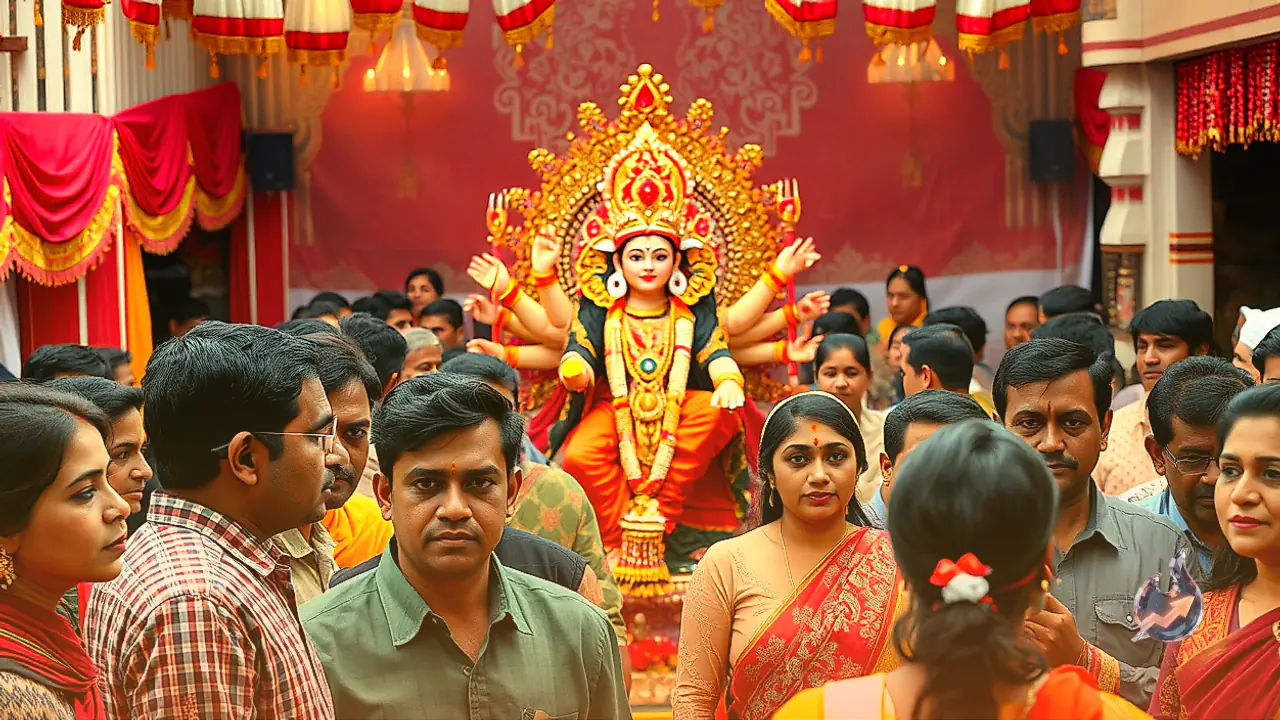

During the festive celebrations of Navratri, Maha Ashtami holds a place of profound spiritual reverence and cultural grandeur. Central to the festival's aesthetic traditions is the ritual adornment of hands and feet with alta, the sacred scarlet liquid deeply rooted in Indian heritage, particularly within Eastern India and Bengal. Symbolizing auspiciousness, feminine energy, and marital grace, this vibrant red hue offers an enchanting alternative to conventional intricate henna. For those looking to honor classic customs while presenting a refined festive appearance, embracing distinct alta aesthetics can seamlessly transform traditional attire into a celebration of timeless grace.
The Auspicious Lotus Motif
Because the lotus flower is intrinsically associated with the worship of Goddess Durga, incorporating it into palm and foot ornamentation serves as both a devotional gesture and an artistic statement. In this particular arrangement, an expansive lotus bloom forms the focal centerpiece on the palm or the upper bridge of the foot. Fine crimson strokes define each petal to produce clean dimension and structural clarity. For individuals who favor fuller coverage, smaller accompanying petals can be drawn extending toward the finger joints and toe tips. The botanical richness of this design pairs magnificently with woven silk weaves and heirloom brocades.
Intricate Flourishes Inspired by Bengali Alpana
Drawing direct artistic lineage from the ritual floor art of Bengal, the alpana-inspired alta technique adapts rhythmic folk geometries to the palms. This layout abandons heavy fill work in favor of flowing curved contours, miniature circular accents, delicate petal clusters, and fine symmetrical lines. The outcome is remarkably distinct from standard mehendi, yielding an airy, ornamental texture that resonates harmoniously with the devotional ambience of evening aarti and traditional celebratory dances.
Concentric Harmony with Mandala Geometries
Mandala patterns offer a structured, meditative aesthetic that centers entirely on radial symmetry. To execute this look, a crisp central circle is first plotted directly in the middle of the palm. Moving outward, concentric layers featuring varied petal silhouettes, tiny droplets, and swirling lines are systematically added. Differentiating the decorative motifs within each successive ring creates dimensional richness, transforming the basic historic round stain into a layered work of art that draws immediate visual focus.
Minimalist Finishes for Understated Grace
For individuals who favor understated elegance or those working under tight holiday schedules, minimal tipping remains a perennial classic. This technique involves coating only the upper phalanges of the fingers and toes in a rich bath of crimson. A modest, neatly painted circular dot placed precisely at the heart of the palm can be added to anchor the aesthetic. This minimalist approach requires merely minutes to apply, dries rapidly, and complements everything from crisp handloom cotton drapes to contemporary ethnic silhouettes without visual clutter.
Framing Feet with Silver Anklets and Toe Rings
On feet, the deep crimson halo of alta creates an unmistakable festive aura. Saturating the lateral borders of the sole, the toe pads, and the heel curve frames the foot in vibrant color. When juxtaposed with carved sterling silver anklets and polished toe rings, the rich dye produces a striking tonal contrast. The ornamental red perimeter enhances every ritual step taken toward the prayer altar, serving as an emblem of sacred celebration.
Dual-Tone Elegance: Red and White Accents
To achieve an ornate, regal finish, artisans often combine the classic red dye with delicate white highlights rendered in sandalwood paste or cosmetic liquid. Along the outer contours of the foot, crisp red bordering is edged with a succession of tiny white dots and miniature ornamental arches. Fine linear sequences of alternating crimson and ivory specks can trace from the toes upward, culminating in a radiant central medallion or floral wheel. This dual-tone styling serves as the definitive companion to the iconic white handwoven saree finished with an intense red border.
Tiered Ankle Bands and Modern Variations
Another sophisticated interpretation involves rendering two or three ultra-thin parallel lines encircling the ankle, simulating delicate painted jewelry. This tiered layout complements heavy Kanjeevaram weaves by introducing ornamental refinement along the foot without creating visual weight, ensuring the footwear and saree border remain harmoniously balanced.
Application Techniques to Prevent Smudging and Prolong Wear
Due to its fluid consistency, applying alta can sometimes result in bleeding lines or premature fading upon moisture exposure. To secure crisp definition, replacing conventional cotton swabs with narrow-tipped cosmetic cotton buds or fine artist detailing brushes is highly recommended. These instruments allow for sharp, controlled linework and clean edges. After application, limbs must remain stationary for several minutes to allow the dye to dry completely in the air. Keeping the decorated areas away from water immediately following application ensures the crimson saturation remains luminous throughout extended day-long festivities.
Carrying a brass offering plate with hands and feet adorned in fresh crimson alta embodies the essence of Maha Ashtami. By harmonizing classical folklore patterns with precise modern execution, your festive appearance becomes an authentic reflection of heritage and timeless elegance.