
During a press conference in Rampur, senior Samajwadi Party leader Azam Khan launched a sharp verbal assault on All India Majlis-e-Ittehadul Muslimeen (AIMIM) chief Asaduddin Owaisi. Commenting on the shifting political dynamics in Uttar Pradesh, Khan suggested that local voters would not embrace outside political entities. His remarks came shortly after AIMIM forged a political alliance with the party of Nagina MP Chandrashekhar Azad.
Remarks on Hyderabadi Biryani and Qualifications of Leadership
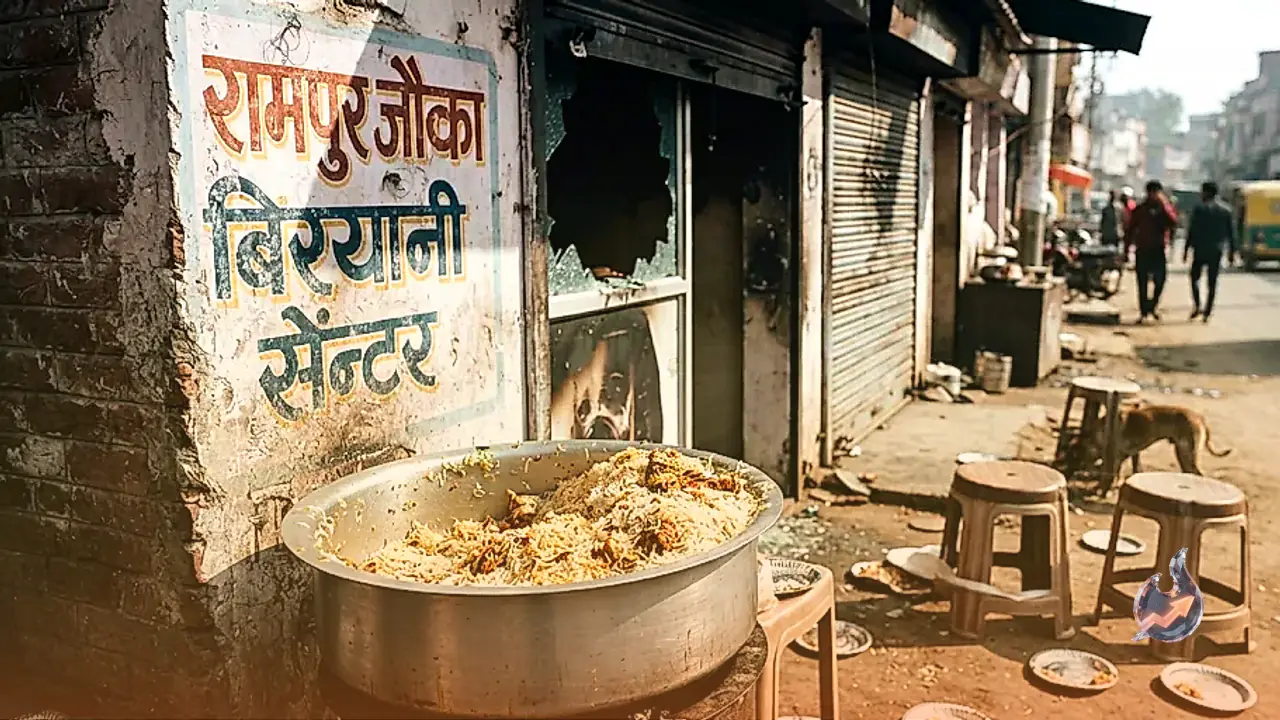
Using a culinary metaphor to critique Owaisi's political entry, Azam Khan remarked that the culinary choices of Uttar Pradesh differ significantly from those of Hyderabad. He observed, "People here do not like Hyderabadi biryani; they prefer pulao and mutton biryani." Through this comparison, he implied that Hyderabad-centric politics would find little traction among the state's electorate.
Addressing Owaisi's public image, the Samajwadi Party leader emphasized that the AIMIM chief is a barrister by profession rather than a religious scholar. Khan asserted that sporting a beard does not automatically confer the status of a Maulana, drawing a parallel that a beard alone does not turn someone into a Sadhu. He explained that claiming the title of Maulana requires a formal degree in Maulviyat, while issuing a fatwa demands the qualifications of a Mufti.
Responding to Owaisi's recent statements inquiring about his health, Khan noted that while he appreciated the well-wishes, his residence was located nearby and equipped with a working telephone line. He remarked that Owaisi could easily have called his wife to inquire about his well-being or visited him directly. Khan dryly added that Owaisi's public comments were not a 'dua' (prayer) for his health, but rather functioned as a 'dawa' (cure) intended for his political adversaries.
Akhilesh Yadav's Stance and Critiques Directed at the BJP
Samajwadi Party chief Akhilesh Yadav also downplayed the significance of the newly formed alliance between Owaisi and Nagina MP Chandrashekhar Azad. Yadav advised leaders of such coalitions to establish a consistent, long-term political presence in Uttar Pradesh instead of appearing exclusively around election cycles.
Azam Khan extended his criticism to the Bharatiya Janata Party, accusing it of fostering communal tension and spreading divisiveness across the state. He contrasted the BJP's approach with that of the Samajwadi Party, asserting that his party routinely organizes initiatives aimed at nurturing peace, affection, and inter-community harmony, whereas opposing forces generate hostile rhetoric.
Seat-Sharing Strategy within the INDIA Alliance
Turning to the upcoming Uttar Pradesh Assembly elections and seat-sharing arrangements within the INDIA alliance, Azam Khan shared that he maintains strong personal relations with alliance partners. He highlighted a distinct historical boundary regarding the Congress party.
Khan pointed out that the current leadership of Congress differs fundamentally from the administration in power during key historical events, such as the occurrences of December 6, the night of December 22-23, 1949, the incident at the Eidgah grounds, or the violence in Maliyana and Meerut. Because the present leadership is completely distinct from those eras, Khan affirmed that the Samajwadi Party carries no residual resentment. He expressed hope for a dignified and respectful seat-sharing arrangement, adding that his party remains willing to make reasonable concessions to maintain alliance unity.