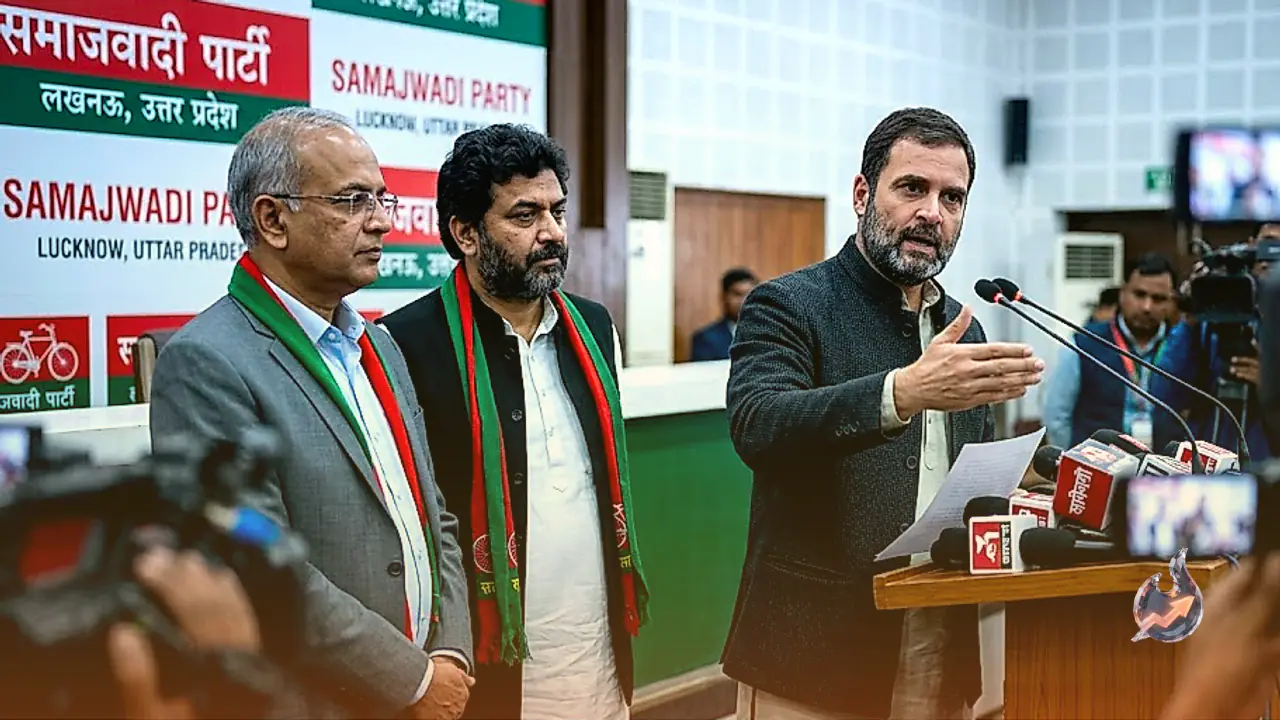


















In western Uttar Pradesh, assembly constituency number 41, known as the Amroha assembly seat, remains one of the most keenly tracked political battlegrounds. A key segment of the Amroha parliamentary seat, the constituency has developed into an unbreached stronghold for Samajwadi Party veteran Mehboob Ali, who has won five consecutive terms as its legislator. The electorate in this assembly segment is predominantly Muslim, shaping an electoral baseline that has consistently favored his campaigns. The Bharatiya Janata Party last captured this seat thirty years ago in 1996. In the most recent assembly contest in 2022, the BJP suffered a heavy defeat against Mehboob Ali by a margin of 71,036 votes. Over the past three decades, neither the Bahujan Samaj Party, the Congress, nor the Rashtriya Lok Dal has managed to secure a single victory here. Examining the historical voting patterns since 1991 outlines the difficult challenges facing rival parties ahead of the 2027 Uttar Pradesh assembly elections.
Pratap Singh's 1991 Victory For The BJP In Post-Ayodhya Firing Context
During the 1991 Uttar Pradesh assembly elections, which took place in the backdrop of the Ayodhya police firing incident, the BJP succeeded in taking the Amroha seat. Pratap Singh of the BJP went up against sitting legislator Mohammad Hayat of the Janata Dal in a polarized contest. Pratap Singh collected 44,923 votes, defeating Mohammad Hayat by a margin of 14,716 votes. Mohammad Hayat ended up with 30,207 votes. Meanwhile, Afsar Khan of the Janata Party finished further behind with 17,751 votes. The Congress put forward Samar Pal Singh, who secured 13,249 votes, while the BSP finished in fifth place after its candidate Qamaruddin gathered only 8,592 votes.
Janata Dal Regains Amroha In 1993 Following Demolition In Ayodhya
The state went back to the polls in 1993 after the disputed structure in Ayodhya was demolished, resulting in a reversal of fortune in Amroha. Haji Mohammad Hayat of the Janata Dal regained the seat in a tightly contested fight against the BJP's Mangal Singh Saini. Haji Mohammad Hayat pulled ahead with 52,175 votes, beating Mangal Singh Saini by 2,596 votes as the BJP candidate finished with 49,579 votes. That result reclaimed the constituency for the Janata Dal. The Samajwadi Party and the Congress were pushed into third and fourth positions. Ishrat Ali of the SP received 16,392 votes, while Khursheed Ahmad of the Congress gathered 11,306 votes.
The Narrow 1996 Win By Mangal Singh Marks BJP's Last Success
The BJP returned to the winning column in the 1996 assembly election, although by the slimmest of margins. Mangal Singh edged past his opponent by just 908 votes in an exceptionally close finish. He garnered 67,526 votes, while Mehboob Ali, running under the Samajwadi Party banner, finished right behind with 66,618 votes. Congress candidate Khursheed Ahmad also contested that election, ending with 29,553 votes. That narrow victory in 1996 remains the last time the BJP won the Amroha assembly seat.
Mehboob Ali's Breakthrough In 2002 On A Rashtriya Parivartan Dal Ticket
In the 2002 assembly election, Mehboob Ali parted ways with the Samajwadi Party and entered the race as the candidate of DP Yadav's outfit, the Rashtriya Parivartan Dal, known as RPD. Despite contesting on a different party symbol, he established control over the constituency. The BJP had allied with the Rashtriya Lok Dal for that election and conceded the Amroha seat to the RLD under their seat-sharing pact. Running on the RPD ticket, Mehboob Ali won 59,314 votes, defeating Dr. Hari Singh Dhillon of the RLD by a margin of 9,272 votes. Dr. Hari Singh Dhillon received 50,042 votes. The BSP, SP, and Congress placed third, fourth, and fifth respectively. Khursheed Anwar of the BSP took 13,507 votes, Haji Mohammad Hayat of the SP received 7,573 votes, and Khursheed Ahmad Ansari of the Congress earned 4,563 votes.
Surviving The 2007 BSP Wave By Just 678 Votes
The 2007 Uttar Pradesh assembly election saw Mayawati lead the BSP to a full majority across the state. Despite that widespread wave, the BSP slipped to fourth place in Amroha, while Mehboob Ali returned to the Samajwadi Party and squared off once again against Mangal Singh of the BJP. The outcome was the closest contest recorded in Amroha between 1991 and 2022. Mehboob Ali managed to protect his seat by a razor-thin margin of only 678 votes. He secured 42,115 votes against Mangal Singh's 41,437 votes. Nadeem Abbas of the RLD finished third with 17,251 votes, while Adil Parvez of the BSP ended fourth with 16,639 votes. Khursheed Anwar of the Congress took only 6,003 votes.
Completing A Hat-Trick In 2012 Following Delimitation
Following the 2008 delimitation exercise, the 2012 assembly election delivered a statewide majority to the Samajwadi Party, making the contest in Amroha much smoother for Mehboob Ali. He achieved a hat-trick of consecutive victories by posting an emphatic win with a margin of 21,805 votes. Mehboob Ali amassed 60,807 votes, leaving Ram Singh of the BJP behind in second place with 39,002 votes. The BSP's candidate Shahid finished third with 32,886 votes, while Naushad Ali of the PECP gathered 24,768 votes.
Holding Firm In 2017 Despite A Statewide BJP Sweep
During the 2017 election, when the BJP swept Uttar Pradesh with a commanding majority, Mehboob Ali successfully defended his stronghold for a fourth straight term. Running on the SP ticket, he secured 74,713 votes and defeated his nearest challenger by 15,042 votes. Notably, the BJP did not finish second in Amroha that year. Naushad Ali of the BSP placed second with 59,671 votes, while BJP nominee Dr. Kunwar Sen Saini was relegated to third place with 45,420 votes. Salim Khan of the RLD received 14,132 votes.
Setting A Milestone In 2022 With A 71,036 Vote Margin
In the 2022 assembly election, Mehboob Ali recorded the most commanding victory of his career by winning a fifth consecutive term. He secured 1,28,735 votes to defeat Ram Singh of the BJP by a decisive margin of 71,036 votes. Ram Singh received 57,699 votes. Mohammad Nawaz of the BSP finished in third place with 34,585 votes. The outcome firmly consolidated Mehboob Ali's standing across the constituency.
Three Decades Of Results And The Road To The 2027 Election
Across the eight general assembly elections held between 1991 and 2022, the Samajwadi Party has won four times, the BJP twice, the Janata Dal once, and the Rashtriya Parivartan Dal once. Neither the BSP nor the Congress has won the constituency in these three decades. Mehboob Ali's personal electoral record shows a runner-up finish in 1996 followed by five back-to-back victories in 2002, 2007, 2012, 2017, and 2022. After winning on an RPD ticket in 2002, he delivered four consecutive victories as the SP nominee, weathering close fights like the 678-vote margin in 2007 and scaling up to his 71,036-vote margin in 2022.
Heading toward the 2027 assembly election, overcoming this SP fortress presents a formidable test for the BJP. Demographic realities play a critical role, as the 2011 census indicates that the Muslim population exceeds 50 percent in the Amroha constituency, complemented by a substantial population of Scheduled Caste voters. In 2002, the BJP allotted this seat to the RLD as part of their coalition agreement, raising questions about alliance dynamics for 2027. On the opposite side, a potential partnership between the SP and the Congress could further solidify the opposition vote, while the BSP's performance will remain closely watched given that its candidate secured 59,671 votes to finish second in 2017.