














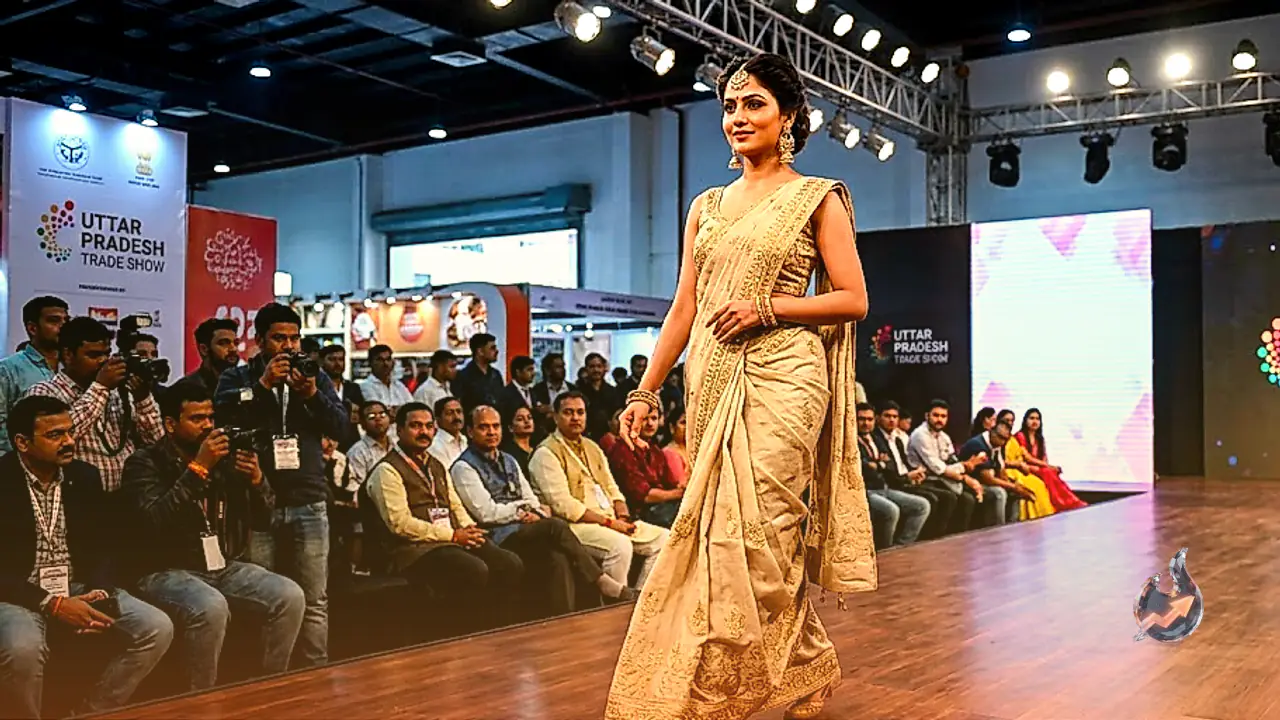

Long associated with austere attire and traditional dressing, khadi is making a determined transition into the fast-paced world of contemporary fashion. Through creative design experiments spanning designer garments and elaborate bridal collections, the handspun fabric is shedding its rigid identity to appeal directly to younger sensibilities. The Uttar Pradesh Khadi and Village Industries Department has been actively steering this transformation, seeking to integrate indigenous textiles into modern lifestyles while creating sustainable livelihood pipelines for grassroots craftspeople.
Contemporary Runways And Expanding Consumer Appeal
Curated fashion exhibitions and trade platforms are providing khadi with a visible, dynamic launchpad, driving its popularity among modern urban shoppers. While attending the Uttar Pradesh International Trade Show in Greater Noida, Rajiv Tyagi, Deputy CEO of the Uttar Pradesh Khadi and Village Industries Board, explained how the fabric has been evolving into a contemporary fashion choice. He emphasized that khadi holds a distinct advantage over commercial synthetic fabrics primarily because it remains an entirely natural, breathable material.
The fundamental character of khadi lies in its manual production, spinning thread completely by hand and weaving it on manual looms. The department is coupling this artisanal authenticity with contemporary cuts to capture the interest of young consumers. Rajiv Tyagi stated that fashion events are being organized across the state precisely to break the stereotype that khadi is limited to conventional kurtas. By showcasing bridal collections and sleek modern silhouettes tailored from indigenous fabric, organizers expect retail demand and overall sales to expand significantly, which in turn will stimulate steady production and direct wages for weavers.
Institutional Collaborations And Designer Engagement
Efforts to reimagine khadi have relied heavily on collaborations with mainstream fashion institutions. Both the initial and subsequent editions of the Uttar Pradesh International Trade Show prioritized khadi showcases. Past editions featured extensive contributions from the National Institute of Fashion Technology, Delhi, where emerging designers translated handspun textures into avant-garde fashion lines.
Similar showcases are regularly hosted in hubs like Lucknow, unveiling dedicated khadi brands, refined seasonal palettes, and bridal wear designed to rival conventional luxury garments. Rajiv Tyagi observed that when younger demographics encounter khadi styled as high-fashion statements, they are far more willing to embrace it within their personal wardrobes. This expanded demand flows directly back to rural spinners and weavers, protecting indigenous heritage while guaranteeing sustainable household incomes.
Technological Modernization For Traditional Pottery Artisans
Alongside textile revitalization, the state agency is accelerating modernization within traditional pottery through the Mati Kala initiative. Exhibitions have spotlighted clay artifacts and functional pottery crafted using motorized electric pottery wheels. Rajiv Tyagi explained that rural potters previously depended on heavy, manually rotated wheels, which demanded intense physical stamina and restricted daily production output.
Through the Mati Kala Board, artisans are receiving motorized electric wheels that minimize physical strain and significantly raise manufacturing efficiency. Many products presented at trade showcases were created by craftsmen who established independent small enterprises through bank loans. Partnering with the state department has enabled these potters to bypass intermediaries and display their creations directly to large retail audiences. From charkhas reaching premier fashion runways to electric wheels revitalizing rural kilns, traditional crafts are securing a sustainable foothold in the modern economy.