


















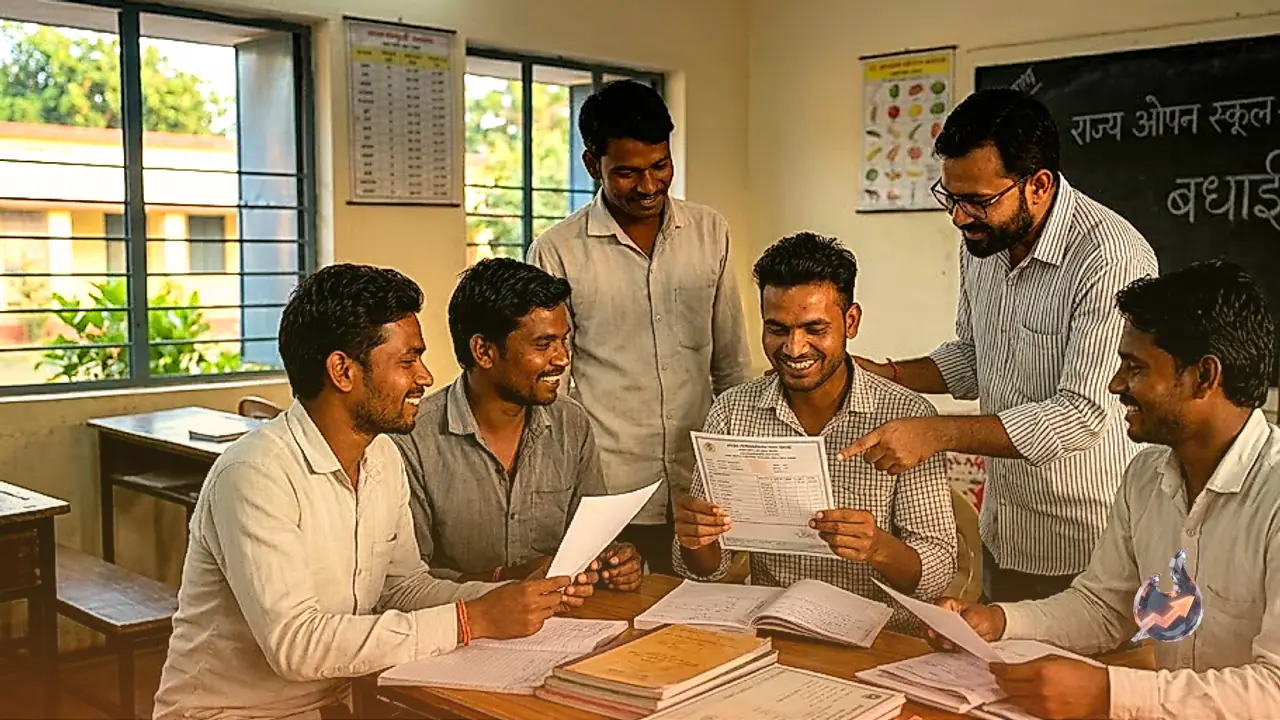

In an inspiring turn toward mainstream civilian life, seven former Maoists who laid down their weapons in Chhattisgarh last year have successfully cleared the Class 10 Secondary School Certificate examination conducted by the Chhattisgarh State Open School. Remarkably, three of these candidates secured first-class marks, proving that steadfast determination can rewrite an individual's future despite an earlier life spent in deep turmoil. The milestone reflects the tangible impact of systematic reintegration and access to educational opportunities.
Rehabilitation and the Decision to Reclaim Education
Having previously spent years inside dense forest hideouts surrounded by automatic rifles and explosive devices, these individuals chose to abandon violence and step into lawful society alongside 210 insurgents who surrendered last year. Many among them had been driven toward armed factions during their youth due to acute personal tragedies, coercion, or severe social vulnerabilities. Following their surrender, local administration and police authorities stepped forward to ensure their rehabilitation was accompanied by meaningful personal growth.
The authorities conducted focused counselling sessions, facilitated the processing of essential civil identification documents, and actively encouraged the candidates to resume their discontinued schooling. Housed in rehabilitation facilities or designated accommodation, the learners turned to academic textbooks, dedicating their spare hours to building a constructive life away from conflict.
Geeta Narote: Overcoming Childhood Trauma to Pursue Nursing
Among the successful candidates, the journey of 35-year-old Geeta Narote stands out as a powerful example of resilience. Originally from Gadchiroli in Maharashtra, Geeta lost her father at the age of ten when he was killed by Maoist fighters. The tragedy eventually pulled her into the insurgent network, where she remained for years. Inside the group, peers referred to her as 'Dr Champa' because she was tasked with administering primary medical care to cadres and stitching bullet wounds.
Her formal schooling had ended abruptly after Class 6, yet after renouncing violence last year, Geeta refused to let age or past trauma limit her aspirations. She resumed her studies with discipline and passed the SSC examination. Now focused on her next step, Geeta intends to train as a professional nurse so she can support her family through healthcare work in mainstream society.
Balancing Vocational Training by Day with Studies by Night
The academic success of 32-year-old Arjun Oyam and his peer Santosh Achla required equal perseverance under demanding conditions. Returning to civilian life from the forests of Bastar presented Arjun with the challenge of learning how to earn an honest living while catching up on years of missed formal education. During the daytime, Arjun immersed himself in practical vocational training, learning fisheries and working toward qualification as an electrician.
Once his daytime vocational duties concluded, Arjun devoted his evenings and nights to studying textbooks. Santosh Achla navigated difficult personal circumstances and household grief with identical diligence to clear the matriculation papers. Their coordinated efforts proved that practical skill development and foundational education could be pursued simultaneously with success.
Role of Digital Tools, Messaging Apps, and Local Instructors
Transitioning from insurgent encampments to modern academic curricula proved challenging for learners who had spent decades away from classrooms. Modern digital equipment bridged this gap effectively. Several students received tablets loaded with digital study material, allowing them to read course modules and study guides electronically.
Supportive acquaintances and mentors utilised WhatsApp to transmit revision notes and explain difficult academic concepts. In addition, local teachers and police personnel volunteered time to answer questions and explain complex topics, steadily building the candidates' academic confidence until exam day.
A Compelling Message for Mainstream Reintegration
The academic breakthrough of these seven former insurgents carries broad significance across regions affected by left-wing extremism. Their performance illustrates that an individual's trajectory is not permanently defined by past involvement in armed groups if rehabilitation frameworks and supportive communities intervene constructively. By exchanging firearms for educational qualifications, these students have demonstrated that enduring progress and personal dignity are earned through knowledge, civic engagement, and persistent effort.