
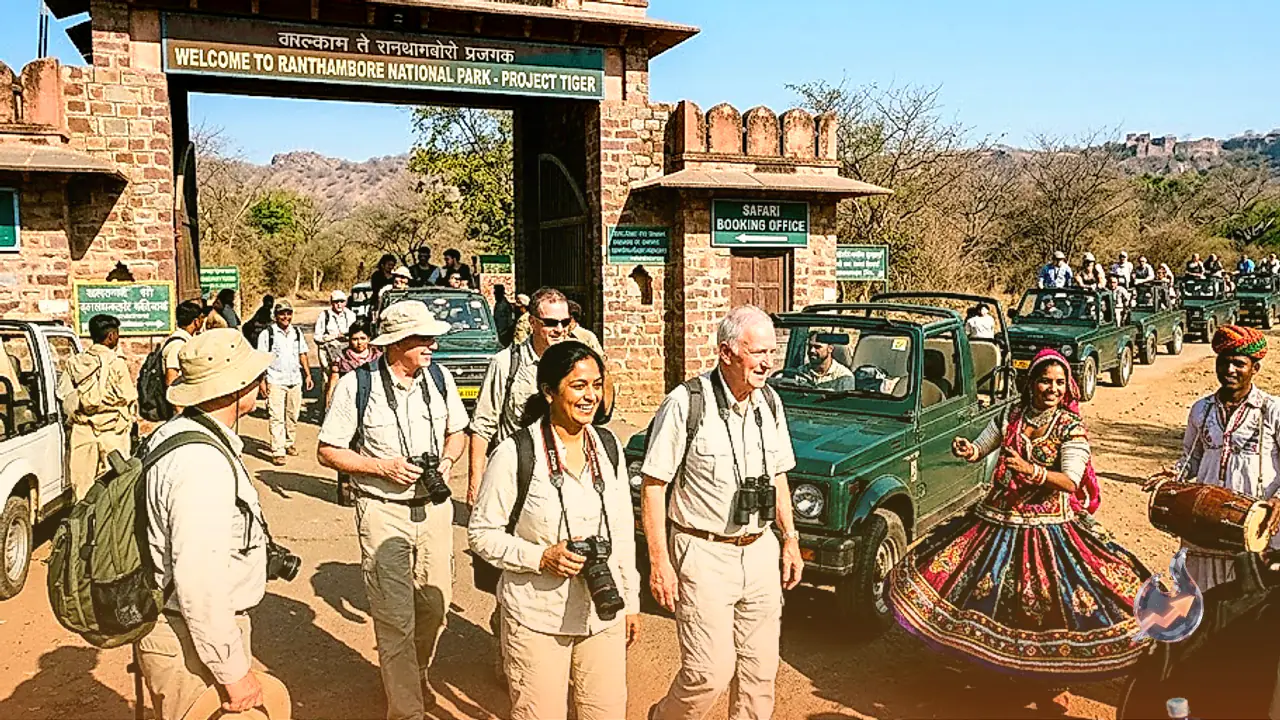



















Wildlife tourism in Sawai Madhopur has sprung back to life after a three-month hiatus, with nature lovers once again heading into the wilderness of Ranthambore National Park. The resumption of safari operations following the seasonal monsoon break brought a festive energy to the Ganesh Dham entrance. Domestic and international visitors were greeted in time-honoured Rajasthani fashion, complete with traditional tilak ceremonies, resonant folk melodies, and spirited dance performances. As open-top safari vehicles lined up for the inaugural drives, the atmosphere mirrored a vibrant cultural festival. Heavy turnout on the very first day signaled a promising start to the new tourism season, underscoring the enduring appeal of experiencing apex predators and diverse wildlife within their natural habitat.
Cultural Welcomes and Administrative Presence at Ganesh Dham
The main gate at Ganesh Dham was transformed for the reopening ceremony, decorated with detailed rangoli art and brought to life by local cultural troupes. Senior administrative and wildlife officials gathered at the venue to oversee operations and welcome travelers. District Collector Kinaram, Chief Conservator of Forests Sharda Pratap Singh, Deputy Conservator of Forests Manas Singh, and Deputy Conservator of Forests Tourism Sanjeev Sharma formally flagged off the fleet of safari vehicles. The officers extended their best wishes to travelers for safe and memorable forest excursions. The morning shift alone saw hundreds of eager visitors enter the reserve, including numerous enthusiastic school groups keen to learn about forest ecology. District Collector Kinaram, accompanied by his wife, also joined the first safari run to inspect on-ground arrangements and experience the park firsthand.
Lush Landscapes and the Quest for Big Cats
After ninety days of minimal human presence, the park presented a verdant landscape shaped by seasonal rains, creating an appealing backdrop for jungle safaris. While catching sight of the iconic Royal Bengal Tiger remains the ultimate prize for most visitors, the sanctuary offers much more than its headline predator. Ranthambore stands among India's most prominent wildlife destinations, supporting robust populations of leopards, sambar deer, chital, nilgai, wild boar, and marsh crocodiles across its lakes and ravines. Forest authorities have instituted comprehensive visitor management measures to ensure seamless experiences while enforcing strict wildlife protection guidelines. Park officials emphasized that safari vehicles must maintain designated routes and speeds, ensuring tourist safety while preventing any disturbance to the natural behaviour of resident fauna.
Sariska's Regional Role and the Boost to Local Business
Rajasthan's wildlife circuit extends well beyond Sawai Madhopur, with the Sariska Tiger Reserve in Alwar district serving as another vital pillar of ecological tourism in the state. Set against the rugged topography of the Aravalli hills, Sariska is celebrated for its tiger population, rich birdlife, and historic forest ruins. Together, Ranthambore and Sariska draw large numbers of nature travelers from across India and around the globe. The reopening of safari gates has brought much-needed economic relief to the hospitality and service sectors in Sawai Madhopur. Local hoteliers, resort operators, safari drivers, guides, and handicraft merchants anticipate a steady stream of business over the coming months. The strong initial footfall has injected fresh optimism into the local economy, while the forest department remains focused on sustaining disciplined, eco-friendly visitor management throughout the operational window.