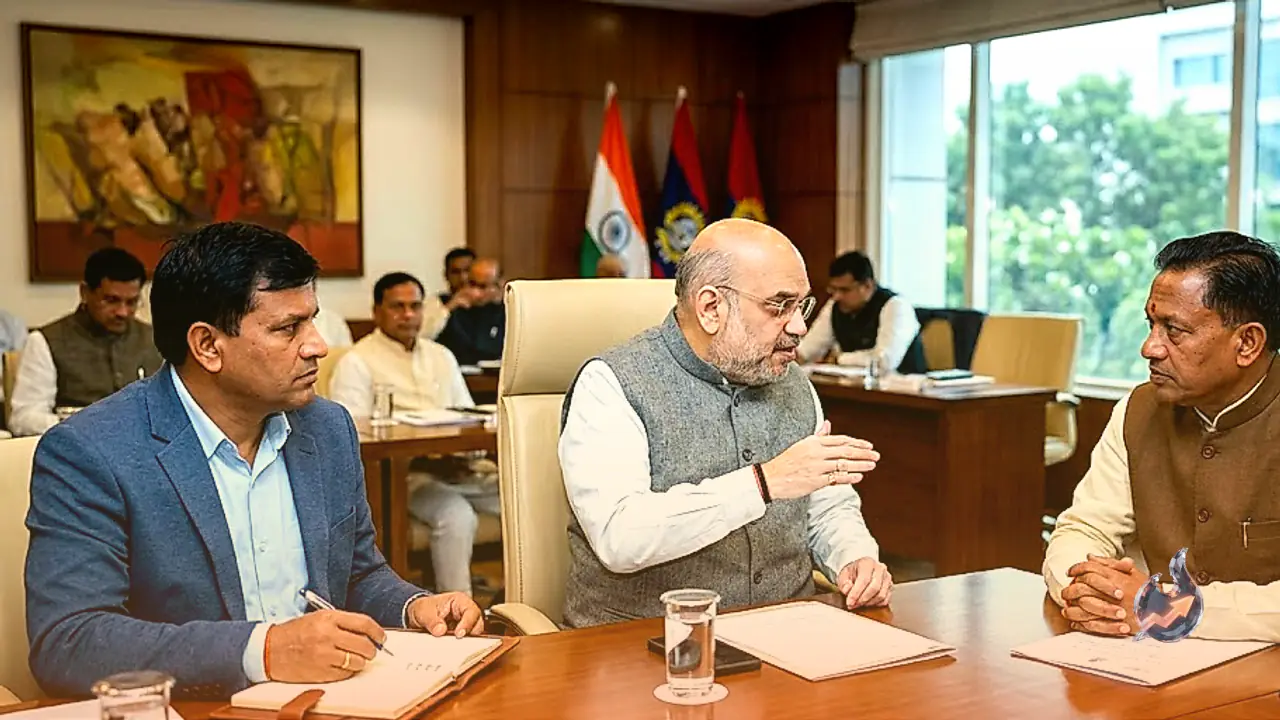

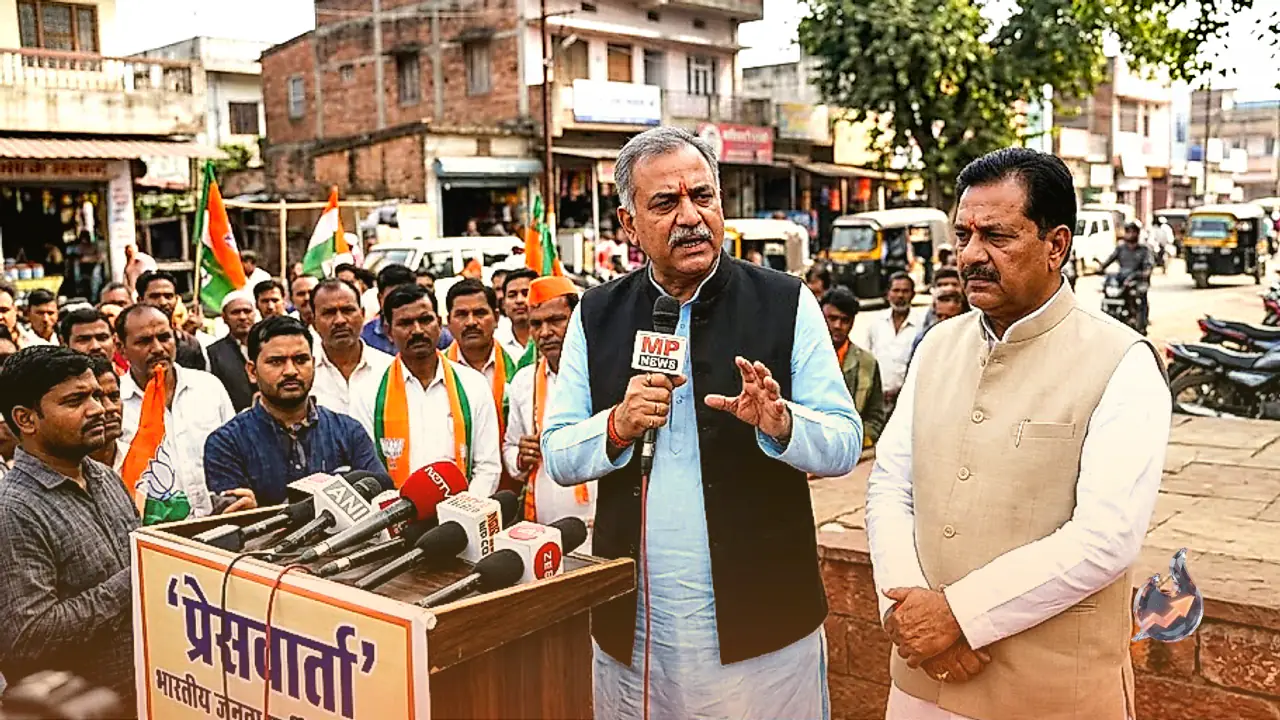














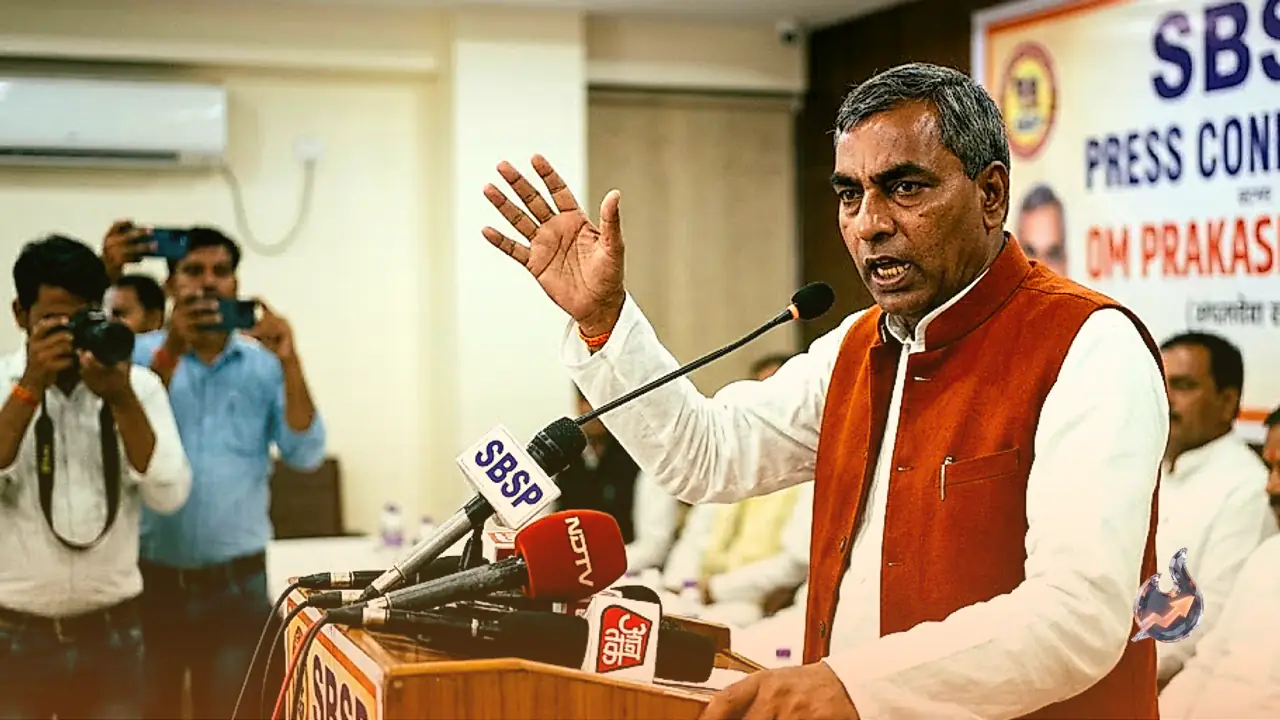

Political friction in Uttar Pradesh is intensifying ahead of the 2027 assembly elections as rival parties clash over caste equations and electoral strategies. While Samajwadi Party chief Akhilesh Yadav continues to anchor his political campaign around the PDA outreach formula, aimed at rallying backward classes, Dalits, and minorities, Uttar Pradesh cabinet minister and Suheldev Bharatiya Samaj Party (SBSP) chief Om Prakash Rajbhar has mounted a sharp offensive, arguing that the ground realities contradict the slogan.
New Interpretations Linked to Upper House Nominations
Using the nomination of Dhanraj Nathwani for the Rajya Sabha as a focal point, Om Prakash Rajbhar claimed that the Samajwadi Party alters the core meaning of its political slogans according to convenience. In Rajbhar's formulation of the acronym, the letters now represent family, wealth, and crime rather than marginalized sections of society. He stated that the letter 'P' stands for family, pointing directly to Ram Gopal Yadav, while 'D' denotes wealthy individuals, represented by Dhanraj Nathwani.
Taking his criticism further, Rajbhar remarked that only the letter 'A' remains unaddressed in this newly interpreted framework. He asserted that if the party searches for and fields a criminal candidate for the third slot, its sequence will be fully realized. He mocked the selection process by suggesting that since family and wealth have already secured their positions, the remaining announcement should simply follow suit.
Questions Over Representation of Marginalized Groups and Muslims
The SBSP leader questioned the absence of key social sections from the party's decision-making apparatus, asking what became of Brahmins, backward communities, Dalits, and Muslims within the purported social justice alliance. According to Rajbhar, the genuine social groups that make up the traditional concept are completely missing from the latest outcomes.
Rajbhar also turned his attention toward the Samajwadi Party's sitting Muslim lawmakers and leaders, accusing them of remaining silent before the top leadership. He contended that the party's Muslim MPs and MLAs lack the resolve to question Akhilesh Yadav about seat allocations. In his view, these representatives should have asserted that leaders like Ram Gopal reach the upper house through the votes of their community and the hard work that secures legislative victories, making upper house representation their rightful due rather than something to be conceded without discussion.
Reference to Past Kannauj By-Election Victory
Revisiting past electoral milestones, Om Prakash Rajbhar brought up the 2012 by-election involving Dimple Yadav, questioning the circumstances that led to her uncontested victory from the Kannauj parliamentary seat. He challenged the legitimacy of that unopposed result by alleging coercion during the nomination process.
Rajbhar claimed that criminal elements were deployed to physically abduct rival candidates who intended to submit nomination papers. He alleged that prospective contestants were forcibly pressured into withdrawing their candidatures, which ultimately cleared the path for an uncontested outcome rather than a democratic contest.
Demand for Brahmin Representation in Upper House
Continuing his broadside, the minister maintained that the current leadership serves no demographic segment consistently, failing Muslims, backward classes, Dalits, and the general category alike. He specifically questioned where the Brahmin community fits into the broader outreach, arguing that if fair representation were truly intended, at least one Brahmin candidate ought to have been nominated to the Rajya Sabha. Rajbhar reiterated that the party's actions consistently diverge from its stated social rhetoric.