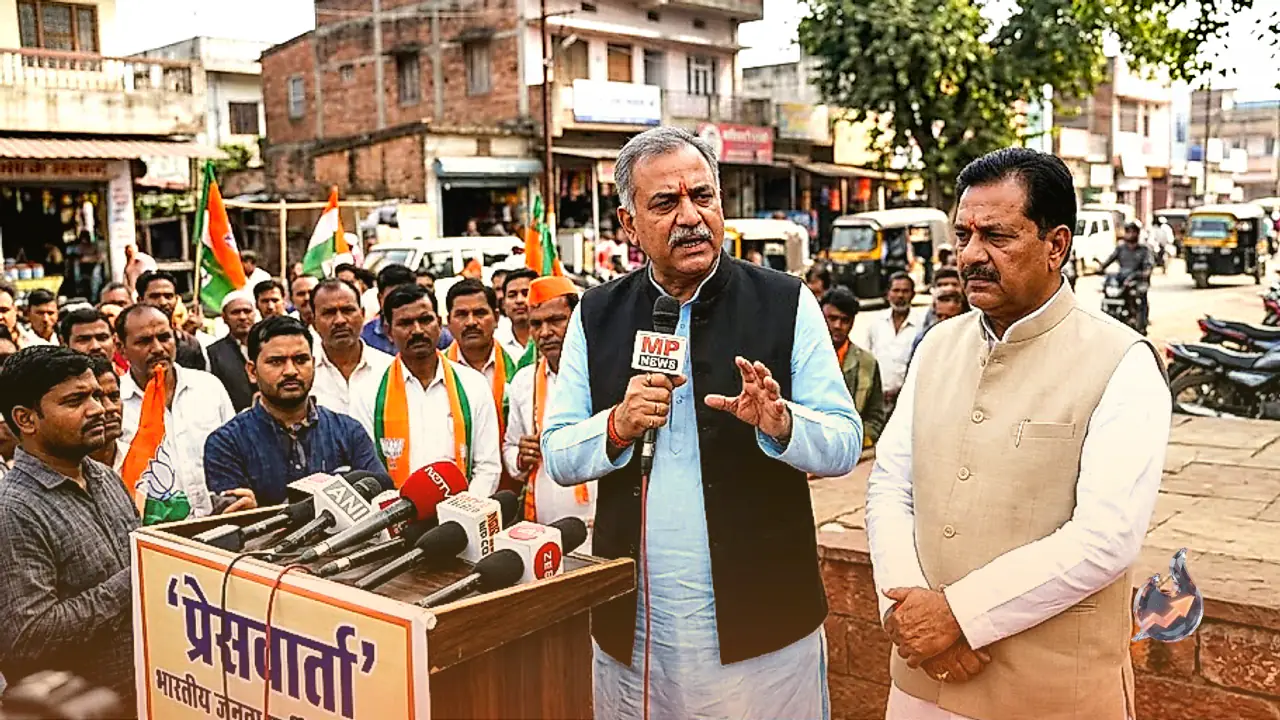














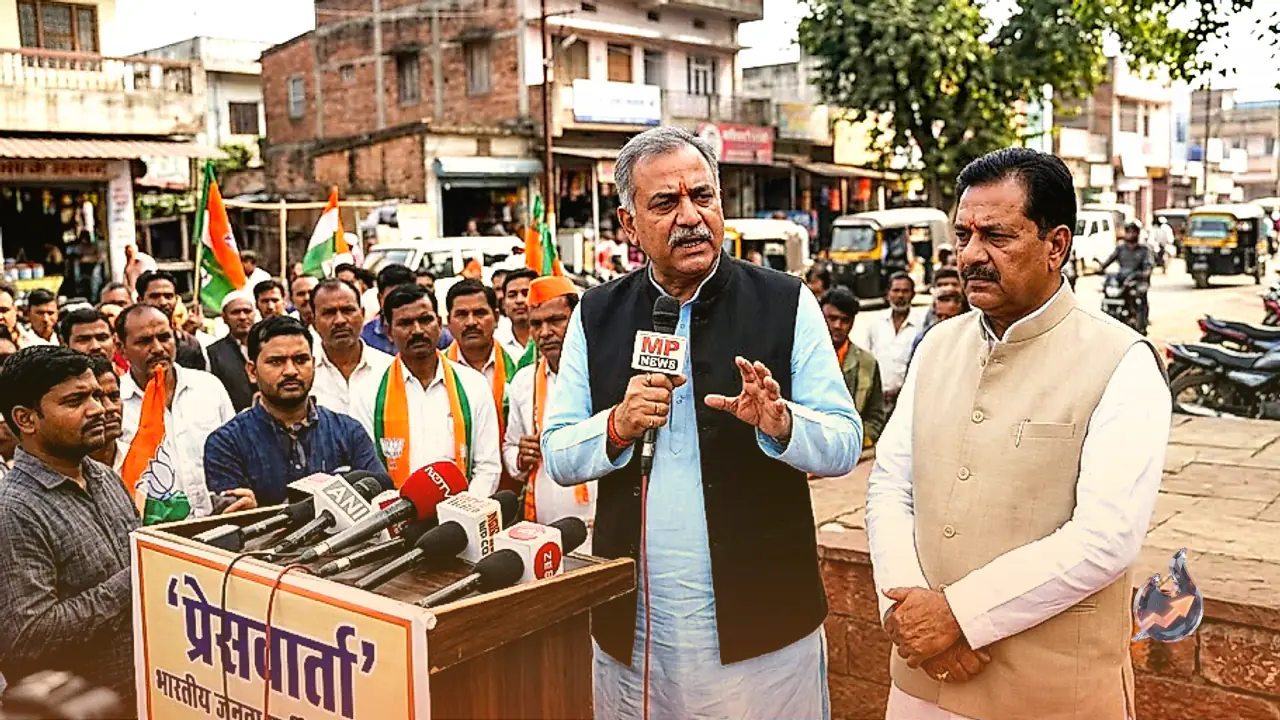

A fierce political row has broken out in Madhya Pradesh following a visit to Balaghat by Congress leader and Leader of Opposition in the Lok Sabha, Rahul Gandhi. Madhya Pradesh Deputy Chief Minister Rajendra Shukla, along with Transport and Higher Education Minister Uday Pratap Singh, strongly criticised the opposition leader for what they described as an irresponsible and casual political posture. Both ministers maintained that Rahul Gandhi consistently demonstrates a lack of seriousness, an attitude that was on full display throughout his stay in Balaghat. Describing the Congress leader as a problem in himself, the ministers demanded an apology from him to the nation, asserting that the state administration remains fully committed to driving development across Balaghat with modern technological amenities expanding even into remote zones under the leadership of Prime Minister Narendra Modi.
Depicting the Tour as Belated Political Tourism
Deputy Chief Minister Rajendra Shukla remarked that Rahul Gandhi acted true to his usual unconcerned character during his visit to Balaghat. He pointed out that naxalite violence had flourished extensively across this very region during the rule of the Congress led United Progressive Alliance administration at the Centre. Drawing attention to regional security history, Shukla recounted that during Digvijaya Singh's tenure in 1999, the state's former home minister Lakhiram Kavre was brutally murdered inside his residence by naxals, who decapitated him. Shukla argued that Rahul Gandhi seemed to have completely forgotten that grim past, orchestrating a dramatic public appearance solely for electoral ambitions. The Deputy Chief Minister accused him of engaging in political tourism by arriving in Balaghat three months after the tragedy took place.
Rajendra Shukla further observed that leveling unsubstantiated allegations has become a persistent habit for the Congress leader. According to Shukla, whenever Rahul Gandhi delivers public remarks, his demeanor and body language distinctly reflect a profound absence of self assurance. He pointed out the contradiction where the Leader of Opposition pledges to raise critical public concerns on the floor of the Lok Sabha while simultaneously disrupting the proceedings and not allowing the lower house of Parliament to function smoothly. Questioning the Congress track record, Shukla asked who conceptualised and launched the Ladli Behna Yojana, who raised the monthly payout from 1000 rupees to 1500 rupees, and noted that the current government is actively transferring 1500 rupees every month under the Aahar Anudan Yojana for the Baiga, Bharia, and Sahariya communities, a welfare reality Rahul Gandhi remains entirely unaware of. He warned that those who previously turned Madhya Pradesh into a Bimaru state should abandon dreams of returning to power, as citizens have not forgotten the state of affairs prevailing before 2003.
Naxal Elimination and Expanding Healthcare Infrastructure
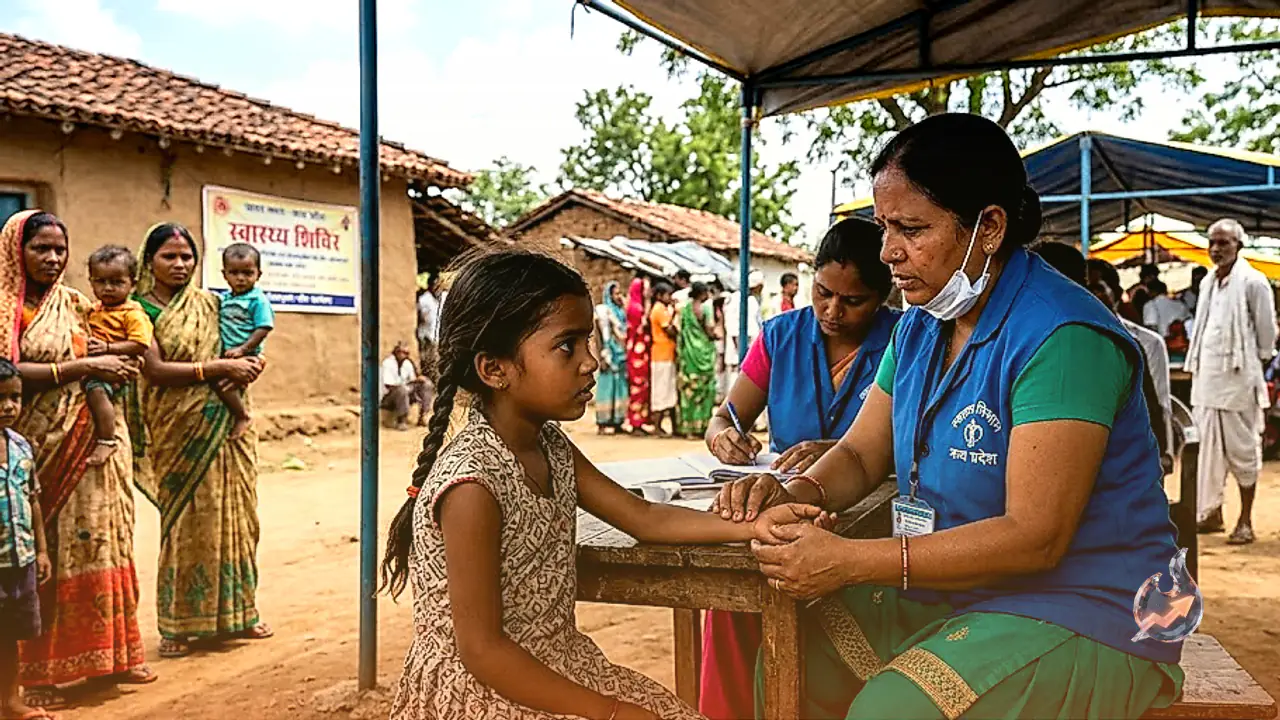
Highlighting major security and governance shifts, Deputy Chief Minister Rajendra Shukla asserted that Rahul Gandhi ought to extend his gratitude to Prime Minister Narendra Modi, as the present dispensation completely uprooted naxal forces from the territory in 2025. Shukla maintained that had naxal elements not been systematically cleared under this government, the Congress leader would not have been in any position to freely travel across this interior forest belt today. Sharing administrative figures, he stated that across two previously naxal affected development blocks, comprehensive health screening has been carried out for 45 thousand individuals. Additionally, 14 new Anganwadi centres and 10 health sub centres have been opened, while a local primary health centre has been expanded into a fully functional 30 bed hospital.
Reiterating that the Leader of Opposition brings no constructive answers and ought to apologise to the country, Shukla highlighted key federal welfare interventions. He noted that through schemes such as the PM Janman Yojana and the Dharti Aaba Yojana, substantial work has been accomplished to empower particularly vulnerable tribal groups including the Baiga, Sahariya, and Bharia communities. Where red flags once dominated, modern mobile towers now stand, providing fast 4G and 5G connectivity alongside operational hospitals and childcare centres. Describing the tragedy that struck Balaghat as deeply sorrowful and unfortunate, Shukla stated that Chief Minister Mohan Yadav, the district in charge minister, the Women and Child Development Minister, and he himself rushed to the site immediately after the incident occurred. The administration swiftly instituted relief arrangements, appointed four block women development officers, and initiated the establishment of 14 health sub centres and community healthcare infrastructure.
Brief Stopover and Bipartisan Engagement
Higher Education and Transport Minister Uday Pratap Singh echoed these criticisms, asserting that Rahul Gandhi merely completed a hollow formality during his Balaghat stopover. Contrasting this with the state government's response, Singh stated that immediately following the incident, Chief Minister Mohan Yadav visited the spot accompanied by cabinet ministers as well as the local Congress district president and Congress MLAs. The state machinery delivered prompt financial and logistical assistance to the grieving families, actions that were openly appreciated by the elected Congress legislators present at the venue. Emphasising that the Bharatiya Janata Party is an organisation driven by dedicated action, Singh stated that the administration prioritises concrete execution rather than empty political speeches.
Uday Pratap Singh elaborated that Chief Minister Mohan Yadav personally engaged in dialogues with tribal village heads and local residents during his visit, reviewing developmental projects and deliberating on the long term growth of the locality. When local villagers expressed appreciation for these developmental steps, both Congress MLAs were actively participating in that dialogue and official gathering. Furthermore, the financial compensation provided by the government to families affected by the unfortunate incident involving the children was handed over in the direct presence of the Congress MLAs and their district chief. In stark contrast, Singh noted that Rahul Gandhi journeyed thousands of kilometres only to spend a fleeting 15 minutes at the site, neglecting even to bring local media personnel along. When the Congress leader inspected a school in the remote tribal belt, he found children studying diligently, teachers conducting classes attentively, and a well maintained and orderly campus, yet he failed to utter a single word of commendation.
Policy Clarifications and Historical Accountability
Cabinet Minister Uday Pratap Singh also took strong exception to questions raised by Rahul Gandhi regarding why Baiga women were supposedly not receiving funds under the Ladli Behna Yojana. Singh dismissed the critique as an utter absence of common administrative sense, explaining that under standard government norms, beneficiaries receiving assistance under one specialised welfare program are generally not granted double entitlements under an identical parallel initiative. He pointed out that Rahul Gandhi was evidently ignorant of the fact that women from the Baiga community are already receiving financial assistance under the specialized Aahar Anudan scheme.
Turning to governance history, Singh questioned where the Congress leadership was during the 55 years it governed the nation out of the past 75 years, while tribal regions remained neglected. He alleged that Rahul Gandhi arrived solely to politicise an unfortunate tragedy involving young children. Singh reminded the public that when former minister Lakhiram Kavre was assassinated, nobody from the party's top leadership visited his home to share grief, nor did Rahul Gandhi visit the residence of the woman leader who once served as their own MLA. He added that the opposition leader had also never paid tribute to the brave personnel who sacrificed their lives fighting naxal insurgency, concluding that this constant superficiality is the exact reason why the public refuses to take him seriously.