


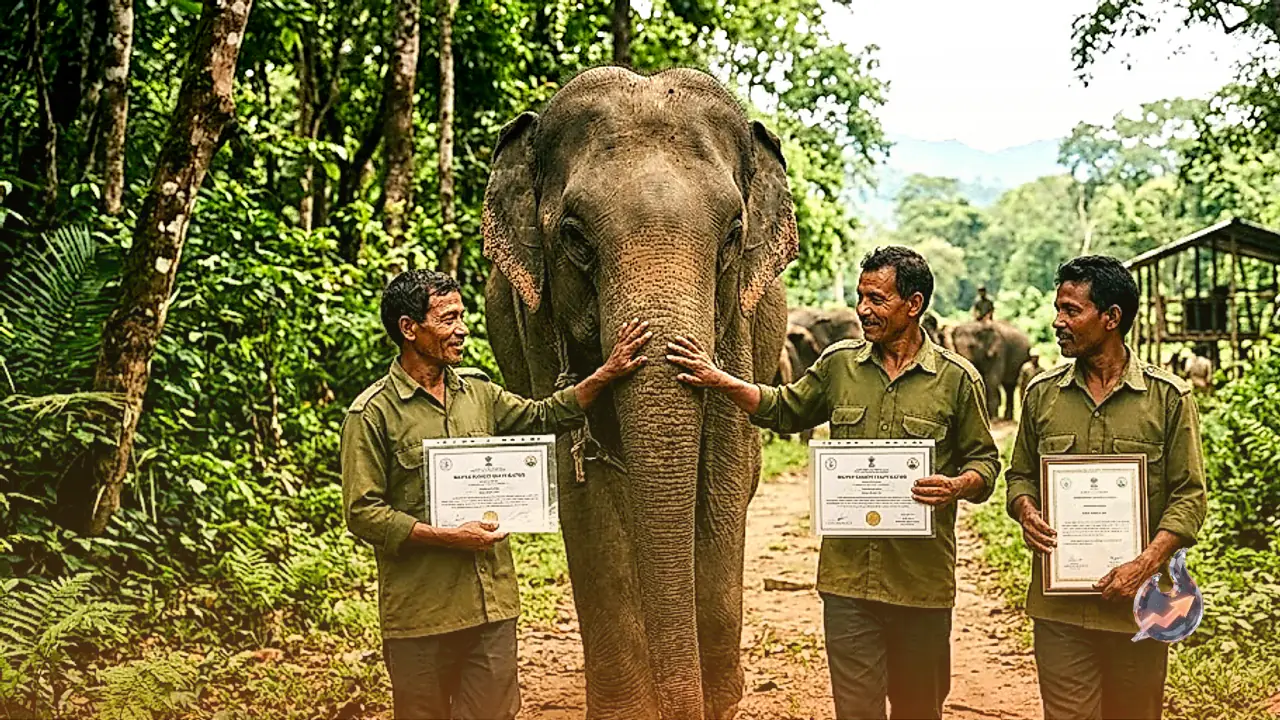
















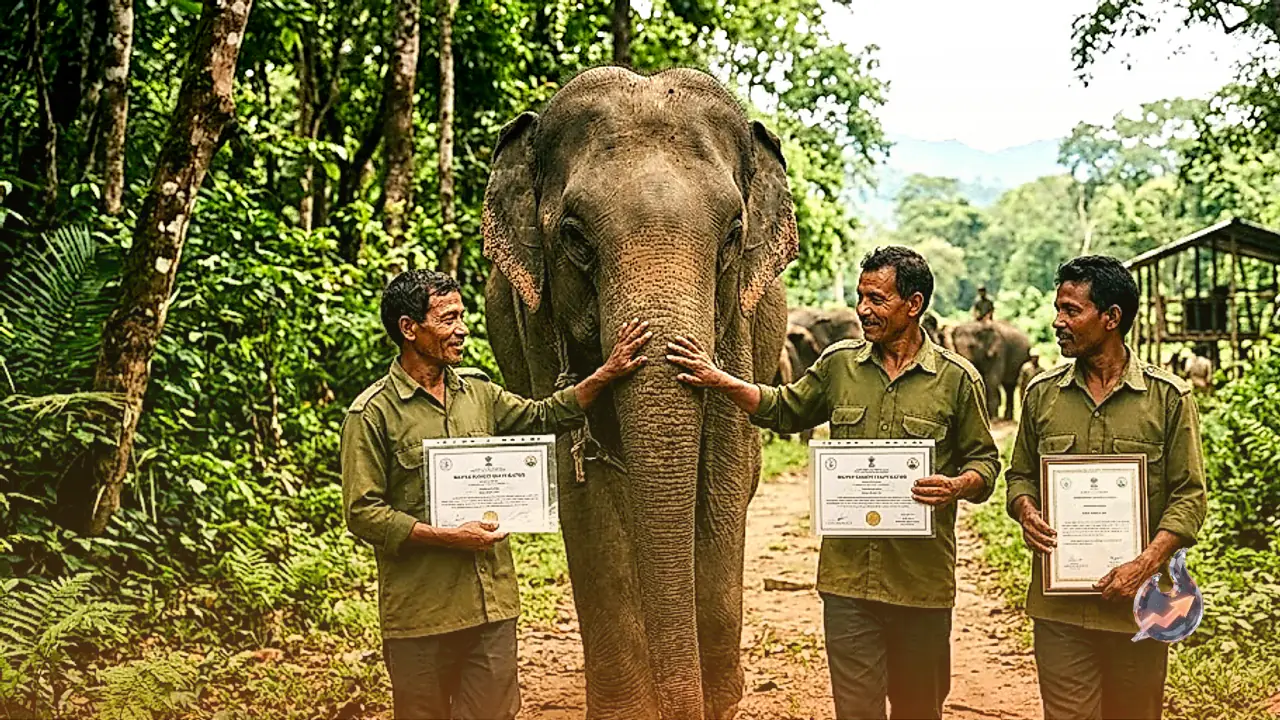

In an exceptional milestone for indigenous wildlife stewardship, two experienced elephant caretakers from the Manas National Park and Tiger Reserve in Assam have achieved the prestigious global status of Master Mahouts. Ramanuj Barla and Md. Alam Ali have earned international acclaim for their refined animal management capabilities, unlocking fresh avenues to exchange their practical wisdom with captive elephant caretakers in other parts of the world.
Certification Backed by Australian Welfare Foundation
The honour followed the successful completion of an intensive training curriculum focusing on the psychological and behavioral needs of captive-born elephant calves. The instructional framework was anchored in animal cognition and positive reinforcement principles designed by the Human Elephant Learning Programs, Advancing Elephant Welfare Foundation, widely known as the H-ELP Foundation, based in Australia. Upon concluding the rigorous evaluation, both Barla and Ali were formally decorated with badges and credentials identifying them as specialized trainers.
Heading to Thailand for Advanced Knowledge Exchange
The international assignment was detailed by Sonali Ghosh, Additional Principal Chief Conservator of Forests and Council Head of Department within the Bodoland Territorial Council. Barla and Ali will travel to Thailand to participate in an advanced technical workshop running from October 29 to November 2 at the Chiang Mai Elephant Conservation Centre. During the engagement, they will demonstrate effective, non-invasive elephant handling methods to an international cohort of conservation workers.
Milestone for Grassroots Conservationists
Ghosh, serving concurrently as the Field Director of the Manas Tiger Reserve, described the international validation as an extraordinary accomplishment for the Assam Forest Department, the reserve management, and the traditional frontline collective of mahouts and khasis. She emphasized that the rich, experiential knowledge acquired over years in the field by these handlers will provide meaningful contributions toward ongoing worldwide initiatives seeking to elevate captive elephant husbandry, safety, and welfare standards. The accomplishment was similarly lauded by James Basumatary, the Executive Member for Forest and Wildlife in the Bodoland Territorial Council, who remarked that the global elevation of Barla and Ali brings immense pride to the local forest administration and the entire state of Assam.
Seven-Day Capacity Building Initiative at Bansbari
The recognition was formally unveiled at the closing ceremony of a rigorous seven-day capacity-building initiative coordinated by the Field Directorate of Manas Tiger Reserve in partnership with the Wildlife Trust of India. The workshop, which began its proceedings on September 24 at Bansbari and drew to a close on Wednesday, represented the premier comprehensive captive elephant training ever staged within the boundaries of Manas.
Instruction throughout the week was guided by a panel of veteran practitioners, including Padma Shri awardee Parbati Barua, retired Divisional Conservator of Forests Bhupendra Nath Talukdar, and Wildlife Trust of India Chief Veterinary Officer Bhaskar Choudhury. The syllabus balanced classroom theory against active field modules, diving deep into clinical veterinary care, physical welfare, low-stress guiding techniques, and humane reinforcement. The workshop brought together 27 conservation personnel stationed across Manas, supplemented by 3 visiting elephant handlers representing the state of Odisha.
Focus on Trust and Scientific Animal Management
Officials from the forest governance structure underscored that the daily vigilance of mahouts and khasis remains indispensable to the protection of wild and captive fauna alike. Highlighting modern welfare dynamics, Ghosh pointed out that sustainable captive elephant management demands specialized technical insight, empathetic engagement, and an unbreakable foundation of mutual trust between animal and keeper, rather than obsolete coercive measures.
Ecological Prominence of Manas National Park
Sprawling across the rugged eastern Himalayan foothills along the international frontier with Bhutan, Manas remains one of South Asia's most ecologically significant landscapes. It made history in 1973 by becoming the very first tiger reserve declared in Northeast India. Over the decades, the landscape has secured widespread international safeguards as a UNESCO World Heritage Site, a Biosphere Reserve, an Elephant Reserve, an Important Bird Area, and a recognized Key Biodiversity Area. The reserve shelters critically endangered and iconic wilderness icons including the Royal Bengal tiger, Asian elephant, Indian rhinoceros, wild water buffalo, golden langur, pygmy hog, hispid hare, and the rare Bengal florican, while supporting a vibrant avian community exceeding 550 bird species.