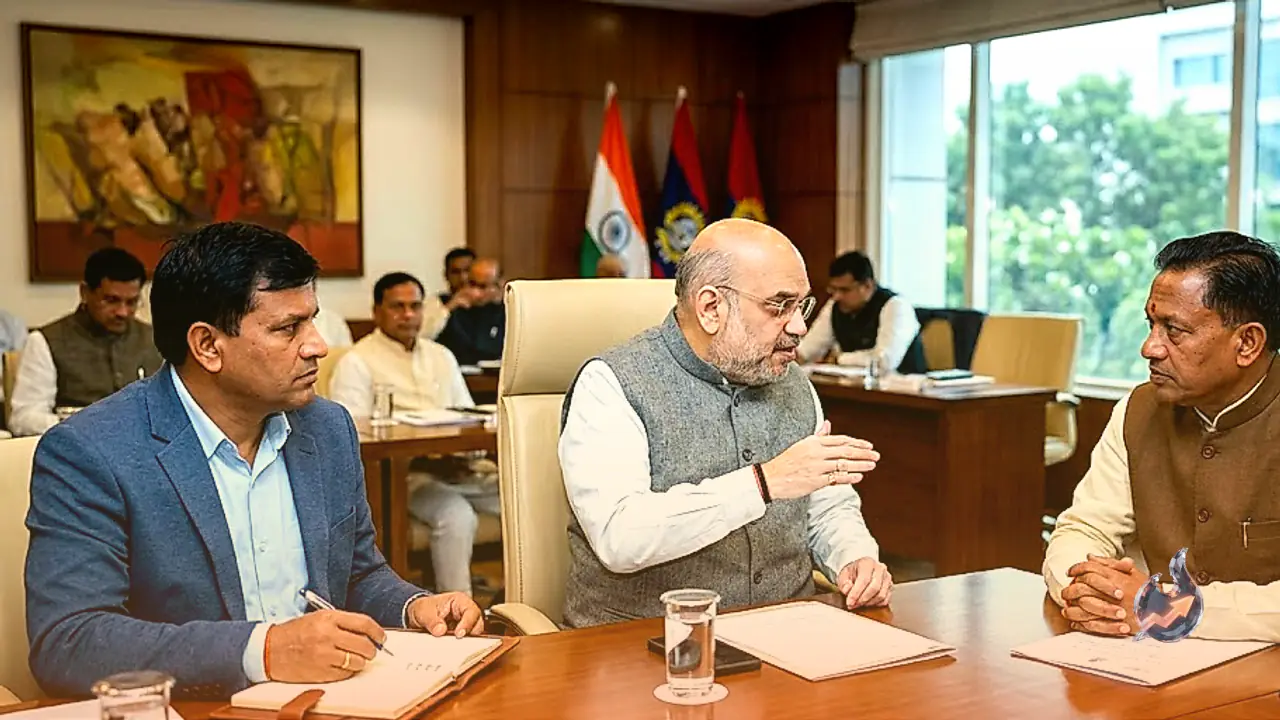















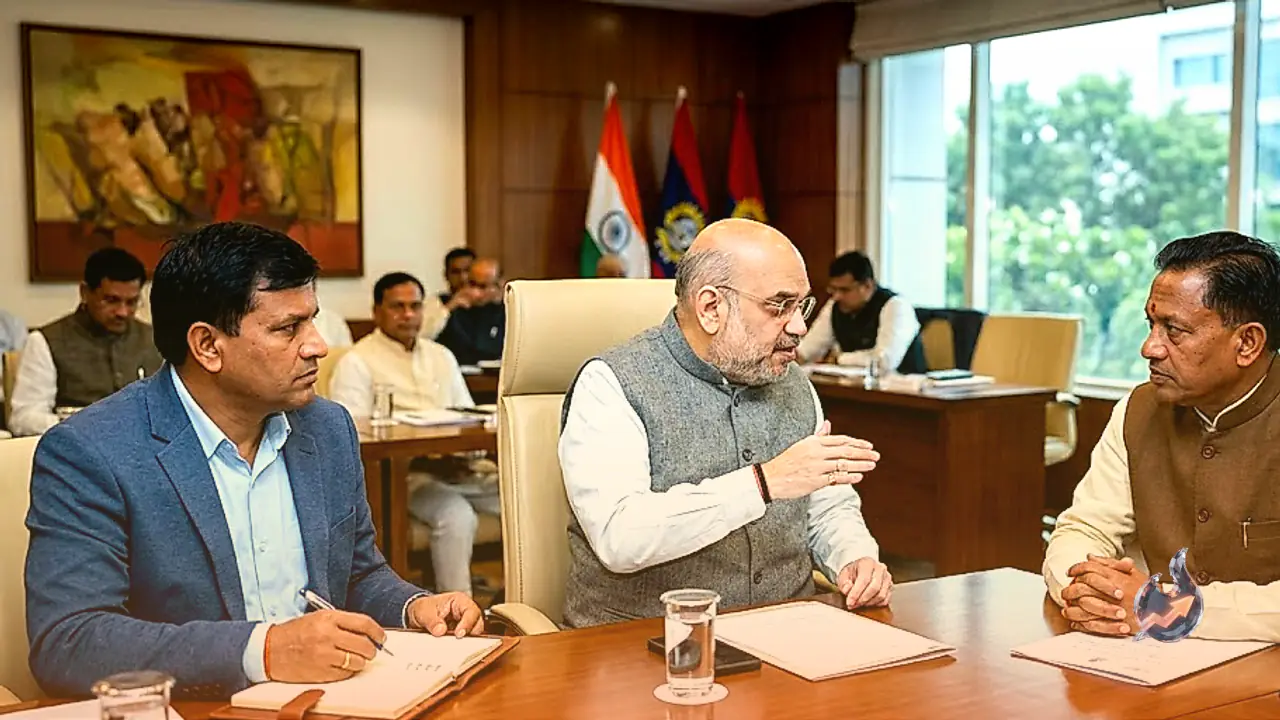

In an effort to end years of procedural deadlock over the sharing of Mahanadi river waters, a significant high-level conference was convened in New Delhi under the chairmanship of Union Home Minister Amit Shah. The deliberations brought together Chhattisgarh Chief Minister Vishnu Deo Sai and Odisha Chief Minister Mohan Charan Majhi, both of whom presented their regional priorities and expectations. Union Jal Shakti Minister CR Patil, the Chairman of the Central Water Commission, and the Chief Secretaries of both states were actively engaged in the session. This dialogue follows an earlier ministerial meeting in July led by the Jal Shakti Minister, during which both administrations had agreed to sustain technical discussions to reach a cooperative agreement.
Chhattisgarh Proposes Balanced Framework Protecting Farmers on Both Sides
During the session, Chhattisgarh Chief Minister Vishnu Deo Sai outlined a balanced roadmap, observing that the Mahanadi river should function as a unifying link between the neighbouring states rather than an instrument of partition. He stressed that any enduring outcome must avoid creating winners and losers, advocating instead for an equitable, objective, scientifically grounded, transparent, and durable consensus. Such an agreement, he stated, must prioritize and protect the long-term well-being of agricultural communities, general citizens, and coming generations across both jurisdictions.
Catchment Realities and Support for Hirakud Reservoir Operations
Detailing the hydrological dimensions of the river system, Vishnu Deo Sai observed that the Mahanadi originates within Chhattisgarh and more than half of its total catchment area falls directly inside the state borders. In light of these geographical facts, he noted that the practical requirements of Chhattisgarh's farmers, agricultural irrigation networks, and tribal regions must be fairly accommodated in any final settlement. At the same time, he affirmed Chhattisgarh's consideration for the downstream needs of Odisha, explicitly stating that Hirakud dam serves as Odisha's lifeline. He committed that Chhattisgarh would extend constructive cooperation to guarantee the uninterrupted and effective functioning of the Hirakud installation. Reflecting on the discussions, he stated on X that the Mahanadi represents the lifeblood and foundation of prosperity for the region.
Drawing Parallels With Decisive Counter-Naxal Initiatives in Bastar
Drawing an analogy with security and governance achievements, Vishnu Deo Sai referenced the ongoing campaign against Naxalism in Bastar, noting that Chhattisgarh has directly witnessed the impact of Amit Shah's resolute determination. The anti-insurgency push was structured around a strict target date of March 31, 2026. Because of that focused execution, the discourse across Bastar has transitioned away from firearms toward infrastructure and development. The central administration has likewise confirmed that the mission to eliminate Naxalism by March 31, 2026 remains on track. The Chief Minister expressed strong conviction that the same intensity and resolve that turned the tide against decades of unrest in Bastar can be applied to achieve a permanent resolution to the Mahanadi river matter.
Cultural Bonds and Shared Rural Backgrounds Unite Both Leaders
In a personal gesture, Vishnu Deo Sai referred to Odisha Chief Minister Mohan Charan Majhi as his younger brother, underlining that both states share profound social, cultural, and historical relationships. He pointed out that both chief executives originate from tribal forest regions and understand the vital importance of ensuring that irrigation waters reach the distant fields of ordinary cultivators. Highlighting their common spiritual legacy, he observed that faith in Lord Jagannath flows as an unbroken cultural current connecting Shivrinarayan in Chhattisgarh to the coastal pilgrimage city of Puri. Consequently, he argued that the river should not serve as a flashpoint for conflict, but rather become a foundation for collaborative regional progress.
Technical Committee Engagement and Pending Tribunal Proceedings
The Chhattisgarh administration expressed full faith in the ongoing mediation by the Jal Shakti Ministry and the scientific, unbiased technical assessments prepared by the Central Water Commission. Vishnu Deo Sai assured the forum that Chhattisgarh will constructively accept and implement whatever collaborative formula emerges from bilateral consultations. The July deliberations had previously highlighted technical teamwork and structured dialogue as the primary vehicles for a just and lasting settlement. In line with that guidance, an expanded technical committee under the Central Water Commission has initiated work on outstanding engineering and hydrological matters. The dispute over Mahanadi water allocations has been pending before the Mahanadi Water Disputes Tribunal since 2018. However, political and technical contacts have accelerated significantly in recent months. On September 20, both Chief Minister Sai and Chief Minister Majhi held direct talks in Bhubaneswar to discuss the Mahanadi question, with both leadership teams expressing confidence in dialogue.