

















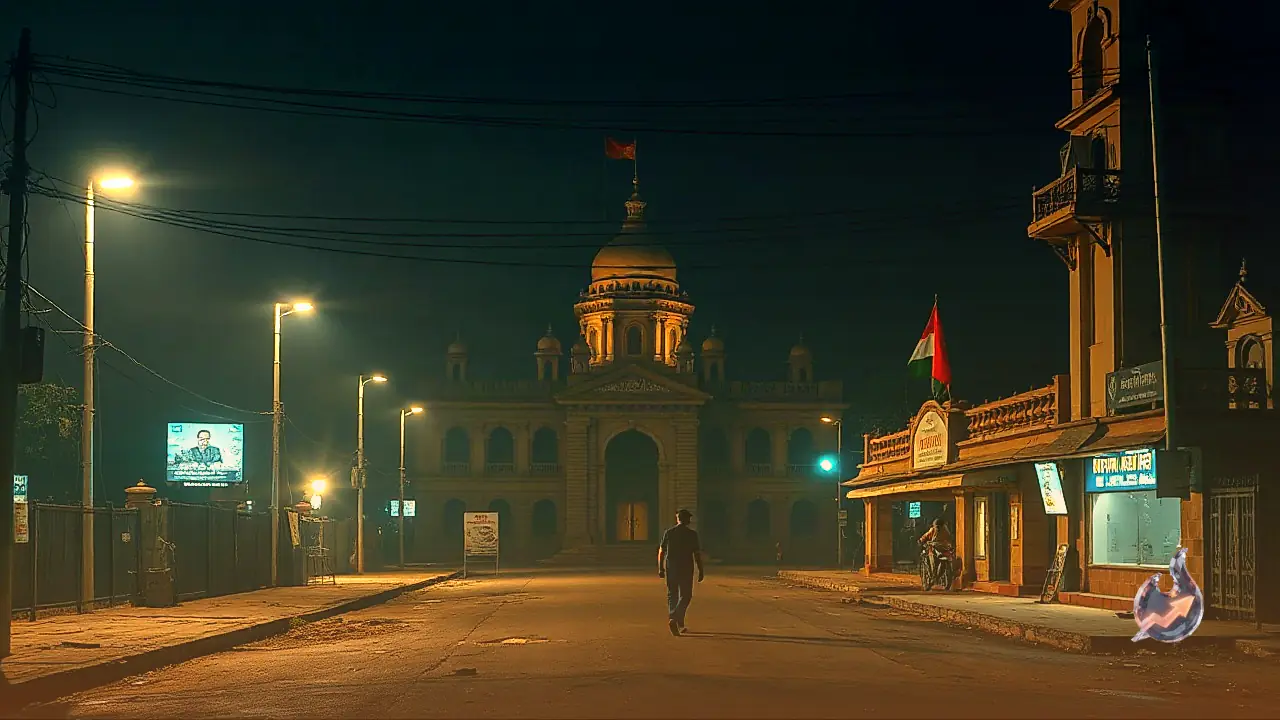

Situated in the western belt of Uttar Pradesh, the Saharanpur Nagar assembly constituency stands out as one of the state's most competitive electoral battlegrounds, where victories are routinely settled by razor-thin margins. Carved out under the 2008 delimitation exercise, constituency number 3 forms a crucial urban segment of the larger Saharanpur parliamentary seat. Across the three general assembly elections and one bye-election conducted here since its creation, the seat has essentially functioned as a direct bipartisan contest between the Bharatiya Janata Party and the Samajwadi Party. The fact that the largest victory margin in any regular general election here stands at just 12,626 votes highlights how closely contested the constituency remains. As political preparations begin to take shape for the upcoming 2027 assembly polls, historical voting trends offer critical insights into what lies ahead.
BJP Registered the First Victory on the Carved Out Seat in 2012
The first assembly election under the newly demarcated Saharanpur Nagar constituency took place in 2012. The BJP placed its bet on Raghav Lakhanpal, who had earlier served as an MLA from the pre-delimitation Saharanpur assembly seat. The election turned into a crowded contest with the Congress fielding Salim Ahmed, the Bahujan Samaj Party naming Sanjay Garg, and the Samajwadi Party entering the fray with Mazahir Hasan.
When the results were announced, Raghav Lakhanpal emerged victorious by securing 85,170 votes. He defeated his nearest rival, Salim Ahmed of the Congress, by a decisive margin of 12,626 votes, with Ahmed securing 72,544 votes. The BSP and the SP finished far behind in third and fourth spots respectively. BSP candidate Sanjay Garg managed 36,140 votes, while SP nominee Mazahir Hasan had to settle for just 19,755 votes. With this victory, Raghav Lakhanpal earned the distinction of becoming the first legislator to represent the newly configured Saharanpur Nagar constituency.
Rajiv Gumber Retained the Stronghold for BJP in the 2014 Bye-Election
The political dynamics of Saharanpur Nagar shifted significantly in 2014 when sitting MLA Raghav Lakhanpal was elected to Parliament from the Saharanpur Lok Sabha constituency on a BJP ticket. His entry into the Lok Sabha created a vacancy, necessitating a bye-election in 2014. The BJP selected Rajiv Gumber as its candidate, who faced a formidable challenge from SP nominee Sanjay Garg, while the Congress chose Mukesh Kumar.
According to Election Commission of India records, Rajiv Gumber polled 1,08,306 votes to register a commanding win. Sanjay Garg of the SP gathered 81,639 votes, falling short by 26,667 votes as the BJP maintained its grip over the assembly segment. Congress nominee Mukesh Kumar finished a distant third after securing 28,533 votes, firmly establishing the constituency as a bipolar turf between the saffron party and the Samajwadi Party.
Sanjay Garg Withstood the 2017 Wave to Wrest the Seat for SP
The 2017 Uttar Pradesh assembly elections saw a massive wave in favour of the BJP across the state, yet Saharanpur Nagar defied the overarching trend to produce a dramatic outcome. The BJP re-nominated its incumbent legislator Rajiv Gumber, while the Samajwadi Party once again placed its trust in Sanjay Garg to lead the challenge.
The ensuing contest became the closest electoral battle in the history of the constituency. In a breathtaking finish, Sanjay Garg managed to defeat Rajiv Gumber by a slender margin of only 4,636 votes. Garg polled 1,27,210 votes against Gumber's tally of 1,22,574 votes. The contest consolidated into a strictly two-way battle, as the BSP candidate lagged far behind with just 17,350 votes, while no other contender was able to breach even the 1,000-vote mark.
Rajiv Gumber Avenged His Defeat in the 2022 Showdown
The 2022 assembly elections witnessed the third consecutive face-off between BJP candidate Rajiv Gumber and SP nominee Sanjay Garg. Aiming to recapture the constituency, Rajiv Gumber mounted an aggressive ground campaign accompanied by focused booth management.
Much like the 2017 contest, the 2022 election turned into an intense, high-voltage affair. Rajiv Gumber succeeded in overturning the previous verdict by defeating Sanjay Garg by a margin of 7,434 votes. Gumber secured 1,43,195 votes, while Sanjay Garg put up a formidable fight with 1,35,761 votes. Meanwhile, the BSP saw its electoral relevance shrink further in the seat, with its candidate Manish managing a meager 8,766 votes.
Electoral Equations and Voter Dynamics Ahead of 2027
A comprehensive review of the electoral record from 2008 to 2022 shows that out of four elections conducted in Saharanpur Nagar, the BJP won three, including the 2012 general election, the 2014 bye-election, and the 2022 general election, while the Samajwadi Party secured victory in 2017. In terms of individual candidate performance, Rajiv Gumber has represented the seat twice in the state assembly, whereas Sanjay Garg held it once. The highest margin of victory in a general election remains Raghav Lakhanpal's 12,626 votes from 2012, whereas the closest contest was the 4,636-vote difference seen in 2017.
The demographic landscape of the Saharanpur Nagar constituency is characterized by sizeable and influential populations of Muslim, Punjabi, Vaishya, Dalit, and other Other Backward Class communities. The voting patterns and mobilization among these key demographic groups dictate the electoral fortunes of contesting parties. Looking ahead to the 2027 assembly elections, another fierce head-to-head collision between the BJP and the SP appears imminent. The eventual outcome will hinge heavily on candidate selection, local caste equations, and granular booth-level election management by both camps.