





















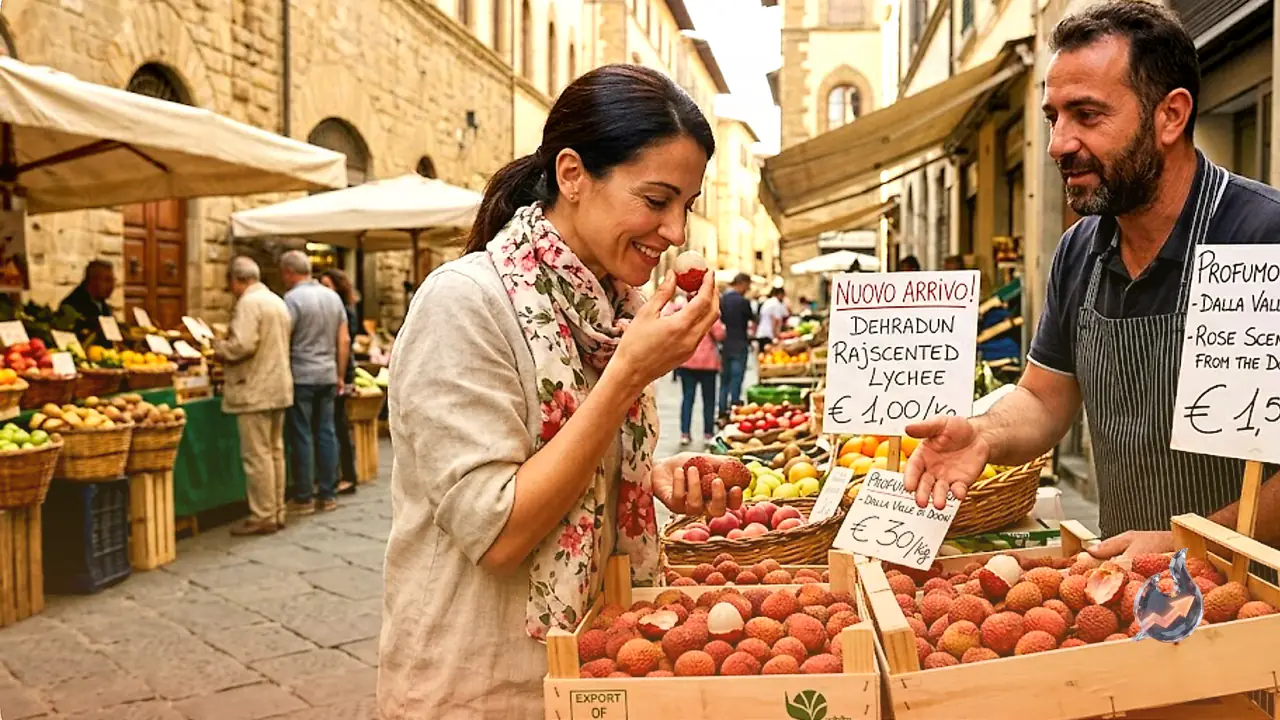

Dehradun's celebrated Rajscented lychee has crossed continents, landing in the markets of Italy with a first consignment of 1 metric ton dispatched recently through the support of APEDA, the Agricultural and Processed Food Products Export Development Authority. The Doon Valley's aromatic fruit is now finding buyers in Italy, the United States, and across Europe on a daily basis. It had previously been shipped to London as well. Demand for Dehradun's signature lychee has never been stronger, even as local production has been declining steadily over the years.
From British-Era Orchards to Global Markets: A Two-Century Legacy
The history of lychee cultivation in Dehradun stretches back nearly two centuries and leads directly to the British colonial period. During the 1820s and 1830s, British officials and Chinese horticulturalists introduced lychee plants to the Doon Valley for the first time. The region's distinctive soil composition, the cold winds sweeping down from the Himalayas, and its unique natural geography combined to make it an ideal environment for growing this tropical fruit.
As orchards flourished, Dehradun's lychee grew so prized during the colonial era that it was specially set aside for Viceroys and British officers. Neighbourhoods such as Dalanwala and Rajpur Road in Dehradun were, during that period, known primarily for their expansive lychee gardens. The Rajscented lychee trees standing at the Circuit House Rajkiya Udyan today were first planted in 1910, and they have continued to bear fruit for well over a century since.
Three Celebrated Varieties the Doon Valley Grows
Deepak Kukrathi, Garden In-charge of the Circuit House Rajkiya Udyan in Dehradun, noted that the city was once a major centre of lychee production but has seen a gradual fall in output over time. He said Dehradun's soil and climate are still considered very well suited to lychee farming. The garden currently cultivates three main varieties: Rajscented, Late Badana, and Calcuttia.
Of these, the Rajscented is the most distinctive and the most sought-after, according to Kukrathi. The name itself tells you something about what makes it special. Once the fruit ripens fully, the pulp and juice release a beautiful rose-like fragrance unlike anything found in other varieties. This scent is what sets it apart and has made it a name lychee lovers recognize instantly. Beyond the Rajscented, there are also varieties with no seed at all, or a very small one, where the pulp content is considerably higher.
Late to Ripen, Unmatched in Sweetness and Fragrance
Grown at the cool Himalayan foothills of Uttarakhand, Dehradun's lychee belongs to the late-ripening category. Its outer skin turns a deep red when mature. The texture is soft, the pulp intensely sweet, and every bite carries a freshness that distinguishes it from lychees produced in other parts of the country. Large in size, dense in flesh, and small in seed, this variety has built its entire reputation on natural sweetness and fragrance.
Kukrathi also pointed out that even as local production has been declining, demand for Dehradun's lychee has kept climbing. The widening gap between a shrinking supply and a growing appetite for the fruit has pushed both its price and its recognition steadily higher.
The Meloni Connection and a Growing Global Appetite
A few months ago, a meeting between Prime Minister Narendra Modi and Italian Prime Minister Giorgia Meloni generated widespread social media buzz, with the Melody candy becoming an unexpected trending topic. But Dehradun now has its own Italy story to tell: its prized Rajscented lychee is being shipped daily to Meloni's country. With daily consignments heading to Italy, the United States, and other European markets, and London having received a shipment earlier, the Doon Valley's most fragrant fruit is steadily building a genuinely global audience.