

















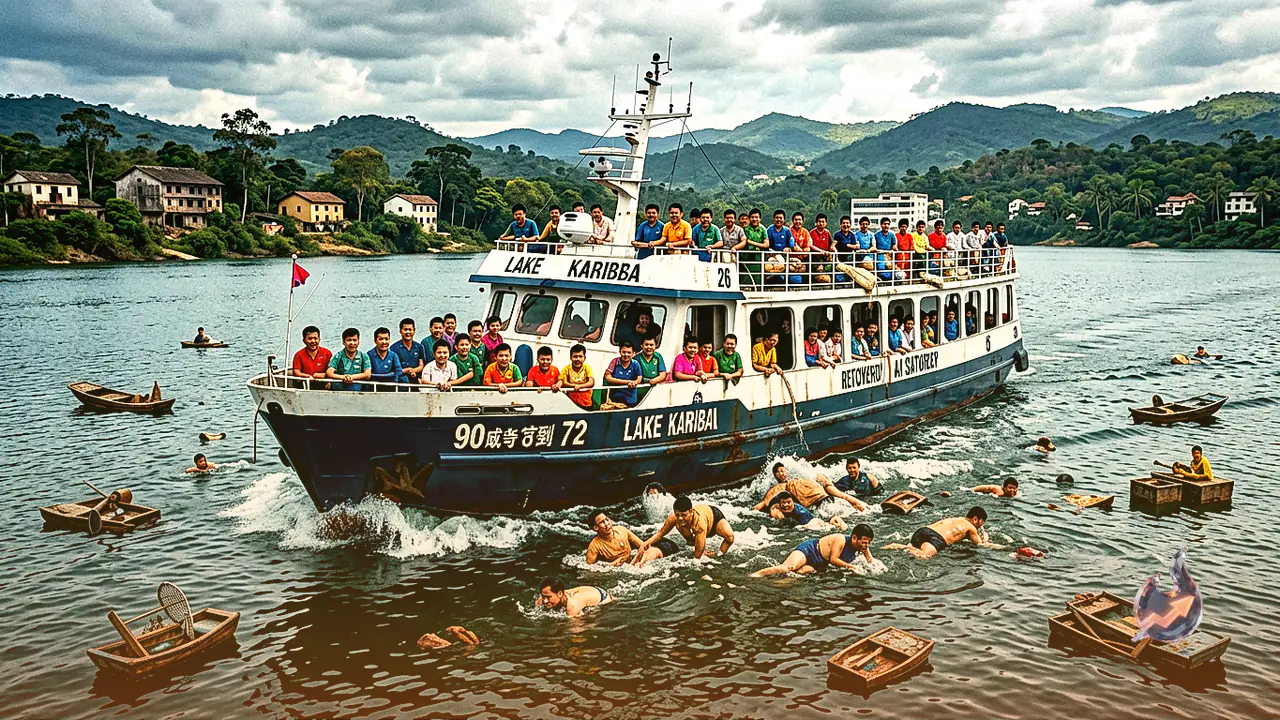

A catastrophic maritime tragedy unfolded on Lake Kariba in Zimbabwe when an overloaded state-operated ferry capsized amid rough waves on Tuesday. Search and rescue operations reached a grim milestone on Saturday as retrieval teams recovered 26 additional bodies from the water, bringing the confirmed death toll to 72. Emergency workers from the disaster management agency managed to rescue 77 survivors from the turbulent waters, temporarily evacuating them to a small islet on the lake before bringing them back to the mainland.
Severe Overcrowding and Child Casualties
Official casualty logs released by law enforcement revealed that 18 children perished in the disaster. Among these young victims, 16 were aged 10 or under, with the youngest casualty being just one year old. Authorities noted that initial estimates struggled to account for children because toddlers beneath the ticketing age threshold were excluded from standard passenger manifests. While the aging ferry was legally rated for a maximum capacity of 90 passengers, officials estimate that up to 153 people were packed onboard at the time of the incident.
Vital Lifeline for Remote Communities
The ill-fated vessel was managed by a government agency, serving as an indispensable transit line between the port town of Kariba and isolated fishing villages across the country's northwest. In these remote territories, land transportation infrastructure remains severely underdeveloped, leaving residents with virtually no alternative public transport routes. Communities around the shore relied heavily on this ferry service to access markets and essential services in Kariba. This tragedy follows another major maritime disaster earlier this month in Indonesia, where a vessel carrying 271 passengers caught fire while traveling between Surabaya and Makassar.
Geography of the World's Largest Man-Made Reservoir
Lake Kariba, where the disaster occurred, holds the distinction of being the world's largest artificial reservoir by volume. The massive body of water was created between the late 1950s and early 1960s following the damming of the Zambezi River. Extending over 200 kilometers in length and reaching widths of up to 40 kilometers at its broadest points, the lake forms a natural border shared by Zimbabwe and Zambia, with their international boundary dividing the water body down the middle.