























Addressing international delegates on October 29, Defence Minister Rajnath Singh emphasized that India's counter-terrorism expertise is not derived from classroom theory or abstract studies. Instead, he explained that this operational knowledge was built through decades of confronting cross-border security threats directly on the ground. Every tactical approach implemented by India has undergone rigorous testing in real-world situations, repeatedly proving its effectiveness during critical operations.
Operation Sindoor and the Stand on State-Sponsored Terror
Speaking at the ASEAN Defence Ministers' Meeting-Plus (ADMM-Plus) held in Cebu, Philippines, Rajnath Singh cited Operation Sindoor from the previous year as a primary illustration of India's counter-terrorism doctrine. He noted that the initiative successfully dismantled an extensive array of terrorist infrastructure. The Defence Minister remarked that the operation served as an unambiguous public declaration of India's resolute stance against state-sponsored terrorism.
Maritime Law Compliance and Securing Critical Sea Lanes
Turning to maritime safety, Rajnath Singh affirmed that India goes beyond merely advocating for international maritime legal frameworks by strictly adhering to them in practice. Preserving freedom of navigation and ensuring the unhindered flow of traffic across global Sea Lines of Communication remain central to India's strategic vision, supported by extensive operational experience built over decades.
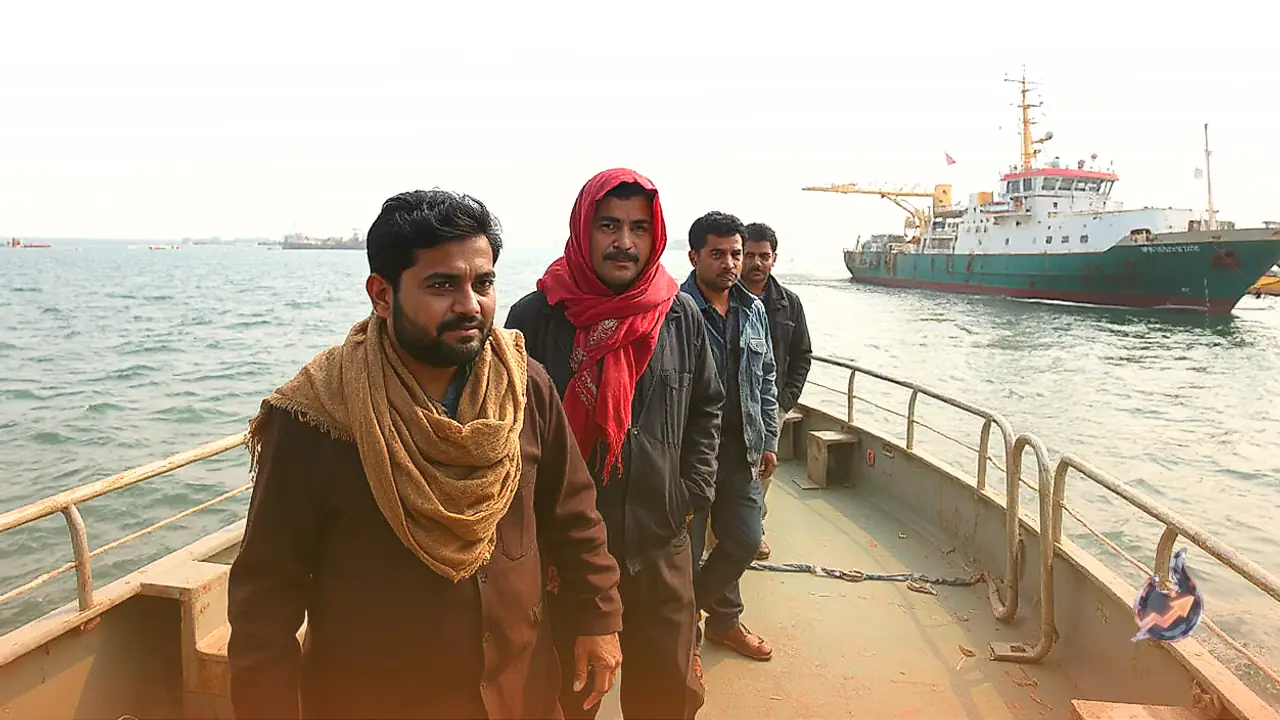
Highlighting real-world naval contributions, the Defence Minister pointed out that the Indian Navy has maintained an active presence in high-risk zones, such as the Gulf of Aden, continuously since 2008. Throughout these deployments, India refrained from exercising force in any manner that compromised the interests of other nations. By stationing frontline warships in critical corridors, the Indian Navy has provided reliable protection to thousands of merchant vessels and successfully intercepted multiple attempted hijackings at sea.
Framework of the ADMM-Plus Platform
The ADMM-Plus serves as a multilateral consultation forum uniting the 11 member states of the Association of Southeast Asian Nations alongside eight dialogue partners: India, China, Australia, Japan, New Zealand, South Korea, Russia, and the United States. India's historical institutional partnership dates back to 1992, when it first became an ASEAN dialogue partner.
The inaugural convening of ADMM-Plus occurred in Hanoi on October 12, 2010. For the year 2026, the Philippines holds the chair of the forum. Furthermore, within the existing institutional architecture, India is actively co-chairing the Experts' Working Group on Counter-Terrorism alongside Malaysia for the 2024 to 2027 cycle.