



















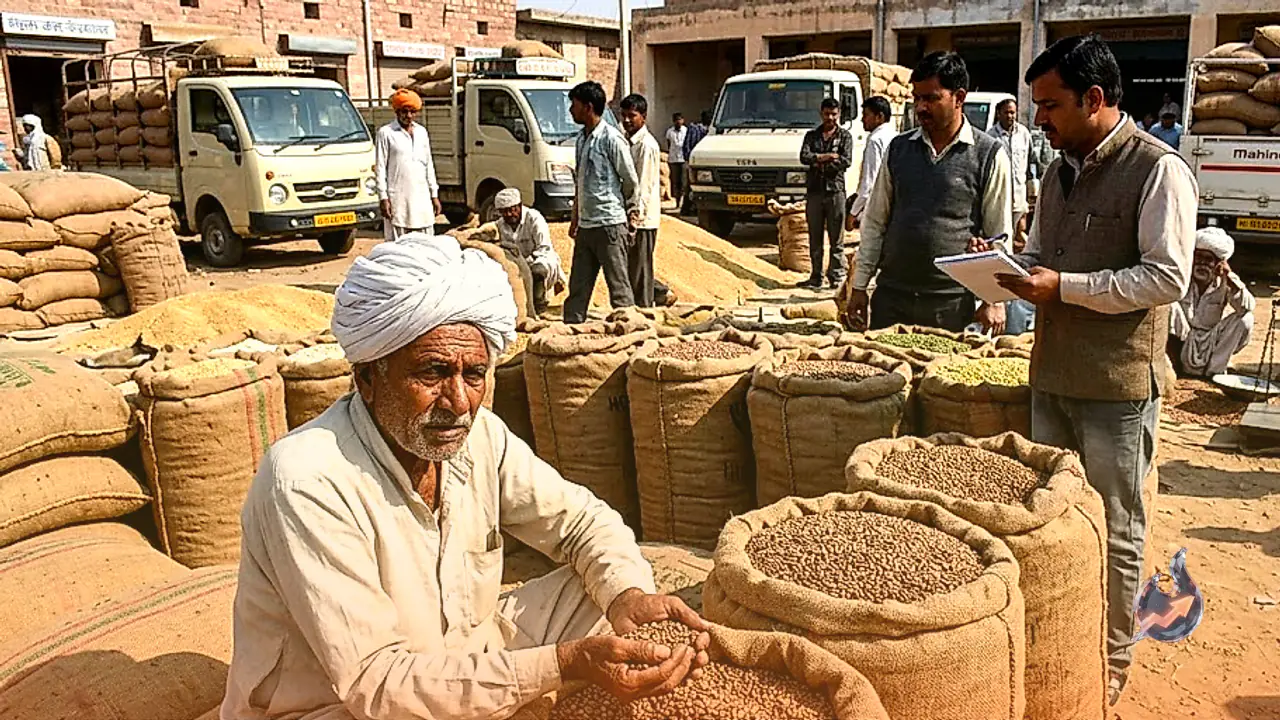

A severe monsoon deficit across western Rajasthan has disrupted the regional agricultural landscape and sent shockwaves through wholesale grain markets. The shortfall in seasonal rainfall has led to a drastic drop in the output of moth bean, a staple pulse crop of the arid zone, causing its market prices to spiral upwards rapidly. With supplies shrinking in mandis, wholesale rates have nearly doubled compared to the previous season. This agricultural setback has not only crippled farmer earnings across key growing belts but also cast a shadow over Bikaner's renowned food processing sector. As raw material expenses escalate, consumers may soon face price hikes on popular snack items including the globally famous Bikaneri bhujia.
Wholesale Moth Bean Rates Surge to Rs 9,300 per Quintal
The restricted arrival of fresh harvest in grain mandis has triggered a sharp price rally for moth beans. During the previous year, wholesale trading rates for the commodity fluctuated between Rs 4,200 and Rs 5,200 per quintal. However, current market figures show prices soaring to between Rs 8,800 and Rs 9,300 per quintal. This near 100 percent increase in raw material costs is creating friction across the supply chain. Because moth beans serve as an essential ingredient for flour used in traditional Indian snacks alongside general pulse consumption, the price hike is expected to reverberate across the broader food market.
Overall Crop Production Drops Below 20 Lakh Bags
Production estimates for the current season highlight the severity of the dry spell. Bikaner Grain Mandi Association President Jai Dayal Dudi noted that drought-like conditions prevail across western Rajasthan due to poor monsoon performance. Since moth bean cultivation relies almost entirely on natural rainfall rather than artificial irrigation, water stress directly hampers crop yields. Dudi explained that while last year's favorable rains yielded approximately 50 lakh bags of moth bean, output for the current harvest is expected to fall below 20 lakh bags. This represents a steep decline, leaving total production at barely 40 percent of the previous year's total volume.
Bikaner and Churu Lead Cultivation Belt Amid Heavy Losses
Moth bean farming in Rajasthan remains heavily concentrated in a few specific geographic pockets. According to Jai Dayal Dudi, the state allocates roughly 10 lakh hectares of land for moth bean sowing. Out of this total area, Bikaner and Churu districts account for nearly 60 percent of overall cultivation, with the remaining 40 percent spread across arid districts such as Barmer and Jaisalmer. Farmers who delayed sowing in anticipation of late monsoon showers suffered the heaviest losses as crops withered without rain. The resulting yield contraction has severely damaged agricultural incomes while restricting inventory levels across regional trading hubs.
Rising Input Costs Threaten Bikaneri Bhujia Industry
The surge in moth bean prices poses a direct challenge to Bikaner's iconic snack manufacturing industry. Moth bean flour forms the core structural component of authentic Bikaneri bhujia, a delicacy distributed extensively across national and international consumer markets. Increased raw material rates inevitably raise the baseline manufacturing expense for local producers. Industry observers indicate that if wholesale pulse prices remain elevated, processors may eventually need to pass the extra burden onto end consumers through retail price adjustments, depending on business decisions made by local enterprise owners.