





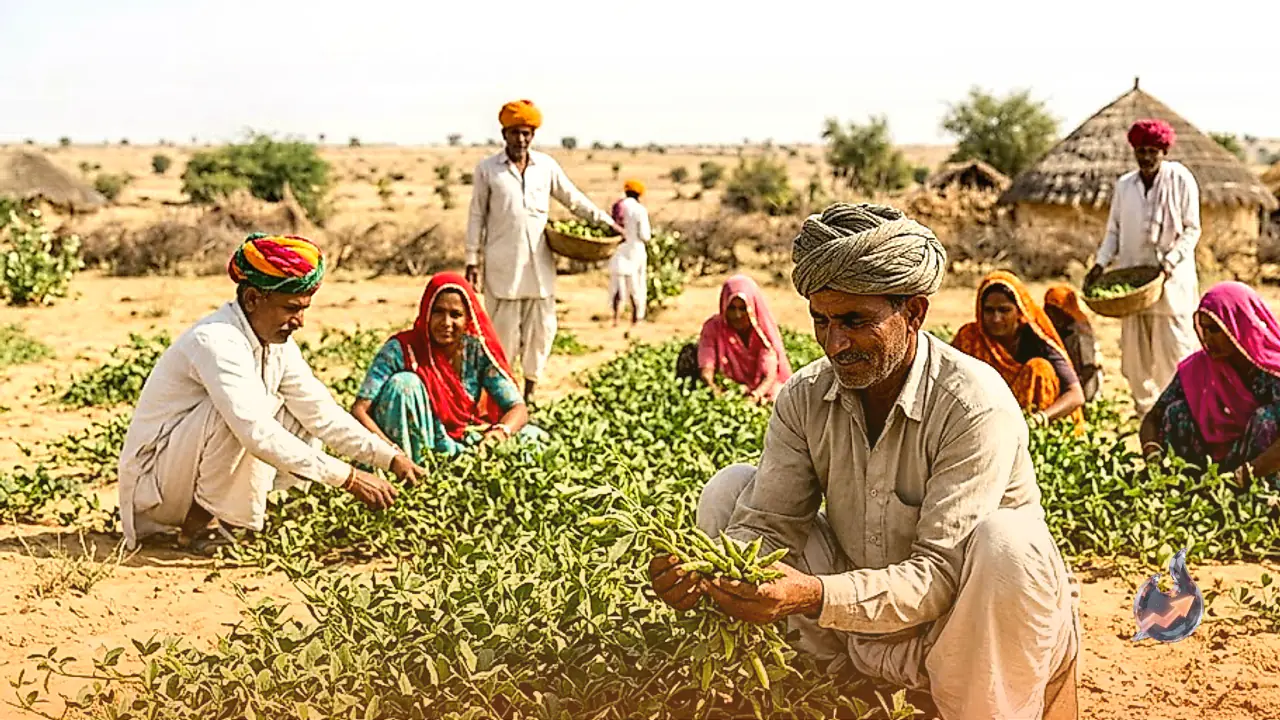














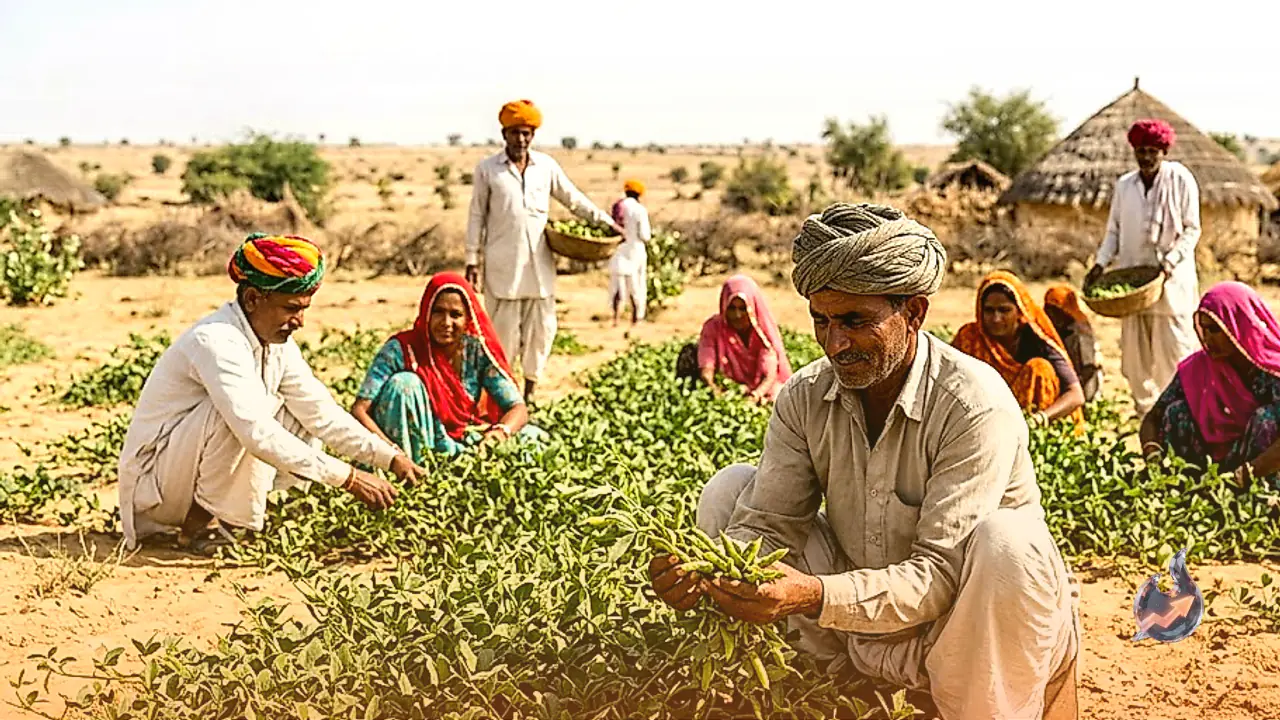

Farmers navigating erratic monsoon patterns and persistent dry stretches during the kharif season are finding a dependable alternative in fast-maturing pulse crops. In the arid landscapes of western Rajasthan, where moisture vanishes quickly and traditional sowings struggle, advanced moth bean varieties developed by the Central Arid Zone Research Institute, widely known as CAZRI, are changing outcomes in the field. Unlike local heirloom seeds, these improved variants flower much earlier and complete their entire reproductive cycle in a significantly compressed timeframe. This rapid growth allows crops to cross vulnerable developmental milestones before groundwater reserves evaporate, cushioning growers against mid-season climatic shocks.
Live Field Harvesting Demonstrates High Yields to Growers
During a dedicated Field Harvest Day and scientist-farmer interactive meet organised in Jodhpur, agricultural experts showcased the tangible results of these developments directly on farm plots. Field staff harvested mature stands of Moth-6 and Moth-7 varieties right before visiting cultivators, giving them an unvarnished view of actual output under arid stress. The core objective of the outreach was to put resilient technologies directly into farmers' hands, showing how limited soil moisture can be utilised with precision. Specialists emphasised that modern agronomic practices and weather-informed crop planning must replace rigid traditional routines if farms are to remain productive.
Rainfall Plummets to 220 mm Compared to Five-Year Average
Addressing the gathering, CAZRI Director Dr. HS Jat highlighted the stark climatic swings observed across the region this year, pointing out that total rainfall reached barely 220 millimetres. This represents a steep decline from the preceding five-year regional benchmark, where seasonal precipitation averaged nearly 500 millimetres. Compounding the moisture deficit, the current season witnessed an extended dry gap of approximately 30 to 35 days without any rain. Under such severe constraints, conserving and allocating moisture from initial sowing through vegetative growth and final grain filling becomes paramount. Dr. Jat urged growers to align their seasonal cropping choices strictly with local weather alerts and ground moisture levels to avoid complete harvest loss.
Building Crop Systems Around Pearl Millet, Moth Bean, and Cluster Bean
Agricultural researchers advised farmers to design a robust cropping matrix incorporating pearl millet, moth bean, and cluster bean, often referred to as guar, based on local water availability. Adopting a structured crop rotation system preserves soil nutrients, prevents depletion of topsoil fertility, and disperses the risks associated with volatile weather patterns. The short-duration moth bean strains engineered by CAZRI are particularly suited for fragile ecological zones that receive sparse precipitation punctuated by multi-week dry intervals. Adapting to evolving climate dynamics through low-water crops, verified seed varieties, and disciplined field management remains the most reliable strategy to stabilize rural farm revenue.