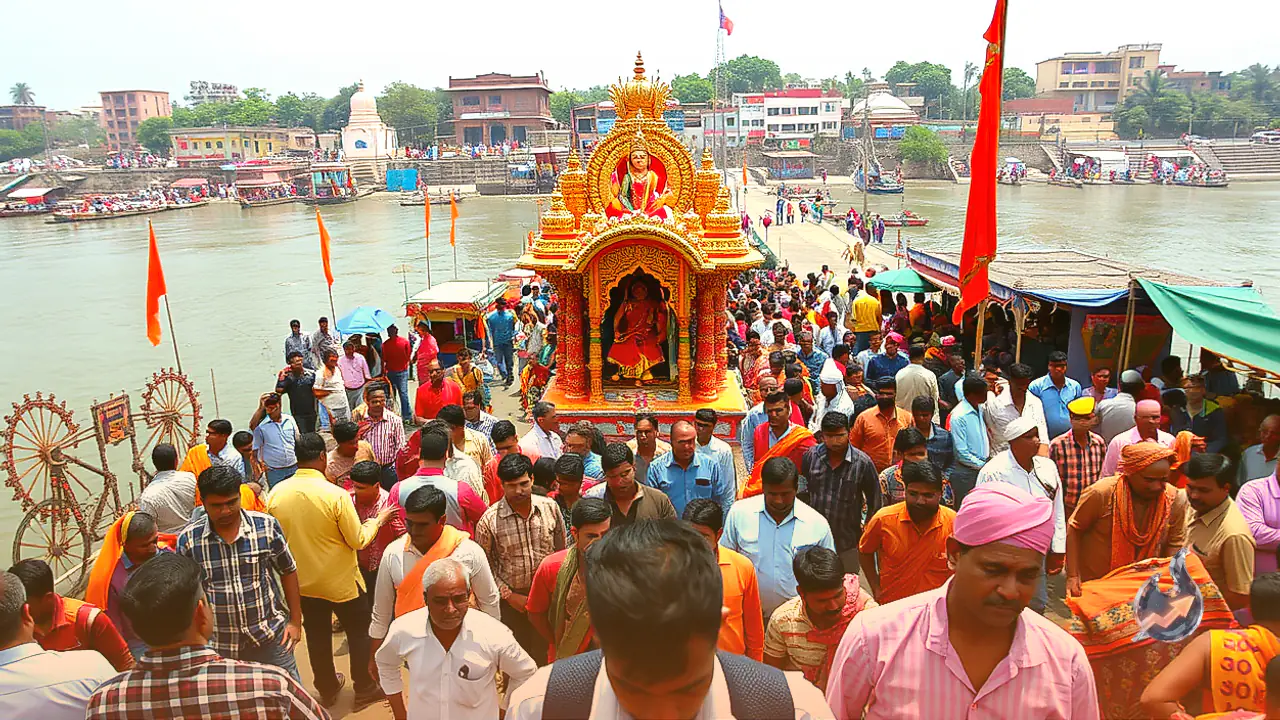
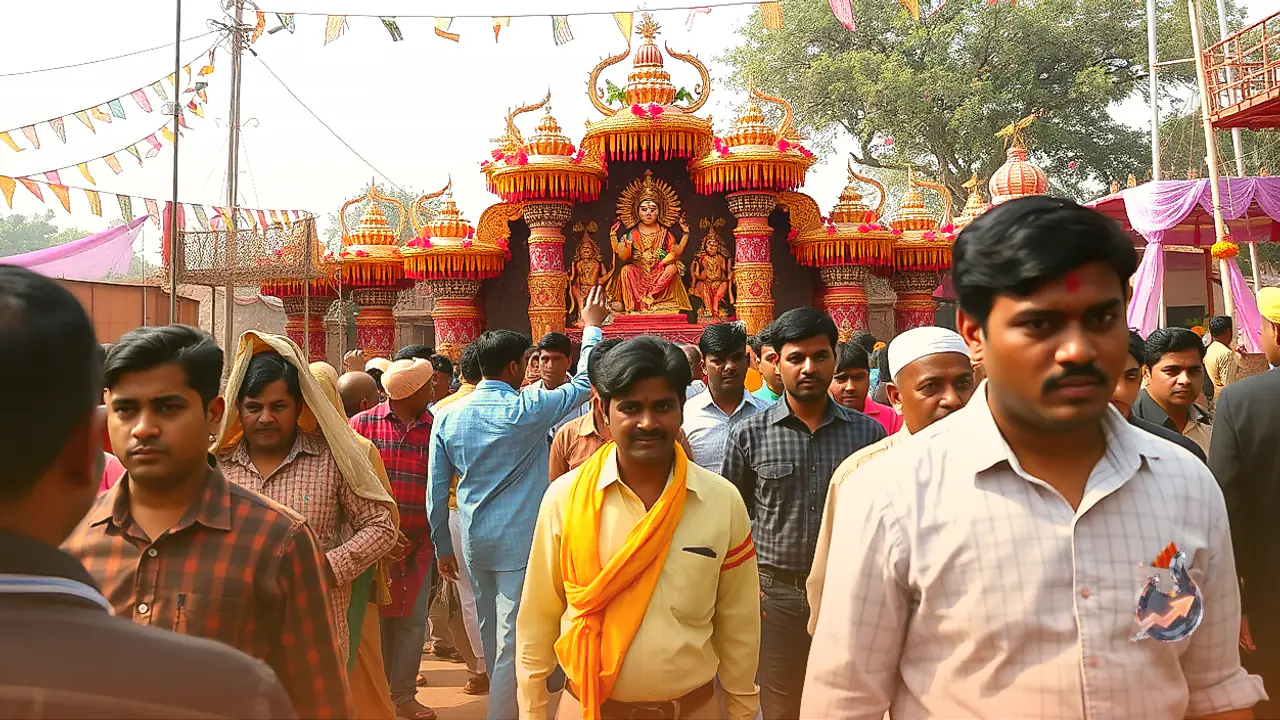















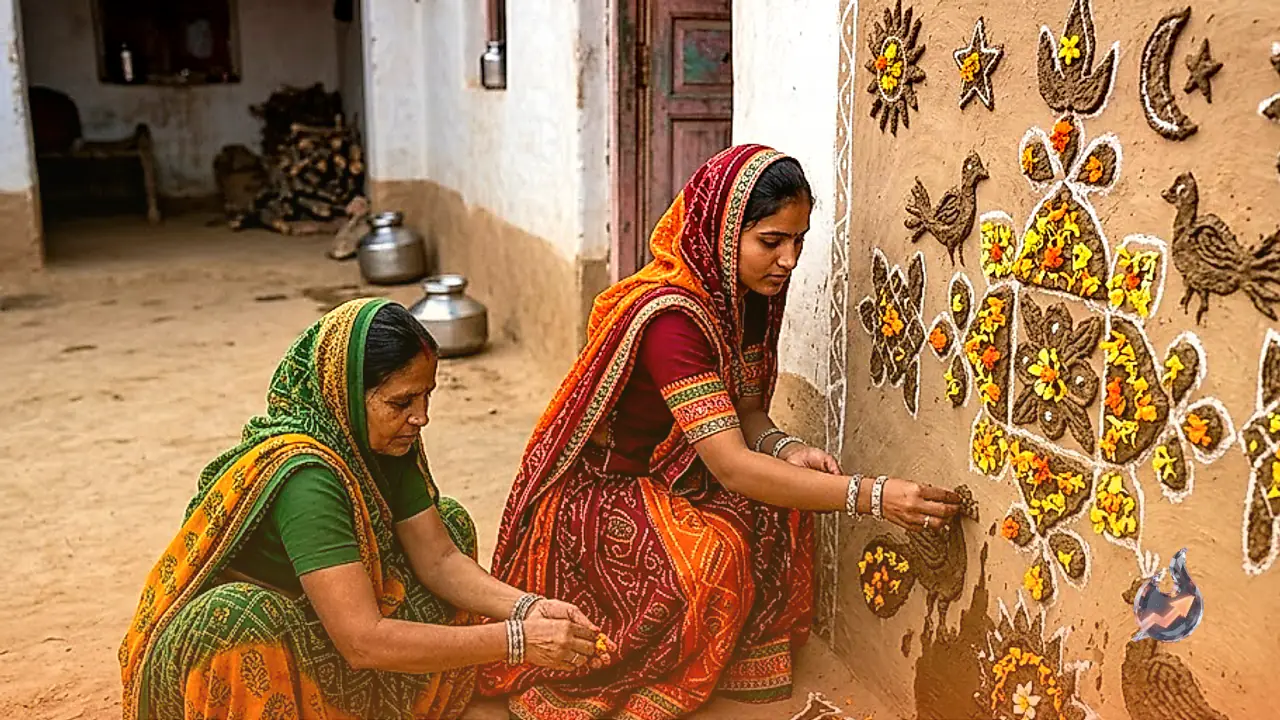

In Rajasthan's Karauli district, age-old cultural customs and religious rituals continue to flourish alongside modern lifestyle changes. During the ongoing period of Pitru Paksha, also known as Shraddh Paksha, the historic 250-year-old tradition of creating Sanjhi art is being observed with deep devotional fervour across Karauli town and surrounding rural localities. In neighbourhoods such as Bhudara Bazar and Vaishali Nagar, women and newlyweds are designing elaborate Sanjhi murals on household courtyards and walls using cow dung, fresh flora, and natural pigments for daily worship.
Daily Artistic Transformations Across Fifteen Days
In accordance with Sanatan customs and long-standing folk beliefs, the observance of creating and worshipping Sanjhi spans a full 15 days, commencing on the Pratipada tithi and culminating on Amavasya. Each morning and evening, women craft intricate artistic motifs using fresh cow dung on walls and floors, subsequently embellishing these relief figures with vibrant fresh flowers, natural leaves, and herbal colours. A distinct design and thematic form is introduced on each consecutive day, drawing neighbouring women together to admire the artwork and participate in collective prayers.
Evenings Filled with Folk Music, Chants, and Dance
The daily Sanjhi rituals transform local residential quarters into lively community celebrations. Following the evening prayer and aarti, women assemble in groups to perform traditional folk ballads, devotional bhajans, and musical recitals. Accompanied by the rhythmic beats of the dholak, participants perform traditional dances, effectively transmitting this cultural legacy across generations. The fifteen-day festival concludes on Pitru Amavasya with special religious observances. On this final day, an elaborate Sanjhi is created exclusively using dry abir, gulal, and colourful powders, while women celebrate with henna-adorned hands, music, and community festivities.
Cultural Link with Shri Madan Mohan Ji Temple
The historical significance of Karauli's Sanjhi tradition shares a profound connection with the renowned local deity at the Shri Madan Mohan Ji temple. Beyond its spiritual dimension, this folk practice serves as a vital community platform that strengthens social bonds among women while preserving regional Rajasthani folk art. Guided by older generations, young girls and women continue to master and carry forward this 250-year-old cultural heritage with pride and enthusiasm.