






















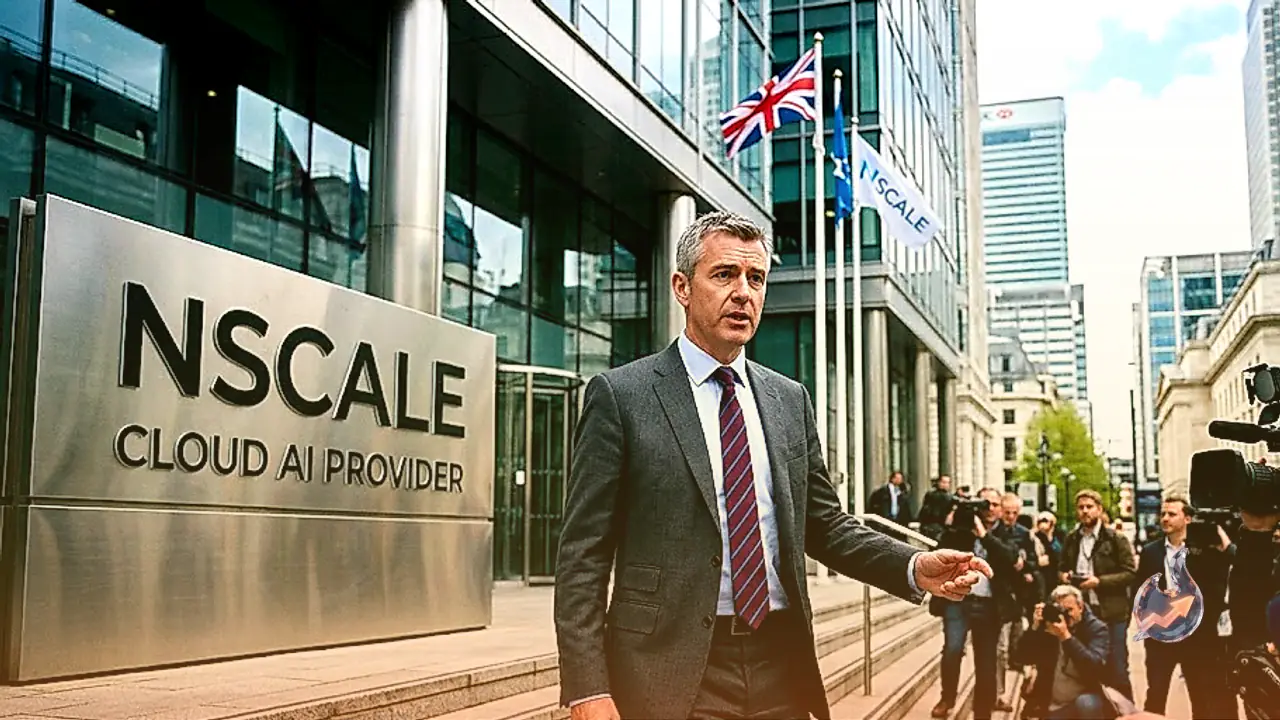

British neocloud infrastructure specialist Nscale is advancing toward a public listing on the New York Stock Exchange, setting the stage for a critical test of public market appetite for specialized artificial intelligence infrastructure providers. The company plans to raise $3 billion in the offering, targeting an overall valuation of $35 billion. While the market debut highlights booming corporate demand for high-performance computing, it also shines a bright light on extreme customer concentration within the broader AI supply chain.
Contract Pipeline Dominated by Two Industry Heavyweights
Two years after being spun out from Australian cryptocurrency mining firm Arkon Energy, Nscale has rapidly built an expansive commercial footprint. According to its regulatory IPO filing, the venture has secured commercial commitments exceeding $103 billion. However, the underlying structure of these forward agreements shows an intense concentration of operational revenue.
Approximately 85% of Nscale's entire contractual backlog originates from just two entities. The company has a compute supply agreement with Microsoft valued at $43.8 billion that runs through 2033, alongside an additional $44.6 billion capacity pact agreed with AI safety and research lab Anthropic.
The Anthropic arrangement carries notable execution conditions. The agreement is explicitly contingent upon Nscale securing the required financing to deliver the contracted computing capacity. Furthermore, Anthropic retains contractual discretion to terminate the partnership or walk away entirely if Nscale misses project delivery milestones that regulatory disclosures categorize as stringent.
Systemic Interdependence Across AI Infrastructure
Nscale's narrow customer base exemplifies a wider industry pattern. Research by credit hedge fund Sona Asset Management indicates that a substantial proportion of emerging cloud infrastructure providers are tethered to a handful of enterprise buyers. While Sona observed that shared exposure is not inherently flawed, it warned that any operational stumbling block or strategic realignment by a single anchor client can ripple across the entire sector.
Comparable dependencies are visible across Nscale's peer group. Sector rival CoreWeave generates roughly 67% of its total revenue from Microsoft. In a similar vein, data center developer Applied Digital relies on Oracle for 67% of its incoming revenue, while generating another 30% directly from CoreWeave, underscoring how circular capital flows have become.
Revenue Surge Accompanied by Widening Deficits
Financial metrics disclosed in the regulatory filing illustrate both explosive commercial expansion and the capital intensity required to build high-density compute facilities. For the six-month period ending June 30, Nscale recorded revenue of $140.6 million, marking a steep climb from $10.4 million generated during the corresponding six-month window a year earlier. Operating scale, however, drove bottom-line losses wider, with net losses mounting to $1.02 billion from $369 million in the prior-year period.
To support its substantial capital commitments, Nscale has continued to draw support from strategic industry partners. Chip designer NVIDIA recently committed $1 billion in convertible debt as an anchor participant in an overarching $3.1 billion financing package. Prior to this, Nscale stood valued at $14.6 billion following a $2 billion Series C round backed by Aker ASA and 8090 Industries.
Intense Rivalry and Global Infrastructure Footprint
The push toward an exchange debut comes amid aggressive capital formation across the specialized cloud landscape. Alongside CoreWeave, Nscale's competitive field features Nebius, Lambda, and Crusoe, the latter of which recently secured $3.9 billion in new funding at a valuation of $30.9 billion to fuel its own infrastructure expansion.
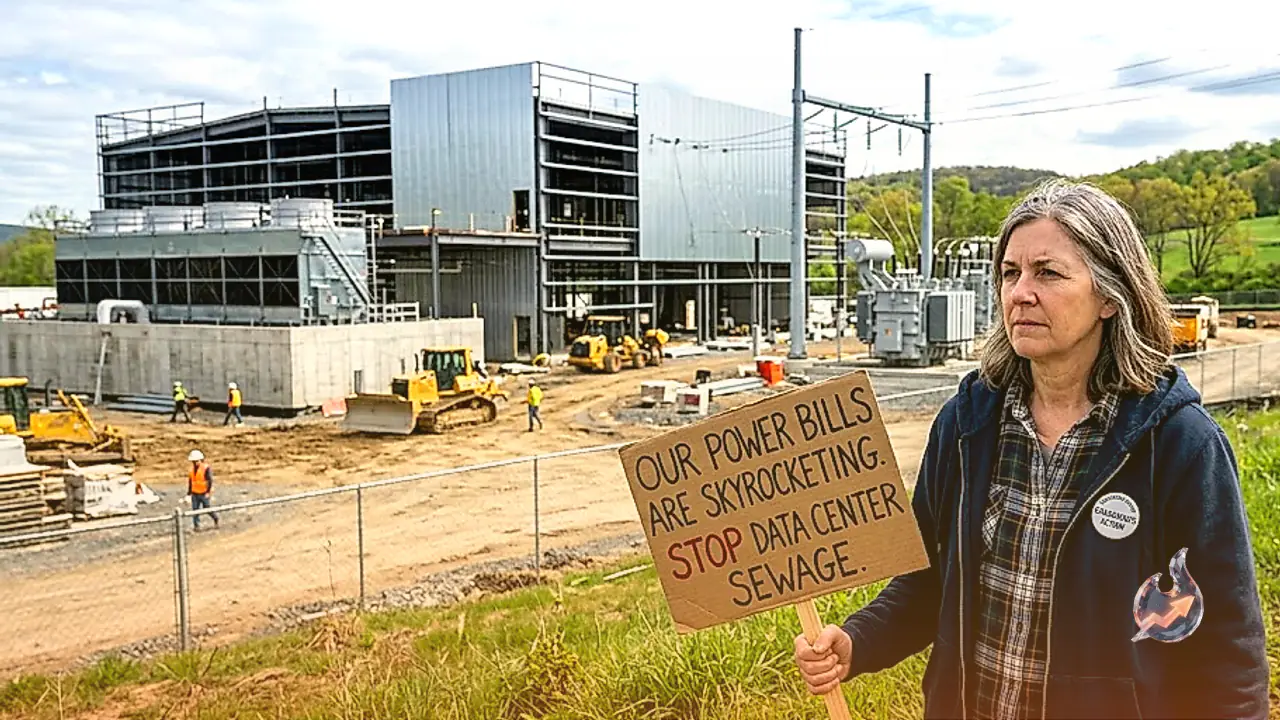
Operationally, Nscale maintains data center facilities across four regions, operating sites in Norway, Portugal, Texas, and West Virginia. Strategic oversight is supported by an experienced boardroom roster that includes former Meta executives Sheryl Sandberg and Nick Clegg, together with former OpenAI leader Fidji Simo.