






















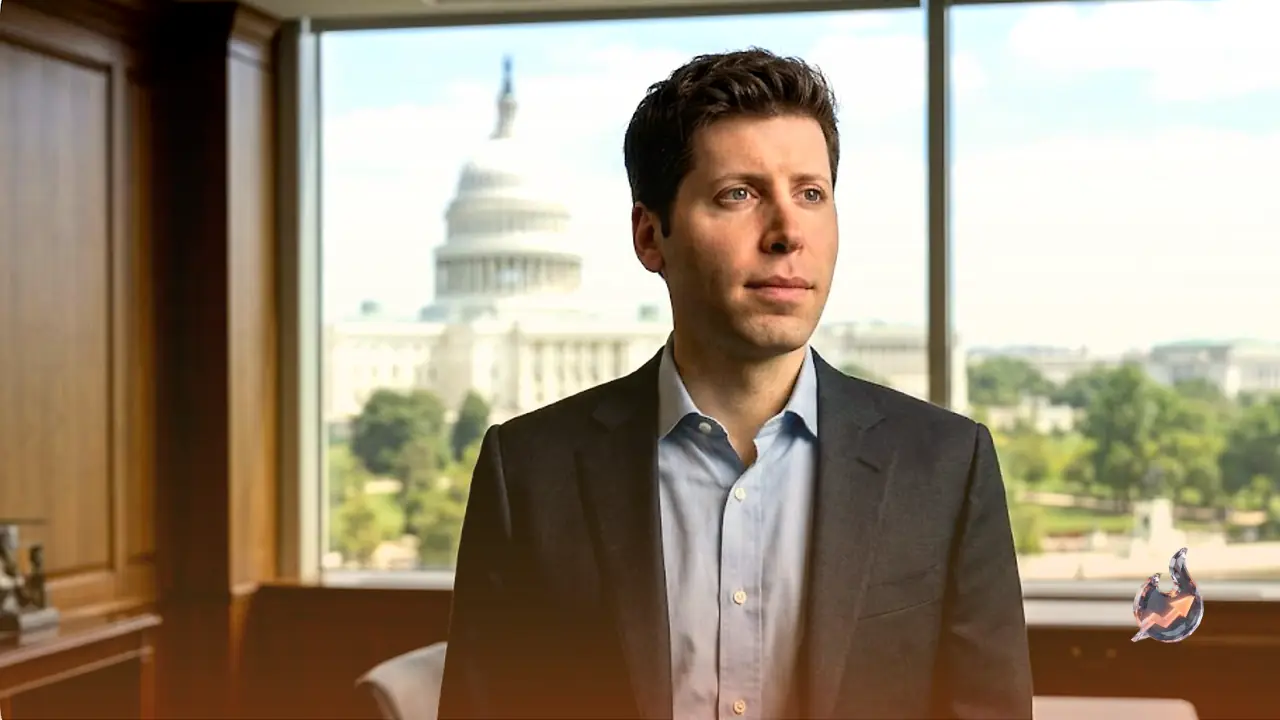

OpenAI, the most talked-about name in artificial intelligence, is discussing an extraordinary arrangement with the U.S. government. According to two people familiar with the conversations, the company is weighing whether to hand the Donald Trump administration a 5% stake in itself. After its March funding round, OpenAI was valued at $852 billion, which means that 5% slice is worth about $42.6 billion.
OpenAI CEO Sam Altman frames the idea as a way to spread the economic upside of AI to ordinary people. His argument is that this is the best route for Americans to share in the industry's rapid growth. Altman raised the proposal directly with President Trump, Commerce Secretary Howard Lutnick and Treasury Secretary Scott Bessent.
Modeled on the Alaska Fund
The proposed structure would work like a sovereign wealth vehicle, along the lines of the Alaska Permanent Fund. That fund was set up in 1976 to invest surplus oil revenues and pay annual dividends to the state's residents.
The plan does not stop with OpenAI. Altman reportedly wants other big U.S. AI developers, namely Anthropic, Google and Meta, to give the government a similar 5% through the same vehicle. So far, none of those companies have shown any interest in taking part.
A Pattern of Government Intervention
Just days earlier, OpenAI released GPT-5.6 in a limited form. That happened after the White House's Office of the National Cyber Director asked for a restricted rollout so officials could build a testing framework for frontier AI. It was the second government intervention of the month. Before that, Anthropic spent most of June under emergency export controls on Mythos 5 and Fable 5, after the Defense Department labeled the company a "supply chain risk." Its access was restored only this week.
On deals with the U.S. government, OpenAI has been far more cooperative than Anthropic. Where Anthropic refused partnerships, OpenAI signed them.
A New Era of Equity Stakes in Tech
Equity has become the administration's favorite tool for managing its relationships with technology firms. Last August, the government took a 9.9% stake in Intel, paying $8.9 billion by converting CHIPS Act grants into shares at $20.47 each, a position now worth well over $50 billion. In a similar vein, AMD and Nvidia agreed to hand over 15% of their China chip revenues in return for export licenses. In May, Trump said he should have negotiated a bigger stake in Intel.
For now, the discussions are conceptual and at an early stage, and any arrangement could require Congressional approval.
Why It Matters for OpenAI
If the deal goes through, it would be the first time Washington holds equity in a private AI company. OpenAI is currently navigating a confidential IPO filing and a probe by a coalition of 42 state attorneys general, so the arrangement could well be worth it for the company.
Senator Bernie Sanders, who met with Altman in recent weeks, is pushing a bill that would force the largest AI companies to surrender 50% of their equity to a public fund, with the proceeds paid directly to Americans. Both OpenAI and Anthropic have already filed confidentially for IPOs, meaning any government stake agreed now would come before the ownership dilution that a public listing brings.